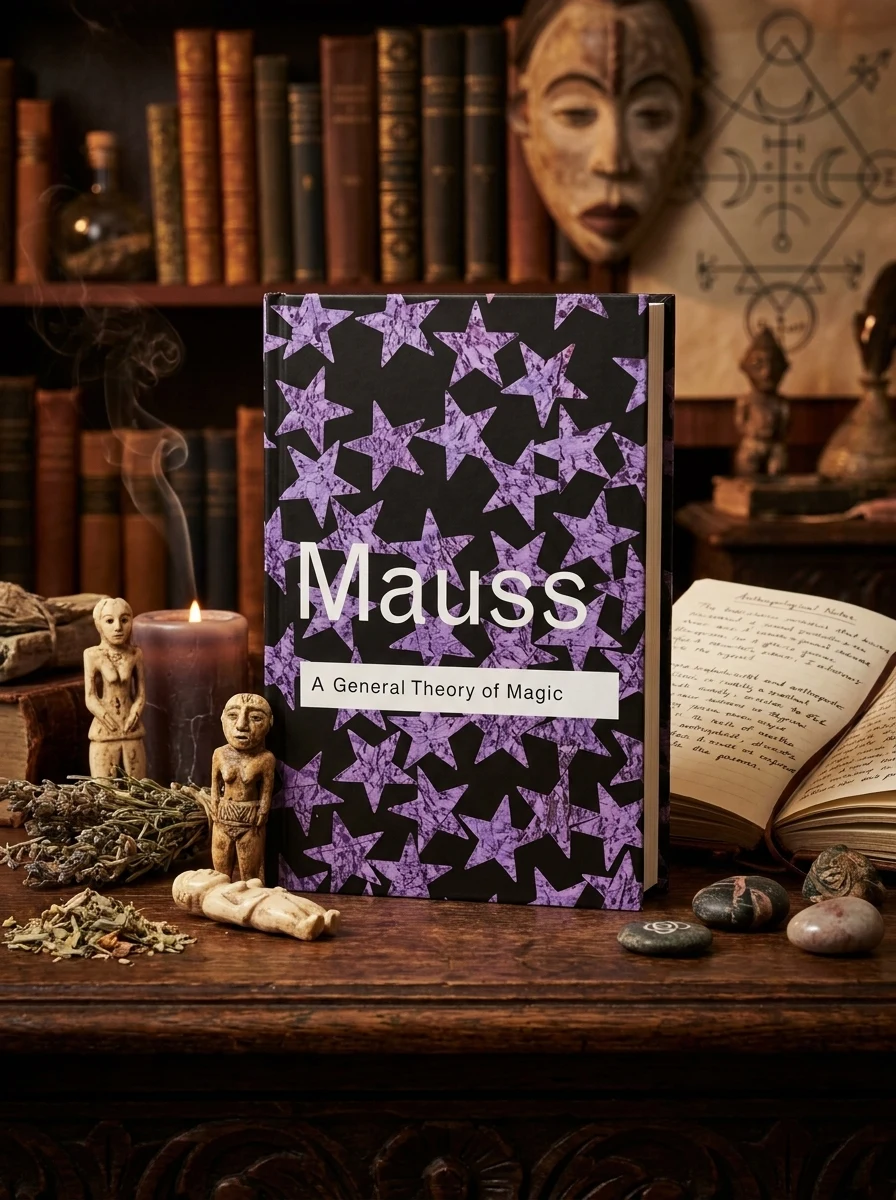
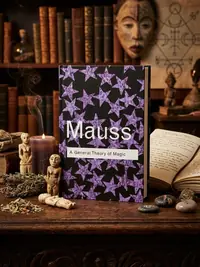

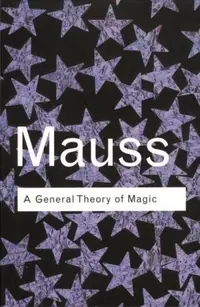
A General Theory of Magic Mauss, Marcel
 82
82
 Editorial score
How we rate
Editorial score
How we rate
Stock reported in the catalog; fulfillment is confirmed with your request.
Mauss dissects the social anatomy of spells, revealing magic as a structural force rather than mere superstition.
This seminal work interrogates the nature of magical practice by examining its function within the collective consciousness of early societies. Mauss argues that magic is not an isolated delusion but a parallel institution to religion and science, bound by the same social laws. By analyzing how magical rites enforce social cohesion and channel communal will, the text demonstrates that these 'primitive' techniques survive in modern bureaucratic and political rituals. It is a rigorous sociological autopsy of the occult, showing how the invisible forces of belief shape the visible world of human interaction.
This text sits at the intersection of classical sociology and occult studies, bridging the gap between anthropological theory and esoteric practice. It recontextualizes magical rites within the framework of early societal structures rather than treating them as mere superstition.


📝 Description: A General Theory of Magic Mauss, Marcel
💎 Expert review
📖 Why choose it
Why this book is worth reading
This book is essential for scholars and practitioners who seek to understand the invisible mechanics behind ritual efficacy. It offers a rigorous sociological autopsy of the occult, revealing how magical practices function as a structural force within collective consciousness. Readers will gain profound insight into how 'primitive' techniques persist in modern bureaucratic and political rituals. By demonstrating that magic is a parallel institution to religion and science, Mauss provides a framework for analyzing how communal will shapes reality. It is ideal for those interested in the social anatomy of spells and the enduring power of belief systems to enforce cohesion and channel human interaction.
⭐ Reader reviews
Reader rating
This has been on my wishlist for months. The symbolism is layered and generous to patient readers. Solid, if not essential.
Grabbed this during a weekend order. Challenging in places, but never needlessly obscure. There's real depth here that reveals itself on a second reading. Already eyeing my next order.
Needed this for my research. It reads better in small doses — a chapter at a time with notes. Deserves a place on any esoteric bookshelf.
Was skeptical at first. The text itself is dense but rewarding — you get out what you put in. Highly recommend to serious students.
This exceeded my expectations. I appreciated how the argument builds steadily from first principles. Happy enough with the purchase.
Exactly what I was looking for. Some chapters demand a slow, careful read, and that's exactly the point. There's real depth here that reveals itself on a second reading. I'd have loved an index, but that's on the original text. Recommended with reservations.
Mauss delivers a dense, analytical dissection of magic as a social phenomenon rather than a spiritual one. While intellectually stimulating for sociologists and historians of religion, this text may frustrate readers seeking practical grimoires or mystical experiences. It is not suited for those who prefer esoteric storytelling over structural analysis or those uninterested in the political implications of ritual. The work demands patience and a willingness to engage with abstract theories of social cohesion. However, for those willing to endure its academic rigor, it offers a compelling argument that magic is a vital, surviving element of human social organization, deeply intertwined with the visible world of power.
❓ Frequently asked questions
📖 Who should read this
Readers of structuralist anthropology, sociologists of religion, and occultists interested in the intellectual history of their craft who seek rigorous academic grounding over esoteric instruction.
🎯 Key themes and symbolism
Social Solidarity
Collective Effervescence
Structural Parallelism
💬 Quotes from the book
“Magic is a social fact.”
“The magician is a functionary of the group.”
📜 Historical context
📚 Glossary
- Collective Consciousness
- Mana
- Structuralism
📔 Questions to reflect on
- Identify a modern ritual that functions like a magical rite to reinforce group identity.
- How does the concept of 'social fact' change your view of personal superstition?
- In what ways do contemporary institutions exert power through collective belief rather than force?
🏛 Books from this publisher Routledge
All books from this publisher →


 89
89

You might also like
See more → 91
91
 91
91

 88
88