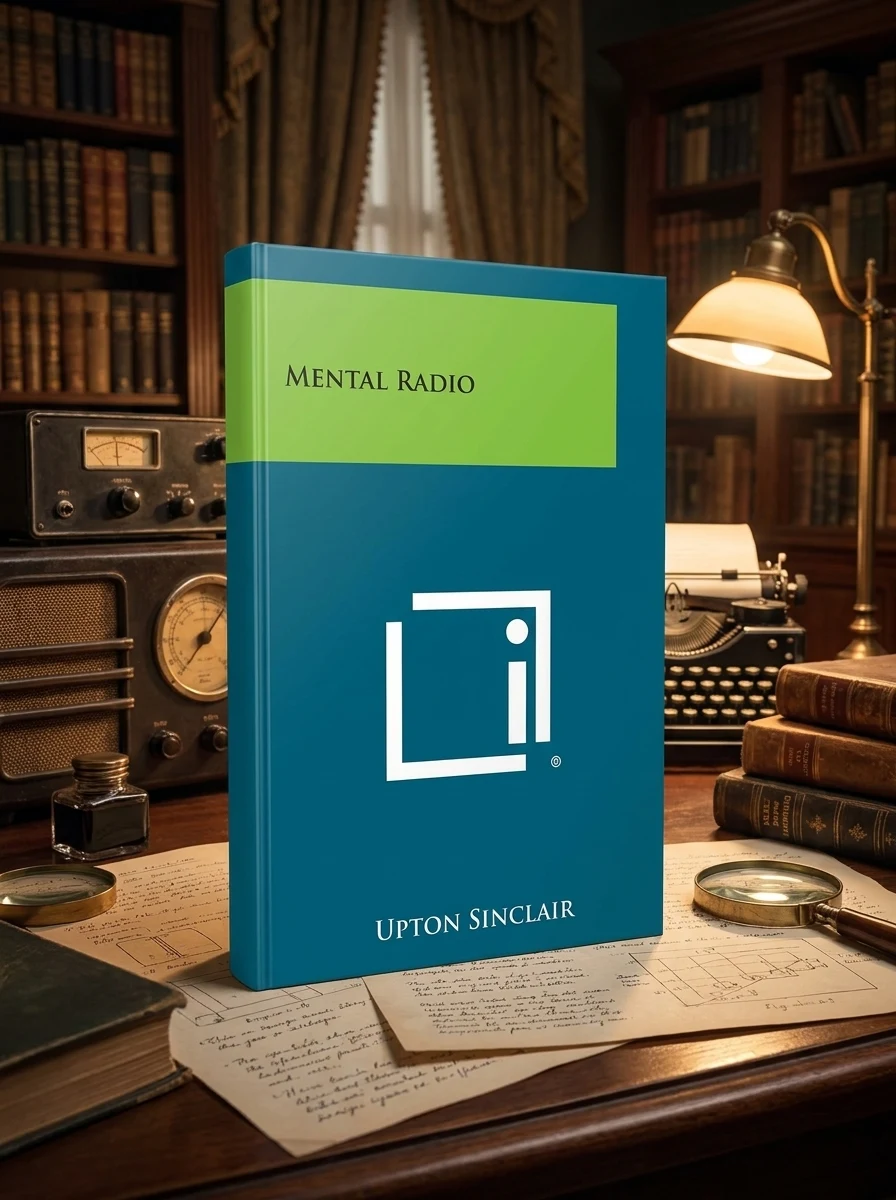
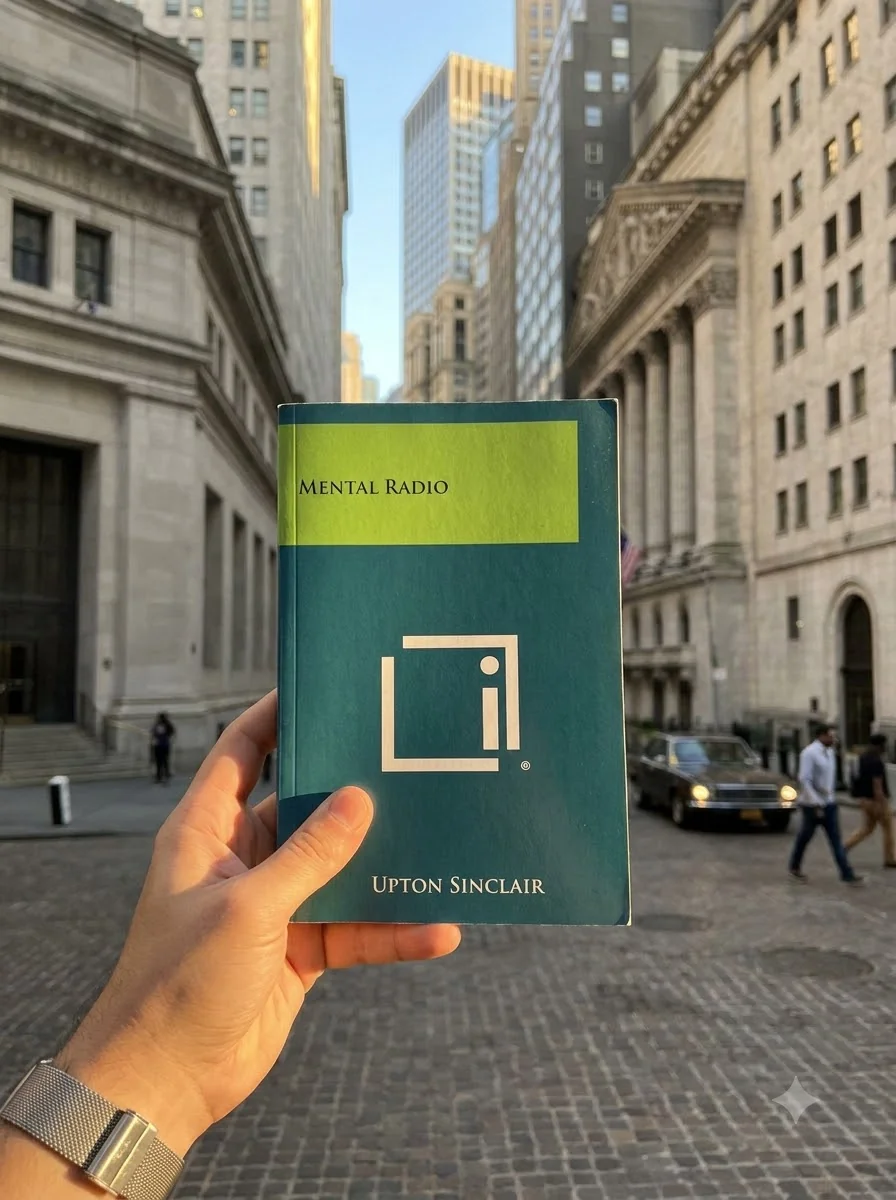
Mental Radio
✍️ Sinclair, UptonUpton Sinclair, the renowned social critic, delves into the enigmatic realm of psychic phenomena in this fascinating 1930 work. "Mental Radio" meticulously details his personal experiments with telepathy and clairvoyance, primarily featuring the remarkable abilities of his wife, Mary Craig Sinclair. Through a series of detailed drawings and thought transference attempts, Sinclair seeks to apply an empirical lens to experiences often dismissed as supernatural. This compelling re-release invites readers to explore the early 20th-century quest to understand the mind's untapped potential and its capacity for non-local communication.


📝 Description: Mental Radio
💎 Expert review
📖 Why choose it
Why this book is worth reading
Readers fascinated by the intersection of literature, science, and the paranormal will find this book a compelling artifact of intellectual history. Upton Sinclair, known primarily for his social critiques, offers a unique perspective here as he attempts to demystify telepathy through rigorous personal experimentation. Those interested in the historical development of psychic research or the private lives of famous authors will appreciate the detailed accounts of his and his wife's efforts to map the mind's hidden channels. It serves as a bridge between skeptical literary analysis and earnest spiritual inquiry, appealing to anyone curious about how early twentieth-century thinkers grappled with the limits of human perception.
⭐ Reader reviews
Reader rating
This volume is essential for historians of esoteric thought but may frustrate readers seeking definitive proof of supernatural abilities. Sinclair’s approach is methodical yet deeply personal, which can feel repetitive to those expecting dramatic revelations or conclusive scientific validation. It does not suit skeptics looking for debunking, nor mystics desiring dogma; instead, it offers a nuanced, empirical record of failed and successful attempts at mental communication. Readers who prefer speculative fiction over documentary experimentation might find the dry, detailed descriptions of drawing exercises tedious. However, for those interested in the sociological context of occultism among literary elites, it remains an invaluable, if somewhat dated, primary source.
❓ Frequently asked questions
📖 Who should read this
If you're fascinated by the early history of parapsychology, curious about telepathy, or seeking a unique account of personal psychic experiments, this book is for you. It offers a rare glimpse into a mind attempting to bridge science and the esoteric.
🎯 Key themes and symbolism
Psychic Communication Explored
Sinclair meticulously documents his wife's purported telepathic and clairvoyant abilities. Through controlled, repeatable experiments involving mental imagery, he provides a compelling, if unconventional, case study for the existence of direct thought transference and distant perception, challenging materialist assumptions about consciousness.
Empirical Pursuit of Unseen
Despite the inherently subjective nature of psychic experiences, Sinclair endeavors to approach them with a degree of scientific rigor. He outlines his methods, controls, and observations, attempting to gather reproducible evidence for phenomena that often elude conventional scientific measurement, pushing the boundaries of early parapsychological inquiry.
The Mind's Latent Power
Beyond mere documentation, this book invites contemplation on the vast, unexplored capacities of the human mind. Sinclair suggests that our ordinary perception represents only a fraction of consciousness's true potential, hinting at innate abilities for profound connection and awareness that lie dormant within all individuals, awaiting activation.
📜 Historical context
📚 Glossary
- Telepathy
- Clairvoyance
- Psychical Research
📔 Questions to reflect on
- How might a modern scientific approach validate or challenge Sinclair's experimental methods and conclusions?
- What are your own experiences or beliefs regarding telepathy or other forms of psychic communication?
- If the mind possesses such latent powers, what ethical considerations arise from their potential development or use?