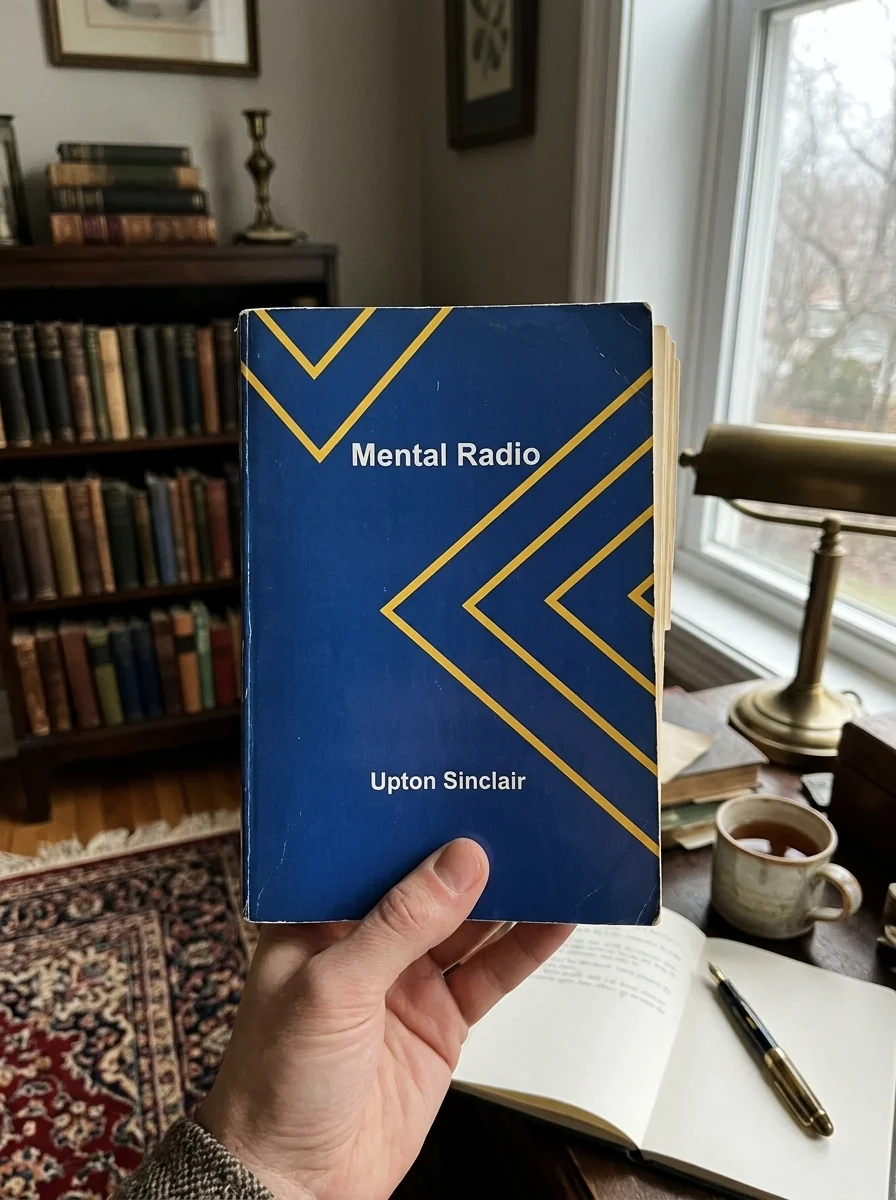
Mental Radio
✍️ Sinclair, UptonUpton Sinclair's "Mental Radio" delves into the extraordinary psychic abilities observed in his wife, Mary Craig Kimbrough Sinclair. This compelling volume documents a series of experiments, primarily focusing on telepathy and clairvoyance, conducted with meticulous detail. Sinclair, a celebrated investigative journalist, approaches these phenomena not as mere anecdote but as a subject worthy of serious inquiry, presenting a fascinating account of purported mental communication. It offers a unique glimpse into early 20th-century parapsychological research through the lens of a personal, yet rigorously observed, narrative.


📝 Description: Mental Radio
💎 Expert review
📖 Why choose it
Why this book is worth reading
Readers fascinated by the intersection of rigorous journalism and occult exploration will find this text uniquely rewarding. Upton Sinclair approaches the subject with the scrutiny of an investigative reporter, making the extraordinary claims feel grounded in meticulous observation rather than wild speculation. Those interested in the history of telepathy research or the personal dynamics of famous literary figures engaging with esoteric topics will appreciate the candid, first-hand narrative. It offers a rare glimpse into how a celebrated author navigated the serious inquiry of mental radio, providing both intellectual stimulation and a compelling human story through his documentation of his wife's abilities.
⭐ Reader reviews
Reader rating
This volume is essential for historians of parapsychology and fans of Upton Sinclair’s non-fiction work. However, readers seeking supernatural horror or traditional mystical theology will likely find it dry and overly clinical. The text prioritizes the documentation of experiments over spiritual interpretation, which may disappoint those expecting a more poetic or esoteric treatment of telepathy. It is not suited for skeptics requiring modern empirical proof, nor for casual readers looking for quick entertainment. The narrative relies heavily on Sinclair’s journalistic style, which can feel repetitive if one is not invested in the specific methodology of early 20th-century psychic research.
❓ Frequently asked questions
📖 Who should read this
If you're fascinated by the early history of parapsychology, curious about documented psychic phenomena, or interested in the extraordinary claims of consciousness, this book offers a unique and thought-provoking exploration by a renowned author. It's a foundational text for those exploring the boundaries of the mind.
🎯 Key themes and symbolism
Empirical Psychic Inquiry
The book meticulously details a series of experiments, primarily between Upton Sinclair and his wife, Mary, exploring their telepathic and clairvoyant experiences. It's an early attempt to apply a somewhat systematic, observational approach to phenomena often relegated to the realm of pure belief, seeking patterns and verifiable instances.
The Nature of Consciousness
Sinclair implicitly questions the conventional boundaries of the mind, suggesting a deeper, interconnected layer of consciousness capable of communication beyond sensory perception. The narrative prompts readers to ponder the potential extensibility of the human mind and its interaction with the subtle energies of the universe.
Challenging Materialism
Through his documentation of seemingly impossible events, Sinclair implicitly challenges the prevailing materialistic worldview of his era. He presents evidence that suggests mind can influence or perceive reality independent of physical means, inviting readers to consider perspectives beyond strictly physical explanations for phenomena.
📜 Historical context
📚 Glossary
- Telepathy
- Clairvoyance
- Precognition
📔 Questions to reflect on
- Reflect on a time you felt an intuitive connection with someone. How might 'Mental Radio' offer a framework for understanding such experiences?
- If telepathy were a provable, widespread ability, how might it fundamentally alter human society, communication, and relationships?
- Consider the challenges Sinclair faced in documenting and presenting such unconventional phenomena. What lessons can be drawn about validating experiences that defy conventional science?