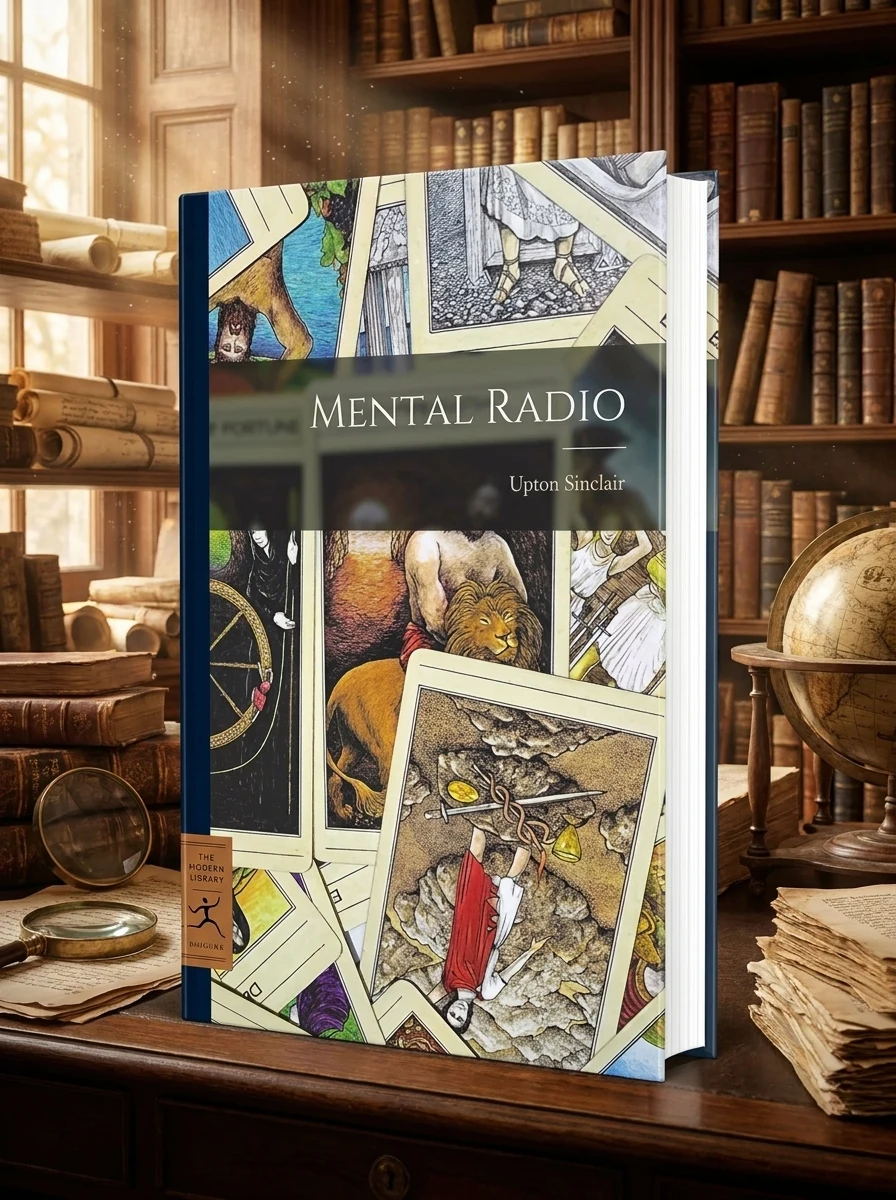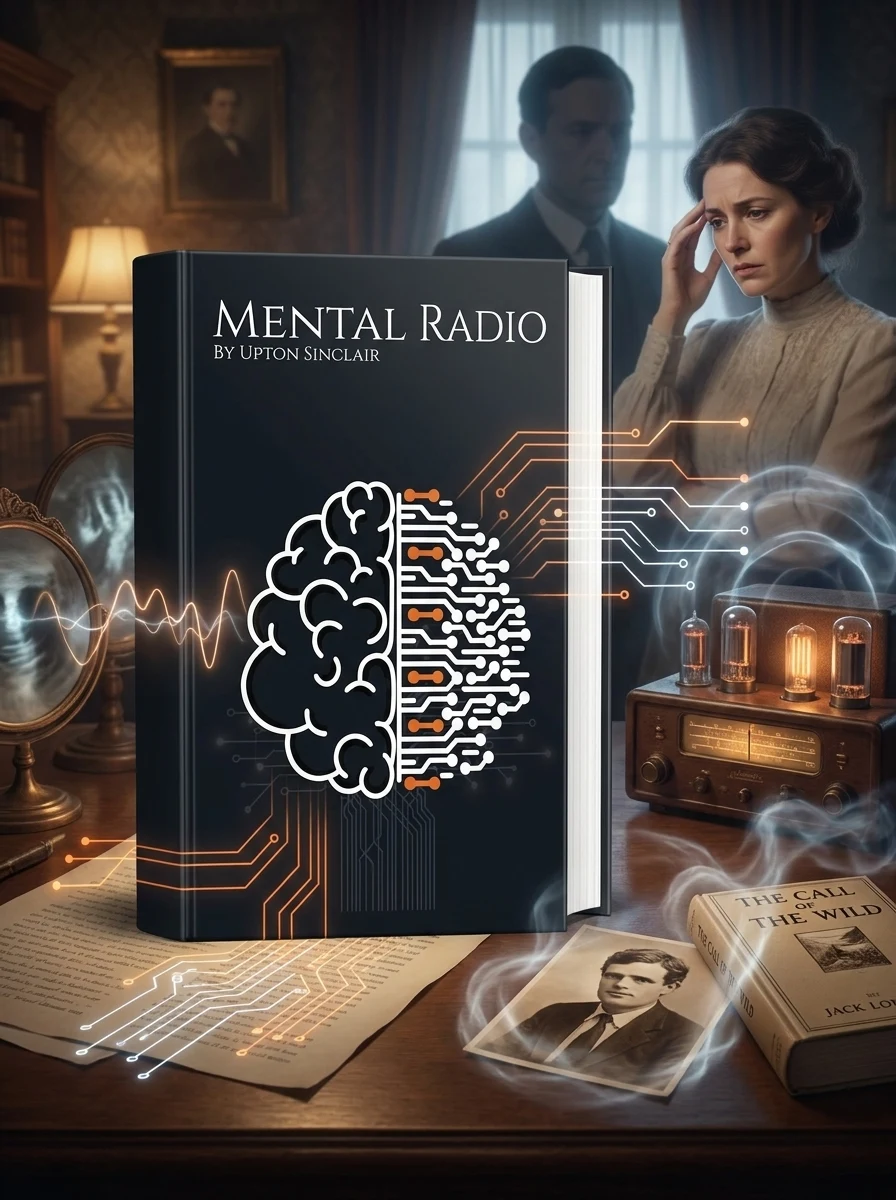
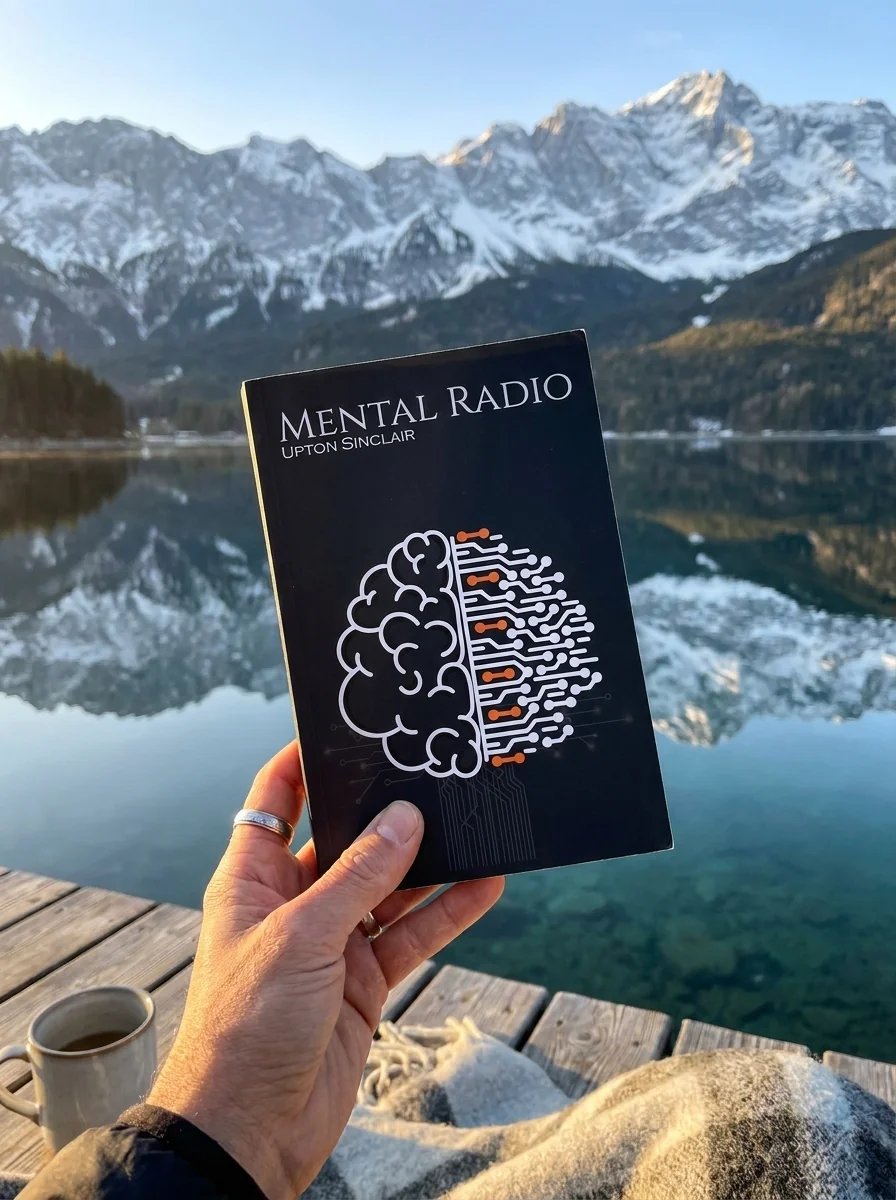
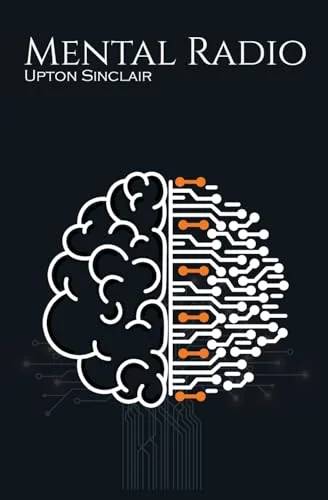
Mental Radio
✍️ Sinclair, UptonA political journalist documents his wife's telepathic experiments and 75 percent success rate in extrasensory perception.
This paperback edition from Left of Brain Books gathers Upton Sinclair's investigation into mind-to-mind communication. Rather than relying on mystical theory, the text relies on raw experiment logs where Mary Craig Sinclair attempted to replicate unseen drawings. Citing endorsements from figures like Albert Einstein, the author approaches telepathy with the skeptical eye of an investigative reporter, presenting 290 controlled trials as raw data for readers interested in the boundary between psychology and psychic phenomena.
Published by Left of Brain Books, this 152 page edition captures an era when prominent journalists and figures like Albert Einstein and William McDougal examined psychic phenomena, bridging general history, literary culture, and the study of extrasensory perception.


📝 Description: Mental Radio
💎 Expert review
📖 Why choose it
Why this book is worth reading
Readers fascinated by the intersection of social reform and paranormal investigation will find this book uniquely compelling. It offers a rare glimpse into how a renowned literary figure approached psychic phenomena with scientific rigor, driven by personal experience rather than blind belief. Those interested in the history of spiritualism or the specific dynamics of telepathic experiments will appreciate Sinclair’s detailed account of his wife’s abilities. It serves as an engaging case study for those who enjoy blending historical biography with esoteric subject matter, providing a grounded yet mysterious perspective on extrasensory perception that challenges conventional scientific boundaries through personal testimony and data.
⭐ Reader reviews
Reader rating
While Sinclair presents his findings with earnest conviction, this book may disappoint readers seeking rigorous academic proof or skeptical debunking. It is not suited for those who demand hard statistical analysis over anecdotal evidence or who view spiritualism with inherent distrust. The narrative relies heavily on the author’s personal testimony and the specific circumstances of his wife’s abilities, which may feel subjective to modern scientific standards. However, for those open to historical perspectives on psychic research, it remains a valuable primary source that captures the genuine curiosity and investigative spirit of its time without pretension.
❓ Frequently asked questions
📖 Who should read this
If you're intrigued by historical accounts of psychic research, the scientific exploration of the unexplained, or want to discover a lesser-known, yet deeply personal, facet of Upton Sinclair's prolific career, this book is for you.
🎯 Key themes and symbolism
Unconventional Psychic Inquiry
Explores how a renowned social activist approached the study of telepathy and clairvoyance with a surprising blend of skepticism and scientific rigor, recording detailed experiments and observations of his wife's abilities, pushing the boundaries of accepted knowledge.
The Power of Intuition
Documents the extraordinary abilities of Mary Craig Sinclair, whose accurate "readings" of unseen drawings formed the core evidence, highlighting the profound and often inexplicable potential of human intuition and its capacity to perceive beyond the ordinary senses.
Credibility and Skepticism
Examines the tension between empirical evidence and personal belief, as a respected public figure grapples with phenomena that challenge mainstream scientific thought, earning endorsements from notable figures like Albert Einstein, lending weight to extraordinary claims.
📜 Historical context
📚 Glossary
- Telepathy
- Clairvoyance
- Extra-sensory Perception (ESP)
📔 Questions to reflect on
- Have you ever experienced an unexplainable coincidence or intuition that felt like more than chance? Describe it in detail.
- How does the credibility of a well-known public figure like Upton Sinclair influence your willingness to consider extraordinary claims about psychic phenomena?
- In what ways might our understanding of consciousness and perception expand if phenomena like telepathy were scientifically validated and accepted?