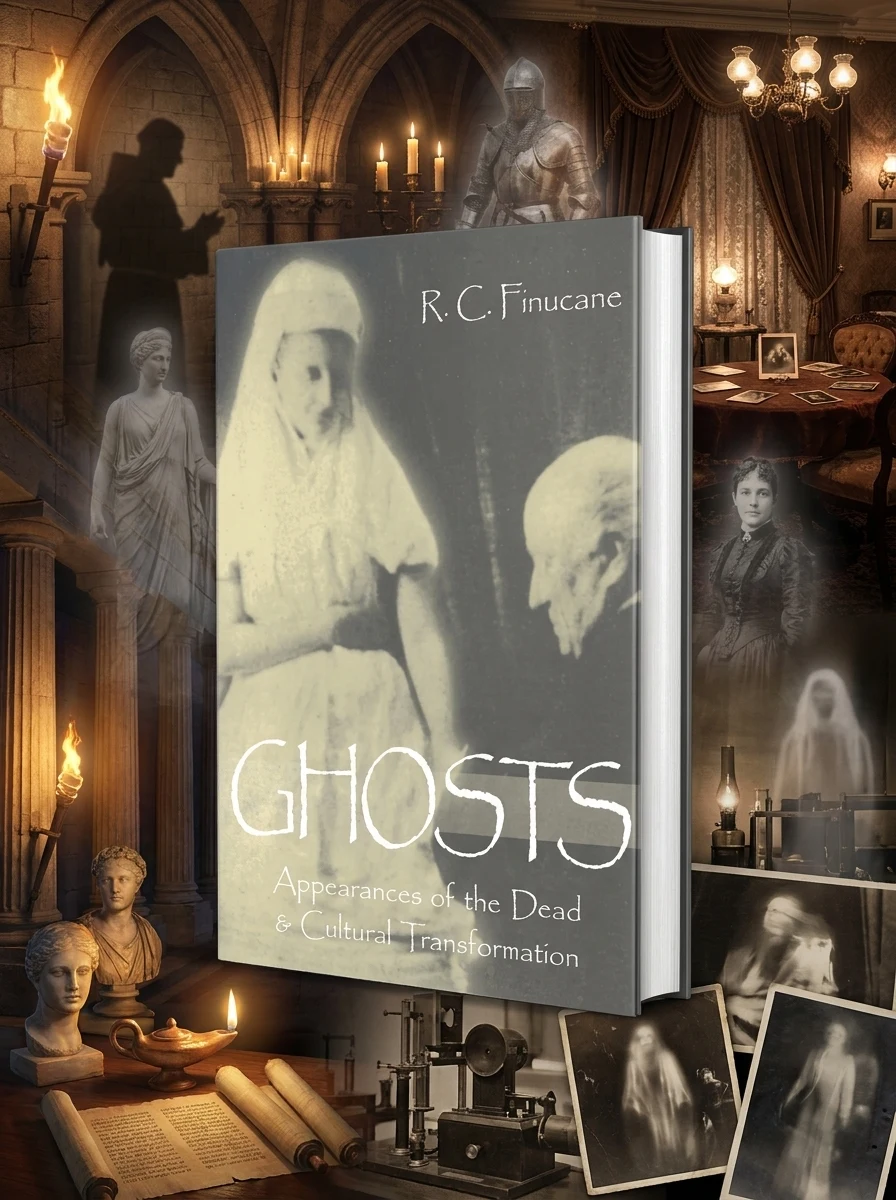
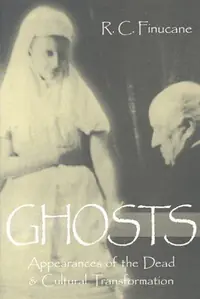
Ghosts
Stock reported in the catalog; fulfillment is confirmed with your request.
Unravel the spectral tapestry: how have ghosts haunted human imagination through the ages?
R.C. Finucane embarks on a fascinating historical journey, meticulously chronicling how perceptions of ghosts have transformed across millennia. From the shades of ancient Greece to the more tangible apparitions of the Victorian era, this work reveals that the 'ghost' is far from a static concept. It delves into the mutable forms and purposes attributed to these spectral entities, exploring how societal beliefs, scientific understanding, and religious doctrines have profoundly shaped our encounters with the unseen. Drawing on a rich array of primary accounts, Finucane offers a panoramic view of humanity's enduring fascination with the beyond.
This work sits firmly within the historical study of spiritualism and esoteric traditions, chronicling the evolution of spectral beliefs from ancient Greece through the Victorian era. It serves as an academic bridge between folklore studies and the history of religion, examining how societal structures have shaped the concept of the ghost over millennia.


📝 Description: Ghosts
💎 Expert review
📖 Why choose it
Why this book is worth reading
Readers fascinated by the intersection of history, psychology, and the occult will find this book indispensable. It offers a panoramic view of humanity's enduring fascination with the unseen, making it perfect for those who wish to understand how religious doctrines and scientific understanding have influenced our encounters with the beyond. By tracing the mutable forms of spectral entities through primary accounts, Finucane provides deep insights into the human condition. It is ideal for scholars and enthusiasts alike who seek to unravel the cultural tapestry of ghost lore without relying on sensationalism. The book transforms abstract fears into a coherent historical narrative, rewarding those willing to engage with the intellectual journey of how we have perceived death and the spirit world across different ages.
⭐ Reader reviews
Reader rating
Finucane delivers a meticulous chronicle that appeals to those seeking intellectual depth in spiritualist history. However, it is not suitable for readers seeking immediate supernatural thrills or practical ghost-hunting guides. The focus on historical transformation rather than anecdotal horror may feel dry to casual fans of the macabre. Those expecting modern scientific debunking or purely theological arguments might find the middle ground of cultural analysis insufficiently decisive. It requires patience for those unwilling to engage with scholarly discourse on societal beliefs, making it a niche choice for general audiences who prefer lighter, more narrative-driven accounts of the paranormal.
❓ Frequently asked questions
📖 Who should read this
If you're captivated by the intersection of history, folklore, and the unexplained, this book is for you. It's perfect for readers who seek a rigorous, scholarly exploration of supernatural beliefs rather than sensationalized accounts, offering deep insights into human cultural evolution.
🎯 Key themes and symbolism
Evolving Spectral Forms
This book meticulously documents how the physical characteristics attributed to ghosts have shifted dramatically over time. It contrasts the ethereal presences described in classical texts with the more corporeal, often interactive phantoms reported in later periods, illustrating how each epoch reimagined the very nature of a disembodied spirit's manifestation.
Cultural Reflections of Phantoms
Finucane masterfully demonstrates that ghosts are not merely isolated phenomena but potent reflections of their cultural context. He explores how the ascribed intentions and functions of spectral visitors—be they omens, messengers, or tormentors—mirror the prevailing religious, philosophical, and social anxieties of the societies that reported them.
Belief Systems and Perception
A core insight of this work is the profound influence of broader belief systems, from religious dogma to emerging scientific paradigms, on the perception and interpretation of ghost sightings. The book traces how shifts in theological thought or scientific understanding directly impacted how people understood, explained, and even 'saw' paranormal events.
💬 Quotes from the book
“The spectral visitor, far from being a monolithic entity, has always been a cultural construct, its form and function morphing with each prevailing worldview.”
“To understand a ghost is often to understand the anxieties and scientific paradigms of the era that conjured it, for their very existence is a testament to human perception.”
📜 Historical context
📚 Glossary
- Apparition
- Specter
- Phantasm
📔 Questions to reflect on
- Considering the historical evolution of ghosts, how do you think contemporary technological advancements or scientific theories might be shaping our modern understanding or perception of the supernatural?
- Reflect on a ghost story or paranormal encounter you've heard or experienced. How do the details of that account align with or diverge from the historical patterns of ghost perception discussed in this book?
- If ghosts are cultural constructs, what does the persistent human belief in them reveal about fundamental human psychology, our relationship with death, or our need for meaning beyond the material world?
🏛 Books from this publisher Prometheus Books
All books from this publisher →
 83
83
You might also like
See more → 91
91
 87
87
 75
75