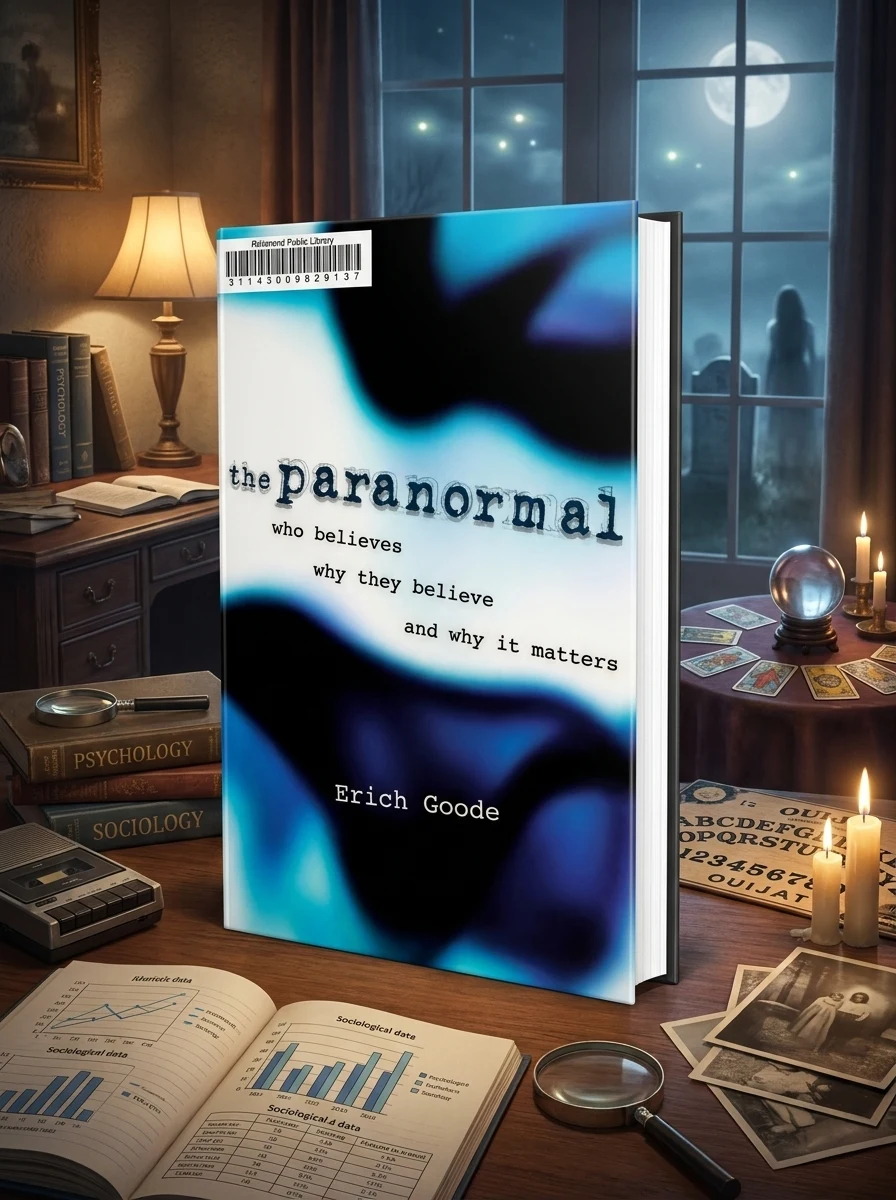
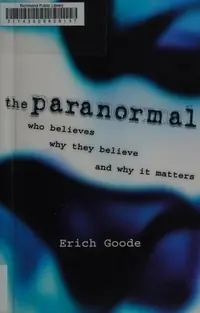
The Paranormal: Who Believes, Why They Believe, and Why It Matters
Stock reported in the catalog; fulfillment is confirmed with your request.
Unravel the profound societal mystery behind belief in the unseen.
This insightful work by Erich Goode delves into the pervasive nature of paranormal belief, moving beyond the usual debates of verification or debunking. Instead, it meticulously explores *why* a significant portion of our modern, scientifically advanced society embraces phenomena like psychic abilities, UFOs, and communication with the deceased. Goode treats these beliefs as a compelling sociological puzzle, examining the underlying motivations, cultural influences, and personal impacts for those who hold them, offering a fresh, analytical perspective on a deeply human tendency.
This work sits firmly within the sociological study of modern esotericism, analyzing paranormal belief not as a failure of science but as a significant cultural phenomenon in contemporary society. It bridges the gap between academic sociology and public interest in the occult by treating these beliefs as a profound societal mystery rather than mere superstition.


📝 Description: The Paranormal: Who Believes, Why They Believe, and Why It Matters
💎 Expert review
📖 Why choose it
Why this book is worth reading
Readers intrigued by the intersection of psychology, sociology, and spirituality will find this book indispensable. It is particularly valuable for those seeking to understand why rational, scientifically advanced individuals embrace the unseen without falling into debunking traps or blind acceptance. You gain a fresh, analytical perspective on human motivation, revealing how paranormal beliefs serve deep personal and cultural needs. If you are fascinated by the societal mystery behind phenomena like UFOs or psychic abilities, this text offers a compassionate, rigorous look at why these convictions matter to so many people in our modern world.
⭐ Reader reviews
Reader rating
Goode delivers a compelling sociological puzzle that moves beyond binary debates of verification versus debunking. The analytical perspective is fresh and necessary for anyone studying modern belief systems. However, readers seeking practical guides on how to perform psychic readings or definitive proof of the supernatural will find little here. This book does not suit those who wish to validate their paranormal experiences through empirical evidence rather than understanding their social function. It is a cerebral exploration of motivation, not a manual for engagement with the occult.
❓ Frequently asked questions
📖 Who should read this
If you're intrigued by the human mind's capacity for belief, beyond scientific validation, this book offers a deeper, sociological understanding. Ideal for those interested in cultural studies, psychology, or the broader sociology of belief systems, it provides a fresh perspective.
🎯 Key themes and symbolism
Belief as Social Phenomenon
This book uniquely positions paranormal belief not as a question of objective truth, but as a fascinating social construct. It investigates how beliefs are formed, sustained, and spread within communities, offering an academic yet accessible framework to understand widespread acceptance of the extraordinary, free from judgment or advocacy.
Understanding Why We Believe
Goode probes the diverse psychological and social factors that drive individuals to embrace paranormal assertions. From personal experiences to cultural narratives, the text explores the myriad reasons people find comfort, meaning, or explanation in the supernatural, even when confronted with scientific skepticism.
Impacts of Paranormal Faith
Beyond simply cataloging beliefs, the author examines the tangible effects these convictions have on individuals' lives and broader society. It considers how such beliefs shape worldview, influence decision-making, foster community, or even lead to marginalization, highlighting their profound societal significance.
💬 Quotes from the book
“The persistence of belief in phenomena defying empirical validation compels us to examine not the phenomena, but the enduring human need for meaning in an often-unpredictable world.”
“Understanding paranormal belief requires a nuanced sociological lens, one that recognizes its profound impact on individual lives and collective worldviews, irrespective of its objective veracity.”
📜 Historical context
📚 Glossary
- Paranormal
- Sociological Phenomenon
- Debunking
📔 Questions to reflect on
- Reflect on a paranormal belief you or someone you know holds. What do you think are the underlying reasons for this belief, considering the sociological factors discussed in the book?
- How might the societal acceptance or rejection of a particular paranormal belief influence an individual's sense of identity or community?
- Considering the book's approach, what ethical responsibilities might arise when studying or discussing others' deeply held paranormal beliefs?
🏛 Books from this publisher Prometheus Books
All books from this publisher →
 83
83
 88
88
You might also like
See more →
 90
90
 89
89
 88
88