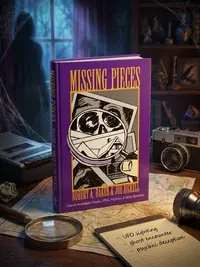
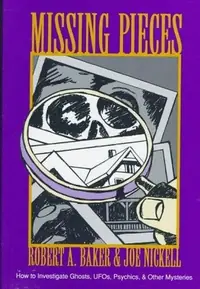
Missing Pieces
Stock reported in the catalog; fulfillment is confirmed with your request.
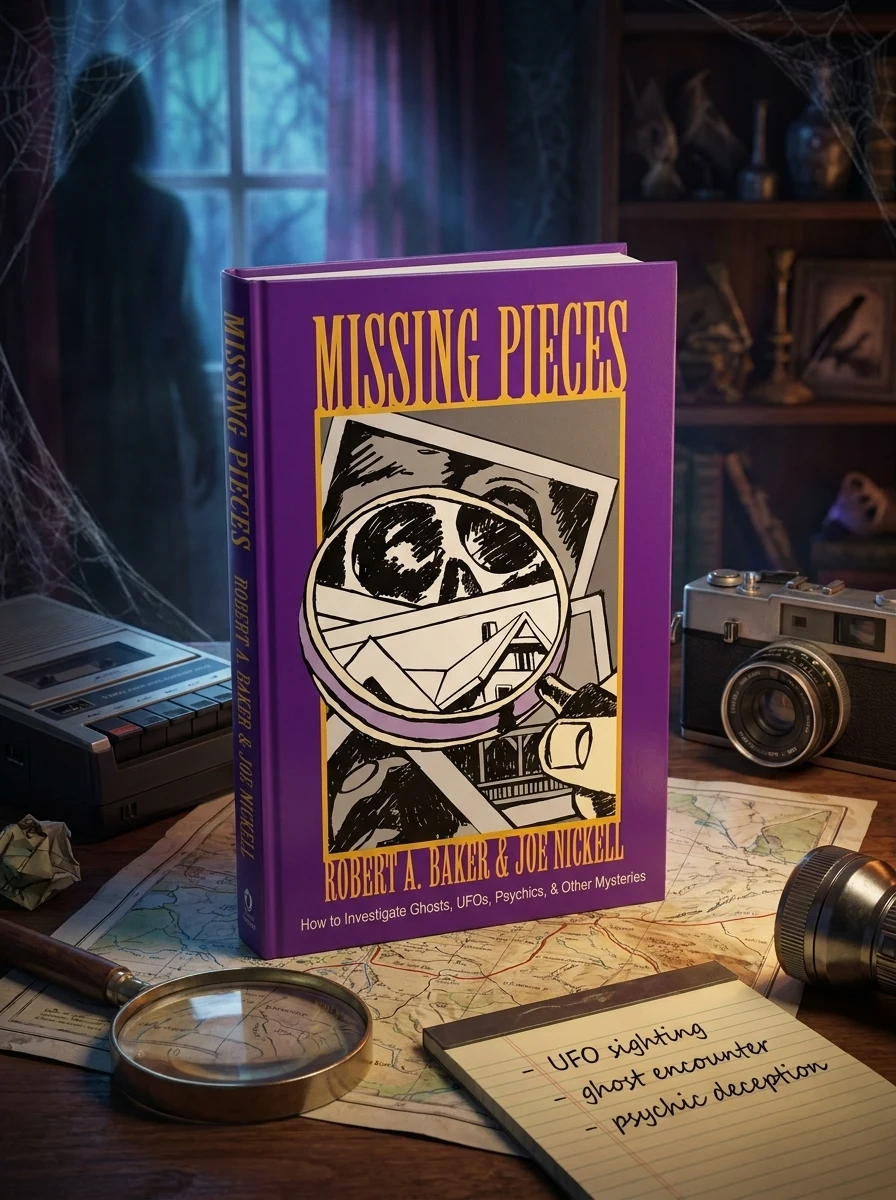
Unmask the supernatural with rigorous, field-tested skepticism and practical investigative techniques.
This essential handbook bridges the gap between paranormal wonder and critical inquiry, offering readers the definitive toolkit for investigating the unexplained. Baker and Nickell provide actionable strategies for dissecting everything from UFO sightings and spectral hauntings to psychic claims and alleged divine messages. You will learn to interrogate witnesses effectively, detect deception, and utilize both mental and electronic equipment used by professional ghostbusters. The authors delve into the psychology behind belief, explaining why intelligent minds often accept false premises, while teaching you how to wield media to expose fraud and spread rational truth.
This work sits firmly within the tradition of skeptical inquiry and critical thinking applied to paranormal phenomena, bridging the gap between spiritualism and scientific rationalism. It reflects a period where practical investigative techniques were being formalized to debunk supernatural claims through rigorous field testing.


📝 Description: Missing Pieces
💎 Expert review
📖 Why choose it
Why this book is worth reading
Readers who have ever felt torn between the allure of the supernatural and their own critical faculties will find this book to be an invaluable companion. It is designed for those who want to understand the 'why' behind paranormal beliefs without dismissing the experience entirely. By providing a definitive toolkit, it empowers individuals to investigate claims with confidence, using both psychological insight and electronic equipment. Whether you are a curious skeptic or a seasoned investigator, this handbook offers actionable strategies to dissect phenomena like hauntings or psychic claims. It helps you wield media effectively to expose fraud, making it essential for anyone seeking to replace blind wonder with rational truth and professional-grade investigative skills.
⭐ Reader reviews
Reader rating
A friend in my study group recommended this one. The material is presented clearly and the structure makes it easy to revisit key passages. The text itself is dense but rewarding — you get out what you put in.
My third book from this store and this one might be the best. You can tell why this work has endured. The ideas are old but land with surprising force today. The font runs small in the appendices. Still worth having on the shelf.
Baker and Nickell deliver a robust manual that successfully merges psychological analysis with practical investigation. The text is highly effective for those interested in the mechanics of deception and witness interrogation. However, readers seeking mystical validation or spiritual comfort will find this volume cold and dismissive. It does not cater to those who wish to affirm their paranormal experiences rather than dissect them. The rigorous focus on debunking may feel overly clinical to casual enthusiasts of the occult. Ultimately, it is a sharp, necessary tool for skeptics, but it offers little warmth or validation for believers, serving strictly as a guide for critical inquiry rather than spiritual exploration.
❓ Frequently asked questions
📖 Who should read this
You will appreciate this volume if you are a skeptic, a paranormal investigator, or simply a curious mind tired of sensationalism. It is for those who want to understand the 'how' behind the hype and possess the courage to question extraordinary claims with rigorous, evidence-based analysis.
🎯 Key themes and symbolism
Skeptical Investigation Tactics
The text moves beyond mere doubt to offer concrete methodologies for fieldwork. It details how to secure scenes, document anomalies, and interview subjects without bias, ensuring that investigators can separate genuine mystery from mundane explanation through systematic observation and evidence collection.
Deception and Fraud Detection
A significant portion is dedicated to the mechanics of trickery. The authors expose how faith healers, psychics, and messengers manipulate perception. It teaches readers to spot physical and psychological sleight-of-hand, revealing the human ingenuity behind supposed supernatural feats and the vulnerabilities they exploit.
Psychology of Belief
The book explores why smart people embrace the paranormal. It analyzes cognitive biases and social pressures that lead to uncritical acceptance of claims. Understanding these mental traps is presented as the first step toward effective investigation, allowing the reader to maintain objectivity amidst compelling but false narratives.
💬 Quotes from the book
“The truth is often less exciting than the lie, but it is far more satisfying to the intellect.”
“Deception is an art form; recognizing it requires the eye of a detective and the heart of a skeptic.”
📜 Historical context
📚 Glossary
- Paranormal Claims
- Ghostbusting
- Cognitive Bias
📔 Questions to reflect on
- Recall a time you accepted a supernatural claim without question. What emotional need did it fulfill, and what evidence would have challenged it?
- If you were to investigate a local 'haunting,' what three mundane explanations would you rule out first before considering the paranormal?
- How does the media shape your perception of 'psychic' abilities? What sources do you trust to verify such claims?
🏛 Books from this publisher Prometheus Books
All books from this publisher →
 83
83
You might also like
See more → 91
91
 87
87

 82
82
 75
75