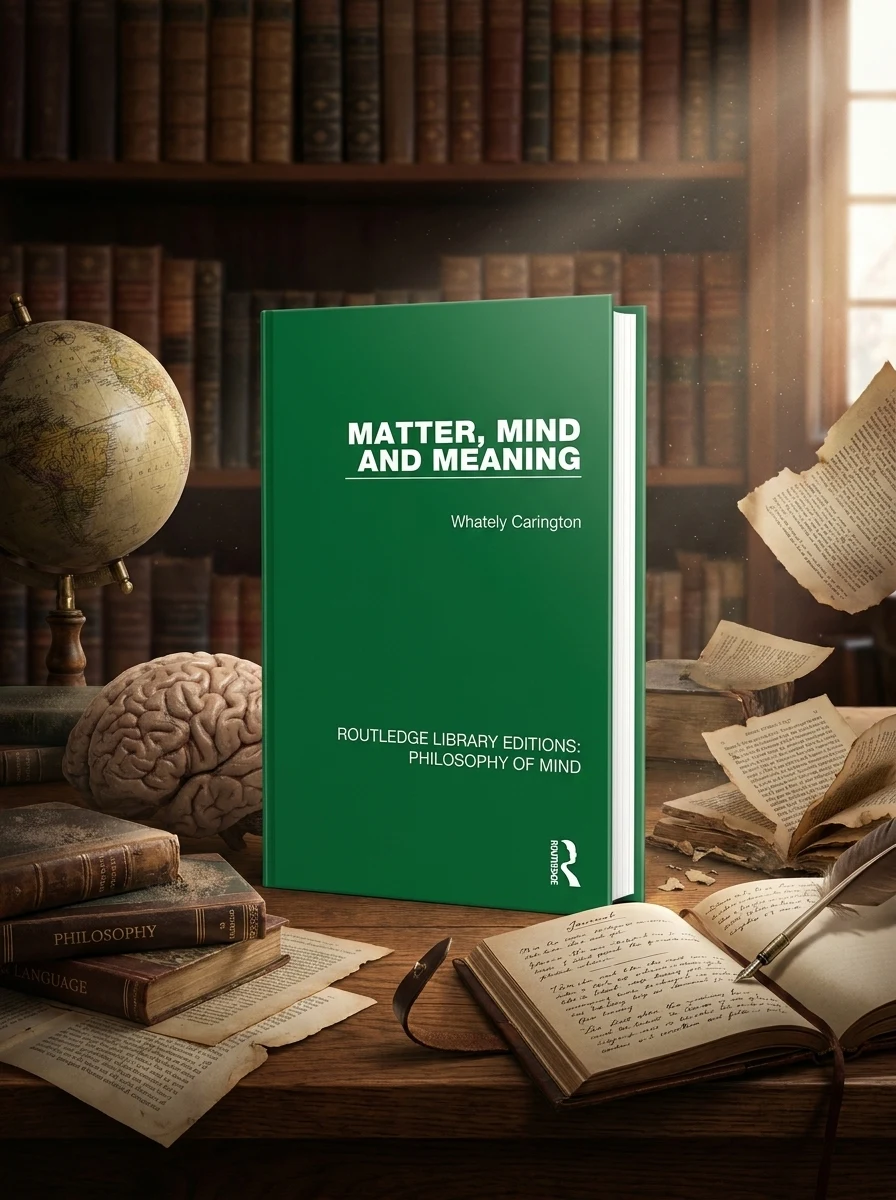
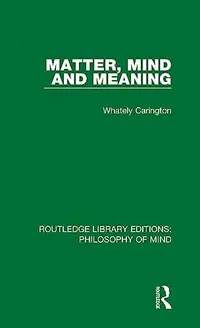
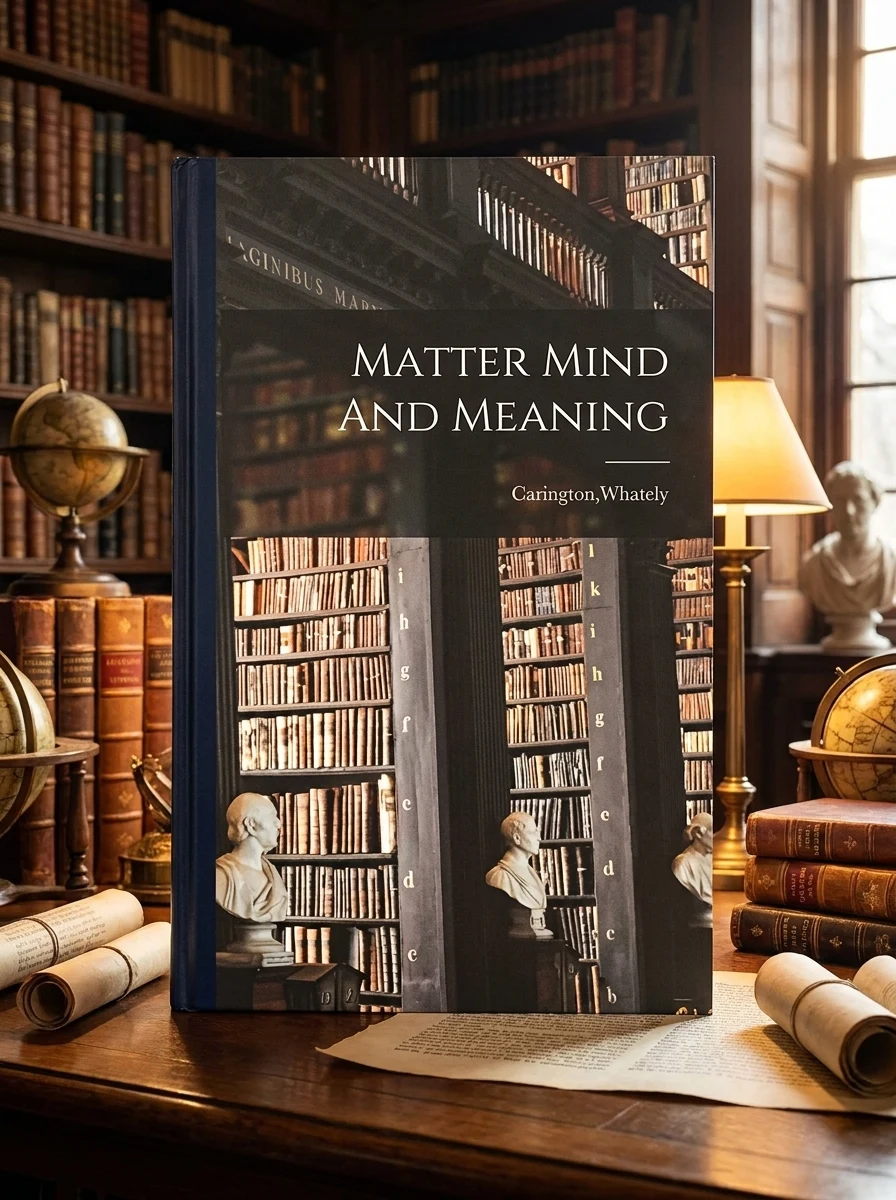
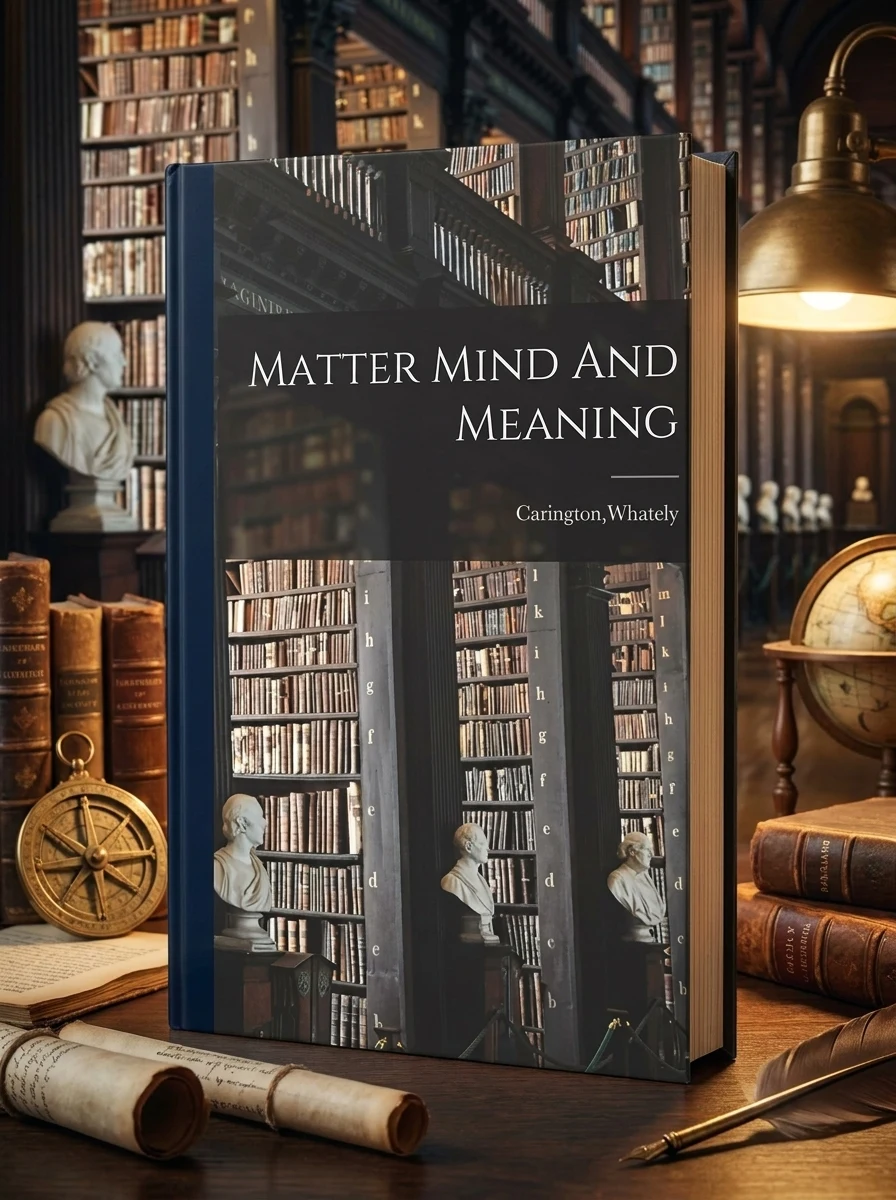
Matter, Mind and Meaning Carington, Whately
Carington, Whately 91
91
 Editorial score
How we rate
Editorial score
How we rate
Stock reported in the catalog; fulfillment is confirmed with your request.
Unravel reality's deepest mysteries by re-examining the very words we use.
Whately Carington’s profound work challenges conventional thought, positing that many enduring metaphysical conundrums surrounding mind, matter, and their interaction aren't inherent, but rather linguistic. By meticulously analyzing how language connects to direct experience, he exposes these traditional philosophical quandaries as meaningless semantic illusions. This radically empirical approach, termed Neutral Monism, seeks to provide a clear, unburdened foundation for understanding psychic phenomena and offers a remarkably lucid introduction to empiricist thought for any discerning reader.
This work emerges from the early 20th-century tradition of British empiricism and neutral monism, intersecting with the era's growing interest in parapsychology and the philosophical analysis of language. It reflects a period where occultists sought to ground psychic phenomena in rigorous empirical frameworks rather than purely mystical ones.


📝 Description: Matter, Mind and Meaning Carington, Whately
💎 Expert review
📖 Why choose it
Why this book is worth reading
Readers fascinated by the intersection of linguistics, metaphysics, and psychic phenomena will find this text indispensable. Whately Carington offers a radical yet lucid path for those tired of traditional philosophical conundrums that feel stuck in semantic loops. If you are seeking a clear, unburdened foundation for understanding how mind and matter interact through the lens of direct experience, this book provides exactly that. It appeals to the discerning reader who values rigorous empirical thought but remains open to the mysteries of the occult. By exposing metaphysical issues as linguistic illusions, Carington empowers you to see beyond conventional thought and appreciate the profound clarity of neutral monism in explaining psychic reality.
⭐ Reader reviews
Reader rating
Carington’s work is a compelling, albeit dense, exploration of how language shapes our perception of reality. It successfully demystifies enduring metaphysical conundrums by attributing them to semantic illusions rather than inherent ontological problems. However, this book does not suit readers seeking straightforward mystical guides or those uncomfortable with rigorous philosophical analysis. Those looking for practical spells or simple dogmatic beliefs will find little here. It is best reserved for the intellectually curious who enjoy dissecting the mechanics of thought and language. While its empiricist approach may feel dry to some, its contribution to clarifying psychic phenomena through neutral monism is undeniably significant for serious students of esoteric philosophy.
❓ Frequently asked questions
📖 Who should read this
For seekers of clarity in metaphysics, students of empiricism, or anyone exploring psychic phenomena from a rigorous philosophical angle. If you question fundamental assumptions about reality and language, this profound text invites you to dismantle conceptual barriers and redefine your understanding.
🎯 Key themes and symbolism
Linguistic Philosophy & Metaphysics
This work posits that many enduring philosophical puzzles concerning existence and consciousness stem not from reality itself, but from our flawed understanding of language. Carington meticulously demonstrates how clarifying the link between our words and their experiential referents can dissolve age-old metaphysical dilemmas, revealing them as semantic illusions rather than genuine quandaries.
Empiricism & Psychic Phenomena
Carington advocates for a robustly empirical framework, particularly for investigating psychical phenomena. By stripping away pre-conceived metaphysical notions, he constructs a philosophical groundwork—Neutral Monism—that allows for a more direct and unburdened exploration of mind-body interactions and psychic experiences, grounding such studies in observable reality rather than abstract speculation.
Mind-Matter Duality Debunked
At its core, the book tackles the persistent philosophical challenge of defining mind, matter, and their perplexing relationship. Carington argues that the perceived chasm between the mental and the physical is a construct of linguistic imprecision. By re-evaluating our terms, he offers a path to transcend this duality, proposing a unified, experience-based understanding.
💬 Quotes from the book
“The fog surrounding mind and matter lifts not by profound discovery, but by merely clearing our linguistic lenses.”
“When our words precisely mirror our experience, the ghosts of philosophical dilemmas vanish into thin air.”
📜 Historical context
📚 Glossary
- Neutral Monism
- Empiricism
- Psychical Research
📔 Questions to reflect on
- Consider a long-held belief you have. How might your understanding of it change if you rigorously examined the words you use to define it, and their direct experiential referents?
- Carington argues that some 'insoluble problems' are nonsensical. Can you identify a philosophical or personal dilemma where re-evaluating your language could reveal a similar illusion?
- If mind and matter are not fundamentally distinct, but rather different aspects of a 'neutral' reality, how does this shift your perspective on consciousness or psychic phenomena?
📖 From the series “Routledge Library Editions: Philosophy of Mind”
All books in the series →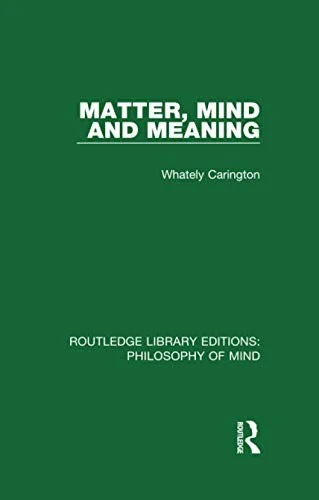
✍️ More books by this author Carington, Whately
All books by this author →

🏛 Books from this publisher Routledge
All books from this publisher →
 89
89


You might also like
See more →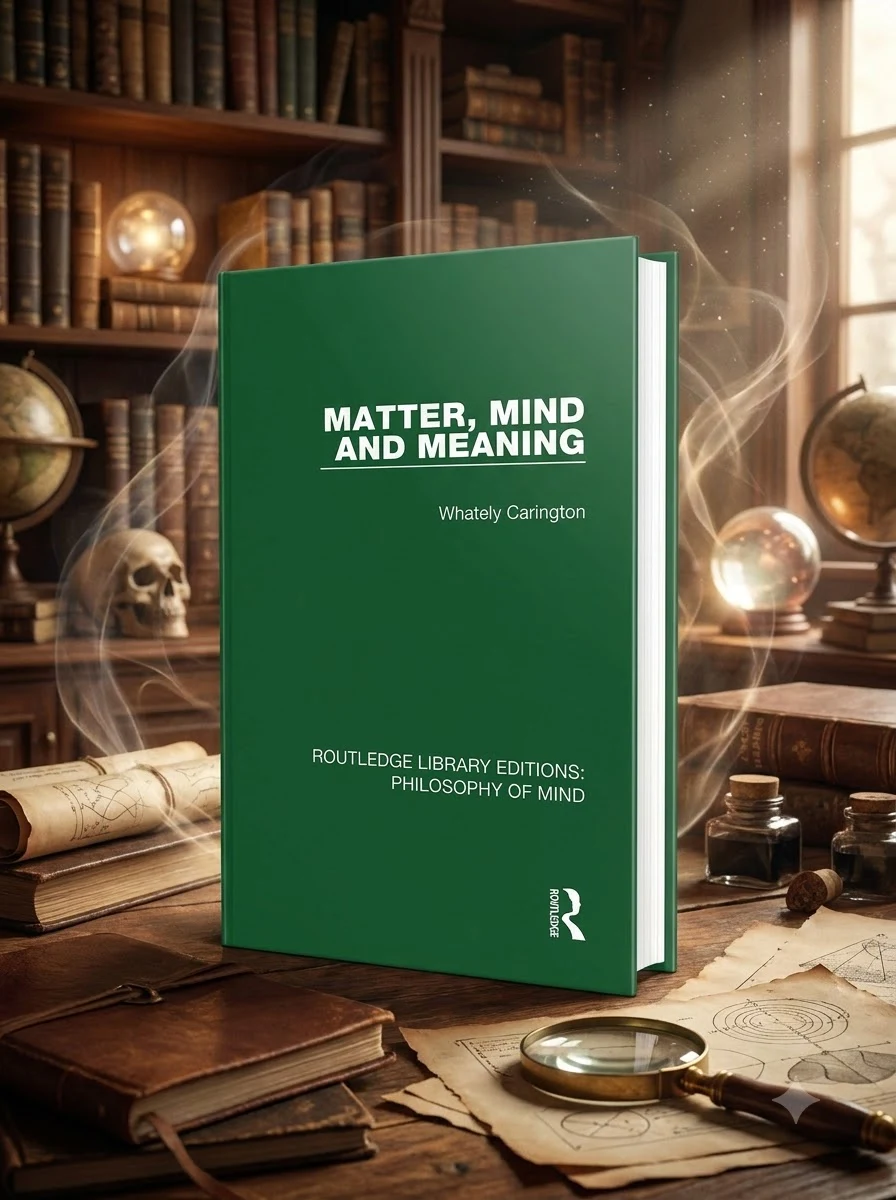
 91
91

 90
90
 90
90