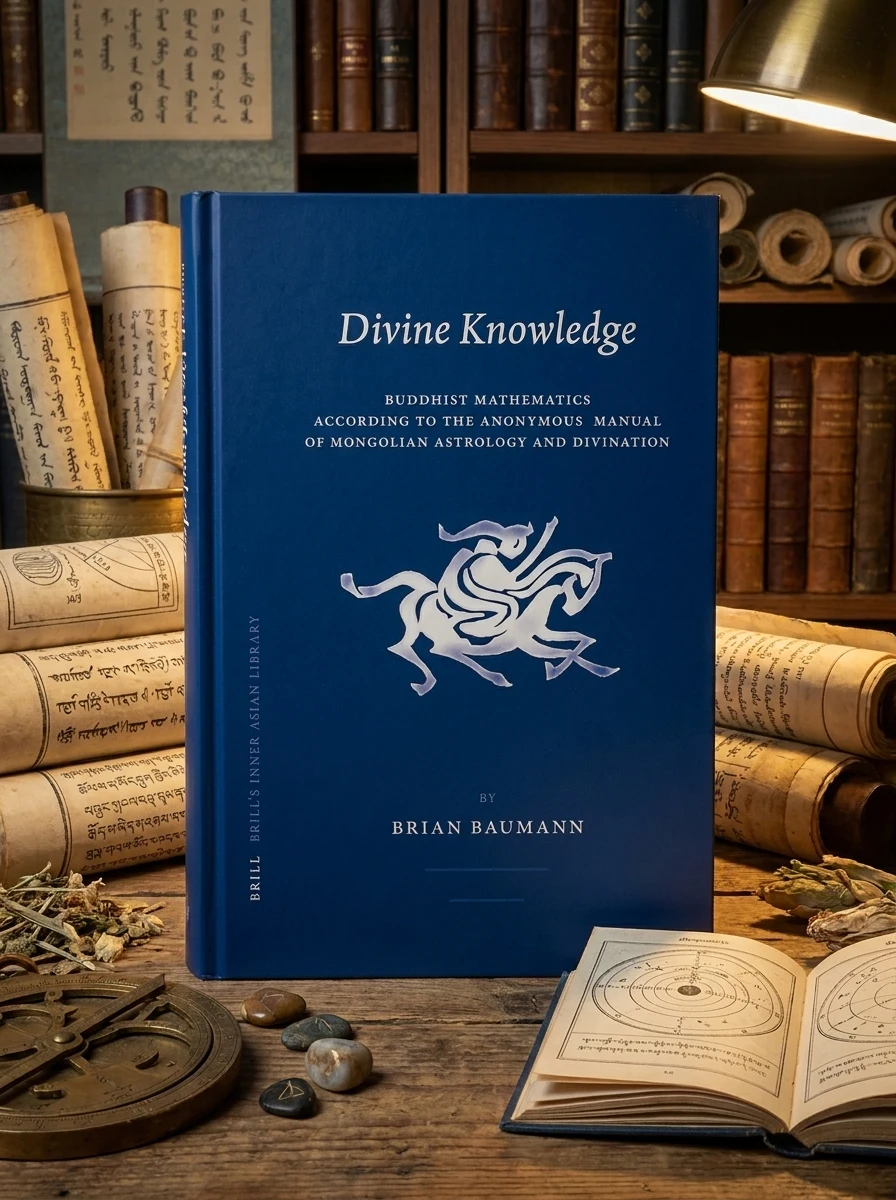
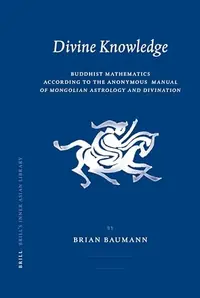
Divine Knowledge: Buddhist Mathematics According to the Anonymous Manual of Mongolian Astrology and Divination - Ingram Academic Baumann, Brian
 91
91
 Editorial score
How we rate
Editorial score
How we rate
Stock reported in the catalog; fulfillment is confirmed with your request.
Unlock ancient cosmic wisdom through the intricate mathematical keys of Mongolian divination.
Brian Baumann's 'Divine Knowledge' unveils the profound Buddhist mathematics embedded within an anonymous Mongolian astrological and divinatory manual. This comprehensive study offers a unique perspective on how ancient wisdom traditions systematized cosmic order, challenging modern, post-Enlightenment views of knowledge. It meticulously unpacks the mathematical foundations of celestial calculations and predictive arts, revealing a sophisticated system where numerical patterns serve as conduits for spiritual insight. This work illuminates a fascinating convergence of spiritual philosophy and practical divination, bridging historical understanding with contemporary thought.
This text explores the intersection of Buddhist philosophy and Mongolian astrological traditions through the lens of ancient mathematics. It situates itself within esoteric studies by examining how numerical patterns served as conduits for spiritual insight in historical divination practices.


📝 Description: Divine Knowledge: Buddhist Mathematics According to the Anonymous Manual of Mongolian Astrology and Divination - Ingram Academic Baumann, Brian
💎 Expert review
📖 Why choose it
Why this book is worth reading
Readers seeking a deep, intellectual engagement with the roots of divinatory systems will find immense value in this rigorous academic exploration. Brian Baumann invites those fascinated by the convergence of spiritual philosophy and complex mathematical structures to look beyond surface-level mysticism. This book is ideal for scholars and serious enthusiasts who wish to understand how ancient traditions systematized cosmic order through numerical patterns. It offers a refreshing challenge to post-Enlightenment views, providing a sophisticated framework for interpreting celestial calculations as tools for spiritual insight rather than mere prediction. Those eager to bridge historical understanding with contemporary esoteric thought will appreciate the meticulous unpacking of these profound mathematical keys.
⭐ Reader reviews
Reader rating
Baumann’s work is a dense, scholarly examination that demands patience and academic focus. It meticulously dissects the mathematical foundations of Mongolian divination, offering a rare glimpse into how ancient wisdom traditions operationalized cosmic order. However, this rigorous approach means it does not suit readers seeking accessible introductions to astrology or casual spiritual guides. Those expecting practical divination techniques or simplified esoteric advice will likely find the text too abstract and heavily theoretical. It is strictly for those willing to engage with complex historical analysis and philosophical implications rather than immediate occult application.
❓ Frequently asked questions
📖 Who should read this
If you are drawn to the intersections of ancient wisdom, spiritual philosophy, and mathematical thought, this book is for you. It offers a unique window into Mongolian astrological traditions and challenges conventional understandings of knowledge, perfect for seekers and scholars alike.
🎯 Key themes and symbolism
Steppe Sky-Reading
Delve into the unique methods of celestial interpretation and predictive arts found in an anonymous Mongolian manual. The text unearths the specific techniques and philosophical underpinnings of how ancient Mongolian practitioners understood fate, fortune, and the influences of the cosmos through their distinctive astrological and divinatory systems.
Rethinking Enlightenment Paradigms
Baumann's research directly confronts the limitations of post-Enlightenment thought regarding traditional knowledge systems. By presenting the logical coherence of Buddhist mathematics, the book invites readers to re-evaluate how scientific and spiritual understandings can converge, questioning the modern separation between objective reason and esoteric wisdom.
💬 Quotes from the book
“For the ancient Buddhist practitioner, a number was never merely an abstract quantity, but a vibrational key to the universe's sacred architecture.”
“The anonymous manual compels us to reconsider the very definition of 'rationality,' suggesting a coherence in traditional systems often dismissed by modern thought.”
📜 Historical context
📚 Glossary
- Buddhist Mathematics
- Mongolian Astrology
- Post-Enlightenment Problem
📔 Questions to reflect on
- How does your culture define 'mathematics'? How might that definition expand after considering 'Buddhist Mathematics'?
- Reflect on a time when you encountered a system of knowledge that challenged your preconceived notions of what is rational or scientific.
- In what ways do you believe modern society could benefit from integrating more spiritual or philosophical perspectives into its scientific pursuits?
🏛 Books from this publisher Brill
All books from this publisher →


You might also like
See more →
 85
85