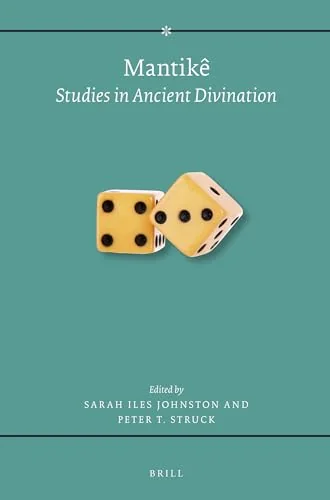
Mantikê: Studies in Ancient Divination
✍️ Sarah Iles Johnston, Peter T StruckA scholarly collection on ancient Greek, Roman, Egyptian, and Christian divination methods.
The editors bring together specialists to analyze how ancient peoples accessed future knowledge. Johnston’s prior research on encounters between the living and the dead informs the approach to necromancy. Struck’s classical training supports the examination of literary and historical sources. The work avoids modern interpretations, sticking to primary evidence from the specified periods. It covers the transition of these practices over centuries. The book is a reference for understanding the mechanics of ancient prophecy.
The volume focuses on religious practices in Greek, Roman, Egyptian, and early Christian societies. It covers the period from the Archaic era through Late Antiquity. The work is published by Brill and falls under subjects including history, folklore, mythology, and ancient religion.


📝 Description: Mantikê: Studies in Ancient Divination
💎 Expert review
📖 Why choose it
Why this book is worth reading
This book is an essential resource for serious students of esoteric history who wish to move beyond superficial tropes and engage with the rigorous academic foundations of ancient foresight. Readers will gain a profound appreciation for the diverse methodologies employed across cultures, from consulting the dead to casting lots. It offers a comprehensive overview that illuminates how humanity sought to pierce the veil of the unknown throughout antiquity. By examining both major oracle sites like Delphi and freelance diviners, it provides a nuanced view of religious practice. It is ideal for those who appreciate meticulous scholarly exploration and wish to understand the enduring mysteries of ancient divination through the lens of leading academics.
⭐ Reader reviews
Reader rating
This collection delivers a meticulous scholarly exploration of ancient divination, tracing its evolution across Greek, Roman, Egyptian, and early Christian traditions. While it excels in providing a comprehensive overview of institutionalized oracles and freelance practices, it is strictly an academic work intended for readers comfortable with dense theoretical frameworks. It does not suit casual hobbyists seeking quick tips on tarot or those looking for accessible, narrative-driven history. The text demands patience and intellectual rigor, focusing on historical analysis rather than practical application. Readers expecting a light, entertaining read will find it dry and overly technical, as it prioritizes scholarly depth over broad appeal.
❓ Frequently asked questions
📖 Who should read this
For the serious student of ancient religions, occult history, or classical studies, this volume offers unparalleled depth. If you seek to understand the intricate mechanics and cultural significance of foresight in the ancient world, prepare for a rigorous and rewarding intellectual journey.
🎯 Key themes and symbolism
Ancient Divinatory Practices
This theme explores the vast array of methods employed by ancient peoples to gain insight into the future. From the solemn rituals of necromancy to the seemingly mundane roll of dice, the book details how diverse forms of foresight were practiced. It uncovers the underlying belief systems and the practical applications of these techniques across various social strata, offering a rich tapestry of ancient magical arts.
Historical Evolution of Prophecy
Tracing the trajectory of divinatory traditions, this work charts their development from the earliest Archaic periods through the Roman Empire and into Late Antiquity. It examines how these practices adapted and transformed in response to shifting cultural, political, and religious landscapes. Readers will discover the dynamic interplay between prophecy and societal change over millennia, revealing divination's enduring relevance.
Cultural Crossroads of Fate
The book meticulously places divination within its rich cultural contexts, encompassing Greek, Roman, Egyptian, and early Christian traditions. It highlights the unique expressions of foresight within each civilization, showcasing both the universal human impulse to glimpse the future and the distinctive ways societies integrated prophecy into their spiritual and daily lives. This comparative approach reveals the intricate tapestry of ancient belief.
📜 Historical context
📚 Glossary
- Mantikê
- Necromancy
- Late Antiquity
📔 Questions to reflect on
- Reflect on a specific ancient divinatory method discussed in the book (e.g., necromancy, dice rolling). How might its practice have shaped the worldview of those who engaged with it?
- Consider the role of the 'free-lance diviner' versus the institutional 'Delphi oracle.' What does this distinction reveal about ancient society's relationship with prophecy and authority?
- Compare and contrast the ancient approaches to understanding the future with modern perspectives on foresight or prediction. What enduring human needs do both attempt to address?
📖 Read on the blog
🏛 Books from this publisher Brill
All books from this publisher →


You might also like
See more →

Have a question about this item?
Ask about the edition, condition, delivery or anything else — we reply by email or phone, usually within a day.
