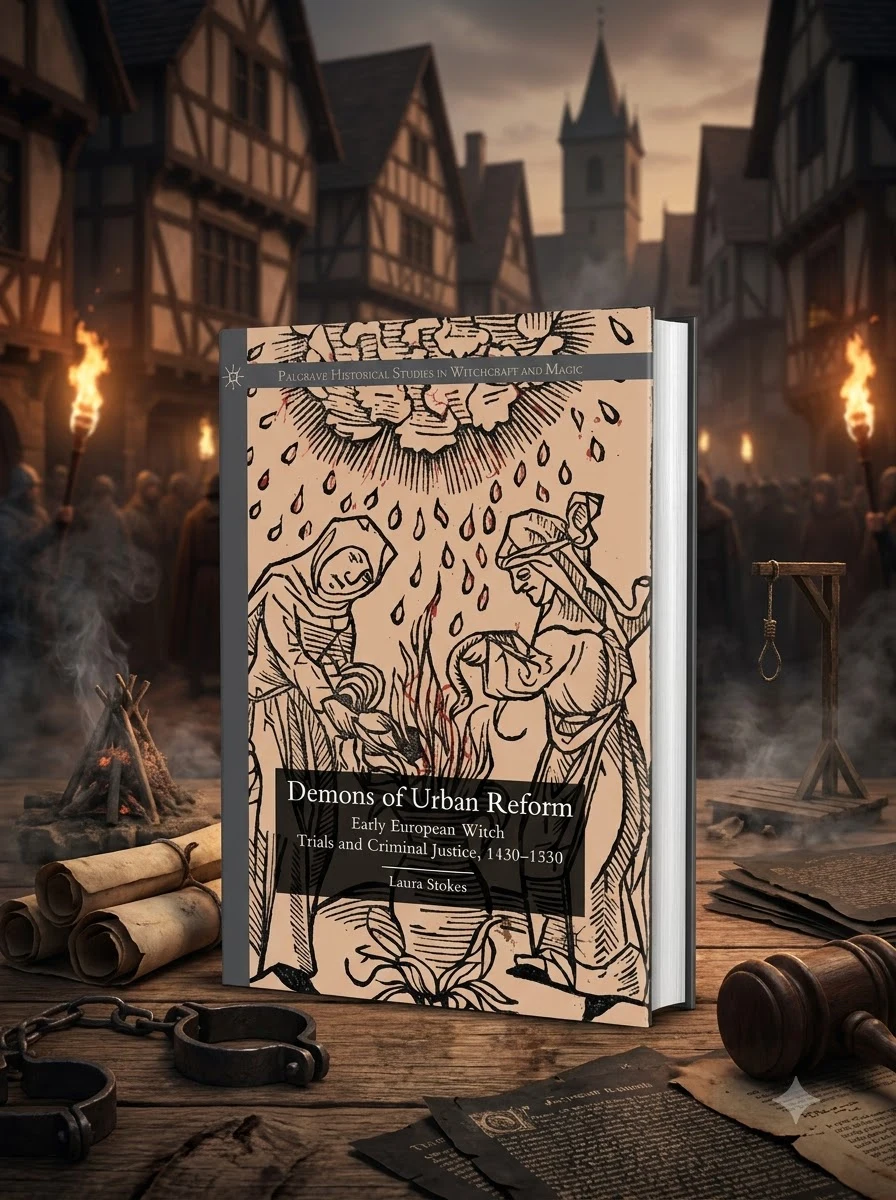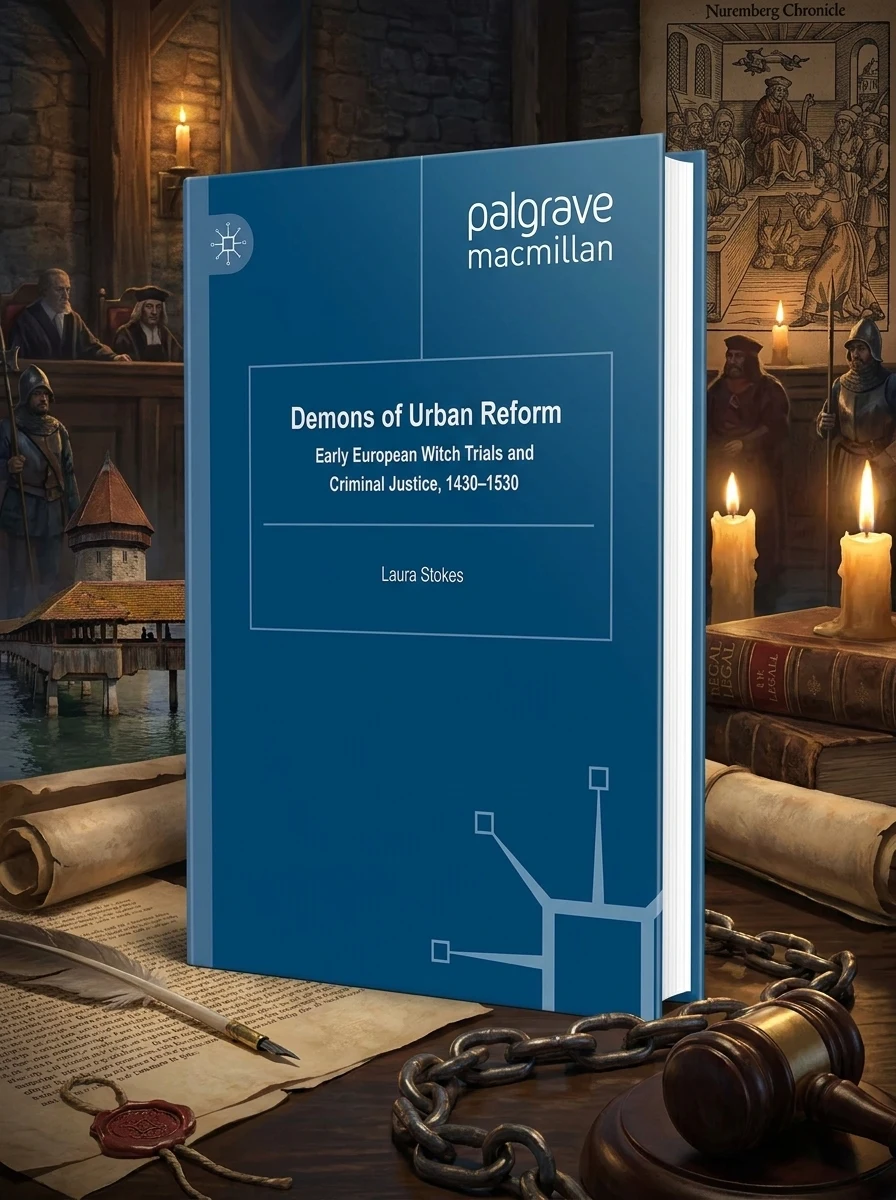
Demons of Urban Reform: Early European Witch Trials and Criminal Justice, 1430-1530 (2011) Stokes, Laura Patricia
Stokes, Laura Patricia 75
75
 Editorial score
How we rate
Editorial score
How we rate
Stock reported in the catalog; fulfillment is confirmed with your request.
Witchcraft trials were not madness, but calculated tools of urban power and legal control.
Laura Patricia Stokes dismantles the myth of the witch panic as mere mass hysteria, revealing instead a cold, calculated mechanism of state-building. Through comparative legal records from Lucerne, Nuremberg, and Basel, she demonstrates how early modern magistrates weaponized accusations of witchcraft to standardize criminal procedure. The book exposes how fear of the occult served as a flexible instrument for municipal authorities to consolidate jurisdiction, suppress dissent, and redefine social order during a period of profound political transition.
This work sits firmly within the historiography of early modern European witch trials, challenging the traditional narrative of mass hysteria by analyzing the intersection of occult beliefs and emerging state power. It contributes to the broader esoteric tradition by reframing witchcraft not as supernatural phenomenon but as a legal instrument in urban reform.


📝 Description: Demons of Urban Reform: Early European Witch Trials and Criminal Justice, 1430-1530 (2011) Stokes, Laura Patricia
💎 Expert review
📖 Why choose it
Why this book is worth reading
Scholars of legal history and early modern politics will find this text invaluable for its rigorous dismantling of the witch panic myth. Stokes offers a compelling argument that these trials were not chaotic outbursts but calculated tools used by magistrates to standardize criminal procedure and consolidate municipal jurisdiction. Readers interested in how fear was weaponized to suppress dissent and redefine social order during political transitions will appreciate the comparative analysis of Lucerne, Nuremberg, and Basel. It provides a cold, clear-eyed view of state-building that replaces sensationalism with structural understanding, making it essential for those studying the origins of modern criminal justice systems.
⭐ Reader reviews
Reader rating
Not my usual area but wanted to branch out. There's real depth here that reveals itself on a second reading. Deserves a place on any esoteric bookshelf.
Stokes delivers a dense, academically rigorous examination that prioritizes legal records over supernatural lore. While intellectually robust, this book is not suited for casual readers seeking dramatic narratives or spiritual insights into witchcraft practices. It may frustrate those expecting a focus on the victims' experiences rather than the magistrates' strategic maneuvers. The comparative approach is thorough but dry, requiring patience from anyone unaccustomed to heavy historical analysis of jurisdictional shifts. It is strictly for those interested in the mechanics of power and law, not the occult itself.
❓ Frequently asked questions
📖 Who should read this
Readers interested in the intersection of law, politics, and religion will find this rigorous study essential. It appeals to those tired of sensationalist witch narratives, preferring instead a nuanced, evidence-based look at how early modern cities used justice systems to build modern state power.
🎯 Key themes and symbolism
Legal Centralization Mechanisms
Stokes argues that witch trials functioned as experimental laboratories for new judicial systems. By prosecuting witches, city councils tested and implemented centralized interrogation methods, replacing fragmented local customs with uniform, state-sanctioned legal frameworks that prioritized confessional evidence over traditional community mediation.
Witchcraft as Political Tool
The text reveals how accusations were strategically deployed to manage urban tensions. Authorities used the demonization of witches to redirect social anxiety, silence political rivals, and enforce moral conformity, effectively using supernatural fear to maintain civil order and assert municipal dominance over chaotic social dynamics.
Comparative Urban Justice
By analyzing Lucerne, Nuremberg, and Basel, the author highlights divergent legal paths. Each city adapted witch trials to its specific political needs, showing that the intensity and nature of persecution were dictated by local administrative goals rather than a uniform religious or cultural mandate across early modern Europe.
💬 Quotes from the book
“The witch trial was a theater of power, where the boundaries of the city were drawn in blood and law.”
“Justice became a tool for order, and the witch a convenient vessel for urban anxiety.”
📜 Historical context
📚 Glossary
- Municipal Jurisdiction
- Interrogation Protocols
- Social Control
📔 Questions to reflect on
- How might modern legal systems use 'fear' to justify the expansion of state power?
- In what ways do contemporary social panics serve similar functions to historical witch hunts?
- Reflect on how the definition of 'crime' shifts to serve the needs of those in authority.
✍️ More books by this author Stokes, Laura Patricia
All books by this author →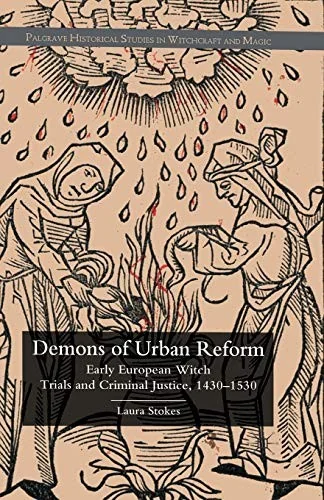
🏛 Books from this publisher Palgrave MacMillan
All books from this publisher →



You might also like
See more →