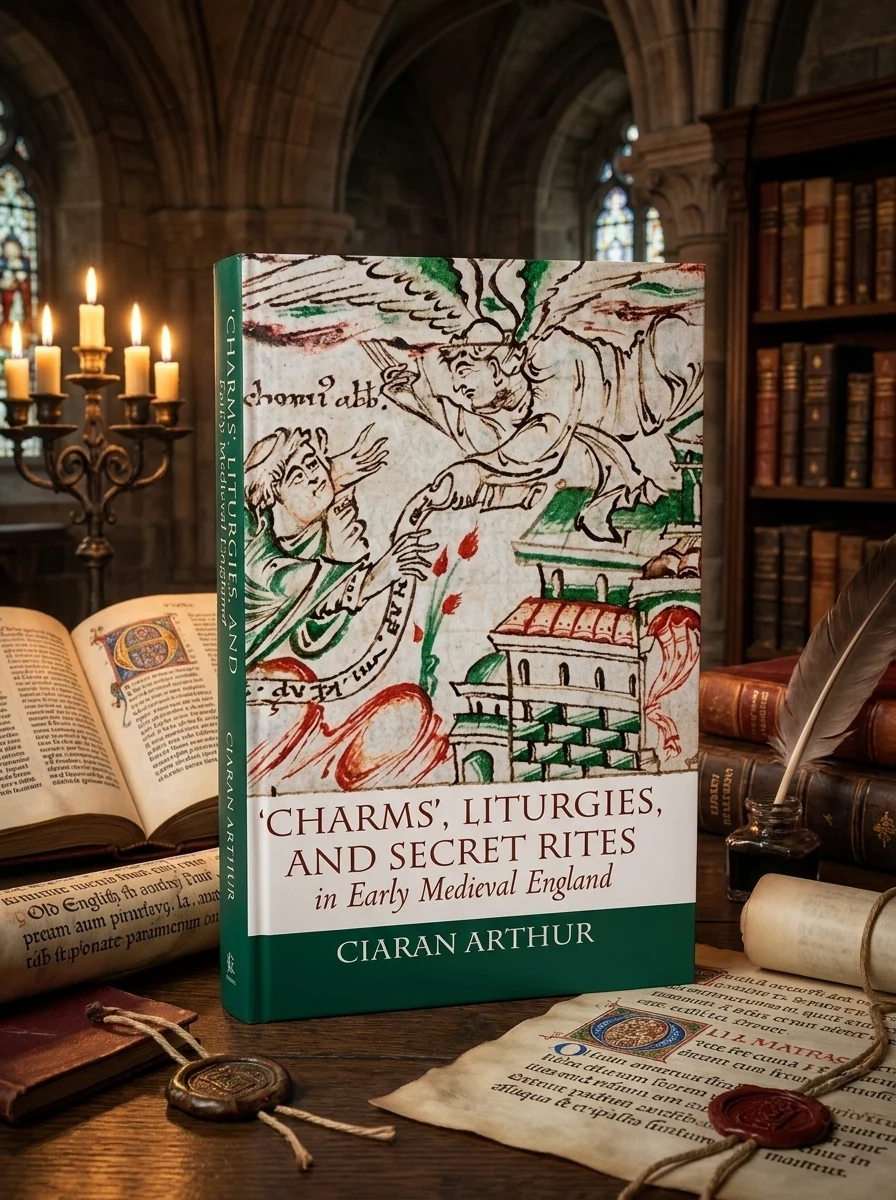
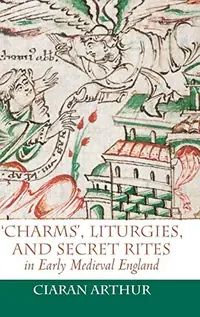
'Charms', Liturgies, and Secret Rites in Early Medieval England
 82
82
 Editorial score
How we rate
Editorial score
How we rate
Stock reported in the catalog; fulfillment is confirmed with your request.
Anglo-Saxon 'charms' weren't pagan whispers, but Christian prayers hidden in plain sight.
Ciaran Arthur's groundbreaking work redefines our understanding of early medieval English ritual texts, conventionally labeled 'charms.' He meticulously argues that these were not pagan remnants or folk magic, but rather integral, diverse forms of Christian liturgy. Drawing on extensive manuscript evidence and theological traditions, Arthur challenges the nineteenth-century notion of a clear division between Christian practice and 'magic.' Instead, he reveals how these so-called charms were perceived by their contemporary scribes and compilers as legitimate, mainstream spiritual expressions, testifying to a rich and varied landscape of early English Christianity.
This scholarly work sits at the intersection of early medieval history and Christian liturgical studies, challenging traditional boundaries between religious orthodoxy and esoteric practice in Anglo-Saxon England.


📝 Description: 'Charms', Liturgies, and Secret Rites in Early Medieval England
💎 Expert review
📖 Why choose it
Why this book is worth reading
This book is essential for scholars and enthusiasts who seek to dismantle the rigid dichotomy between 'magic' and 'religion' in early medieval thought. Ciaran Arthur invites readers into a nuanced world where Christian prayers functioned with the structural weight of charms, revealing a spiritual landscape far more complex than previously acknowledged. It appeals to those fascinated by the subtleties of manuscript culture, the evolution of liturgical expression, and the ways marginalized or overlooked texts reflect mainstream theological concerns. If you are interested in how identity, faith, and ritual power intersected in early England, this text offers a profound re-evaluation of what constituted legitimate spiritual practice for its time.
⭐ Reader reviews
Reader rating
Arthur’s argument is rigorous and transformative, successfully upending the notion that Anglo-Saxon charms were merely pagan survivals. However, this volume is not suitable for casual readers seeking accessible folklore or practical magical instruction. It demands patience with dense philological analysis and historical theology. Those looking for a narrative history or simple summaries of rituals will find the academic tone dry and impenetrable. This work is strictly for specialists and serious students of medieval studies who appreciate granular manuscript evidence over broad generalizations.
❓ Frequently asked questions
📖 Who should read this
If you're fascinated by the intersection of religion, history, and perceived 'magic,' or if you seek to challenge long-held academic assumptions, this book is for you. It offers a sophisticated reinterpretation for scholars, enthusiasts of early medieval history, and those interested in the evolution of spiritual practices.
🎯 Key themes and symbolism
Reimagining Ritual Texts
This book fundamentally re-evaluates the nature of Anglo-Saxon 'charms,' moving beyond their traditional classification as pagan or superstitious. Arthur presents a compelling case that these texts, often seen as folk magic, were deeply embedded within Christian theological frameworks. He demonstrates how early English ecclesiastics viewed and utilized them as valid, if sometimes unconventional, forms of religious observance and spiritual protection.
Christian Liturgical Practice
Arthur argues that these texts were not external to the Church but functioned as 'para-liturgical' rituals or even direct liturgical rites. By analyzing their structure, language, and context within high-status minster manuscripts, the book integrates them into the broader spectrum of early medieval Christian worship. This perspective highlights a surprising diversity in how faith was practiced and understood during this period.
Diversity of Early Christianity
The work illuminates the rich and multifaceted character of early medieval English Christianity. It challenges anachronistic modern distinctions, showing that what we now compartmentalize as 'magic' was often considered by its original practitioners to be a legitimate part of their Christian faith. This reveals a more nuanced and expansive understanding of religious expression in Anglo-Saxon England.
💬 Quotes from the book
“The persistent categorization of these Old English texts as 'charms' has, for too long, obscured their foundational identity as varied expressions of Christian liturgical practice.”
“Far from being marginal pagan remnants, these rituals demonstrate the rich, often surprising, breadth of spiritual engagement within early medieval English Christianity.”
📜 Historical context
📚 Glossary
- Anglo-Saxon Charms
- Para-liturgical
- Minster
📔 Questions to reflect on
- How does the reclassification of 'charms' as Christian rituals change your perception of early medieval religiosity and the blurred lines between 'magic' and 'religion'?
- Consider a modern-day spiritual practice that might be miscategorized if viewed through a purely historical or anachronistic lens. How might Arthur's methodology apply?
- If these texts were Christian liturgy, what does that imply about the spiritual needs and anxieties of Anglo-Saxon people, and how the Church sought to address them?
🏛 Books from this publisher Boydell Press
All books from this publisher →
You might also like
See more → 91
91
 91
91