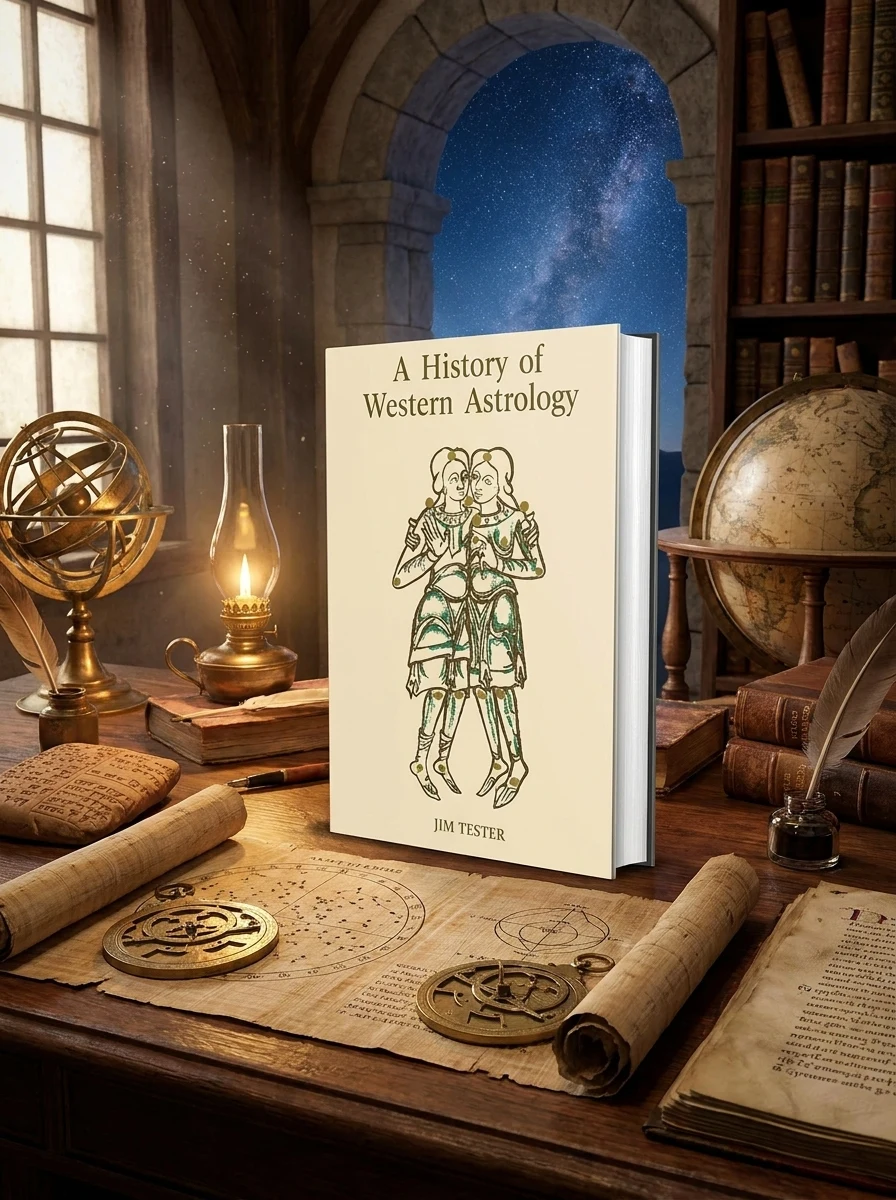
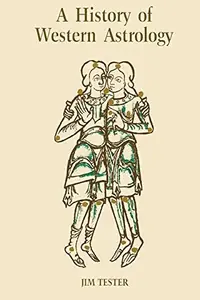
A History of Western Astrology (Revised)
Stock reported in the catalog; fulfillment is confirmed with your request.
Unravel the cosmic thread of Western astrology, from its ancient roots to its enduring influence.
Delve into the intricate lineage of Western astrology, charting its evolution from a mystical fascination with celestial patterns to a sophisticated system of cosmic interpretation. This comprehensive history begins in 5th-century BC Greece, where Eastern proto-astrological concepts were imbued with Greek philosophy, geometry, and rational thought, culminating in foundational texts like Ptolemy's *Tetrabiblos*. Discover how this ancient art traversed through Islamic scholarship and back into the European West, maintaining its core principles even through the Renaissance, until its perceived decline amidst the intellectual shifts of the Enlightenment.
This volume situates itself within the rigorous academic study of esoteric history, tracing the intellectual migration of astrological thought from ancient Greece through Islamic scholarship to the European Renaissance.


📝 Description: A History of Western Astrology (Revised)
💎 Expert review
📖 Why choose it
Why this book is worth reading
Scholars and serious practitioners will find immense value in this comprehensive narrative, which meticulously maps the intellectual journey of Western astrology. By tracing its evolution from 5th-century BC Greece through the preservation efforts of Islamic scholars back to Europe, the book offers a vital contextual framework often missing in modern interpretations. Readers seeking to understand how rational thought and geometry shaped celestial interpretation will appreciate the detailed analysis of foundational texts like Ptolemy's Tetrabiblos. It serves as an essential bridge between mystical fascination and systematic cosmic interpretation, providing clarity on how core principles survived centuries of cultural shift until their eventual decline during the Enlightenment.
⭐ Reader reviews
Reader rating
This text provides a robust academic chronicle of astrological lineage, appealing primarily to those interested in historical continuity and philosophical development. However, it is not suited for casual readers seeking practical horoscope advice or immediate divinatory techniques. The narrative focuses heavily on intellectual shifts, geometric influences, and the transition from ancient roots to Enlightenment decline, which may feel dry to those expecting esoteric mystery over historical fact. It is a scholarly resource for understanding the 'why' and 'how' of astrology's endurance rather than a guide for its application. Readers looking for mystical immersion or modern predictive methods will likely find the focus on Greek philosophy and Islamic scholarship too detached from contemporary practice.
❓ Frequently asked questions
📖 Who should read this
If you seek to understand the intellectual bedrock of Western astrology, or simply wish to trace its profound journey through philosophy, science, and culture, this book is an indispensable guide. It illuminates how our cosmic perspectives have evolved.
🎯 Key themes and symbolism
Cosmic Science & Sacred Art
Explore how the Greeks integrated mathematical plotting and rigorous philosophical inquiry with celestial observation. It wasn't merely magical thinking; it was a systematic attempt to understand and predict based on planetary positions, elevating astrology to both a respected scientific discipline and a profound interpretive spiritual practice within its historical context.
Hellenic Roots of the Stars
This volume illuminates how early Eastern celestial ideas were profoundly transformed upon reaching Greece. The infusion of Platonic and Stoic philosophy, alongside geometric principles, provided a rational and respected framework, cementing the practices that would define Western astrology for millennia, most notably codified by Ptolemy in his seminal work.
Continuity Through Eras
Trace astrology's remarkable resilience as it journeyed from the classical world through the Islamic Golden Age and its eventual European reintroduction. Despite vast cultural and intellectual shifts across centuries, its fundamental structure remained largely consistent, showcasing its deep-seated appeal before facing significant skepticism during the Enlightenment and beyond.
💬 Quotes from the book
“The unique genius of the Hellenic mind lay in its capacity to transform mere celestial omens into a coherent, geometrically structured cosmos, ripe for philosophical interpretation.”
“Even as the Age of Reason dawned, casting shadows of doubt upon ancient doctrines, astrology's deep-seated cultural resonance ensured its quiet, persistent survival in various forms.”
📜 Historical context
📚 Glossary
- Protoastrological Ideas
- Tetrabiblos
- Stoicism
📔 Questions to reflect on
- How did the integration of philosophy and geometry elevate astrology beyond simple superstition in the ancient world?
- What parallels can you draw between the historical shifts in astrological acceptance and the fortunes of other esoteric practices throughout history?
- Considering its historical journey, how do you perceive the future relevance or evolution of astrological thought in a modern, scientific society?
🏛 Books from this publisher Boydell Press
All books from this publisher →



You might also like
See more →
 91
91

 91
91


 91
91