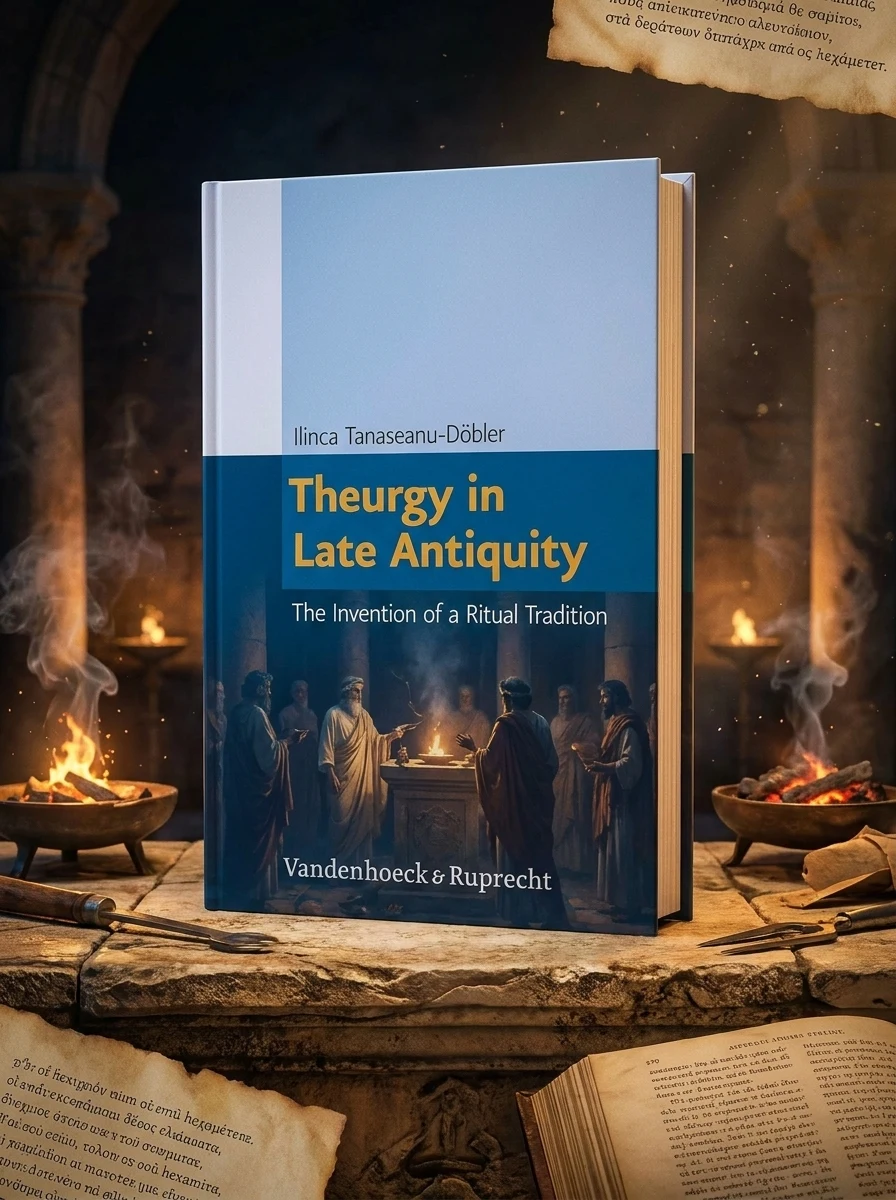
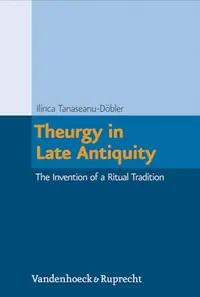
Theurgy in Late Antiquity: The Invention of a Ritual Tradition Tanaseanu-Dobler, Ilinca
 79
79
 Editorial score
How we rate
Editorial score
How we rate
This edition can be ordered. No arrival date is confirmed.
Uncover the genesis of theurgic ritual, not as ancient tradition, but as a deliberate late antique invention.
Ilinca Tanaseanu-Dobler's insightful work meticulously dissects the origins and evolution of theurgy in Late Antiquity. Rather than accepting it as a monolithic, ancient practice, she reveals how this ritual complex, often linked to the Chaldean Oracles and debated by Neoplatonists, was dynamically constructed over centuries. This study challenges conventional views, demonstrating the diverse interpretations and functions ascribed to theurgy by various authors. It presents theurgy as a "fabricated" tradition, artfully assembled from existing ritual elements, offering a unique opportunity to witness the complete lifecycle of a spiritual practice from its inception to its eventual dissolution in historical discourse.
This work situates itself within the scholarly discourse of Late Antiquity, challenging traditional narratives surrounding Neoplatonism and the Chaldean Oracles. It redefines theurgy not as an ancient continuity but as a constructed ritual tradition emerging from specific historical interactions.


📝 Description: Theurgy in Late Antiquity: The Invention of a Ritual Tradition Tanaseanu-Dobler, Ilinca
💎 Expert review
📖 Why choose it
Why this book is worth reading
Scholars and students of ancient religious history will find this volume indispensable for its rigorous deconstruction of theurgical origins. Tanaseanu-Dobler offers a fresh perspective by framing theurgy as a deliberate invention rather than a static inheritance, appealing to those interested in how spiritual practices are socially constructed. Readers fascinated by the interplay between philosophy and ritual in Late Antiquity will appreciate the detailed analysis of diverse interpretations. It is essential for anyone seeking to understand the complex lifecycle of esoteric traditions, from their inception through their eventual dissolution in historical discourse, providing a nuanced view of how meaning was assigned to ritual elements over centuries.
⭐ Reader reviews
Reader rating
Tanaseanu-Dobler’s study is a dense, academic contribution that demands patience and prior knowledge of Neoplatonic thought. It excels in tracing the genealogy of theurgical concepts but lacks narrative accessibility for casual readers. Those seeking practical magical instructions or simplified historical summaries will likely find this text dry and overly theoretical. It is strictly for those willing to engage with complex historiographical arguments about ritual fabrication. The book does not suit readers looking for a straightforward account of ancient mysticism; instead, it offers a critical dissection of how such traditions were assembled and debated by late antique authors.
❓ Frequently asked questions
📖 Who should read this
If you're a serious student or practitioner of esoteric history, especially interested in ancient ritual, Neoplatonism, or the origins of spiritual traditions, this scholarly work offers a rigorous re-examination. Prepare to challenge your preconceptions about theurgy's historical development.
🎯 Key themes and symbolism
Theurgy's Deliberate Construction
This book argues that theurgy wasn't an ancient, unbroken lineage but a consciously assembled ritual system in Late Antiquity. It examines how disparate elements were brought together, presenting a compelling case for its "artificial" rather than organic development. The author meticulously traces this process, revealing the intellectual labor behind its creation, and how it was claimed as sui generis.
Neoplatonic Interpretations
Explore the fervent philosophical discussions among Neoplatonists regarding theurgy's purpose and efficacy. The book highlights how these thinkers grappled with its relevance to spiritual salvation and the ultimate goals of philosophy, offering varied perspectives that shaped its understanding and practice within their schools of thought, often debating its very legitimacy.
Diverse Theurgic Practices
Moving beyond a unified vision, Tanaseanu-Dobler showcases the significant variations in what was considered "theurgic" across different late antique sources. This reveals a dynamic landscape where individual authors adapted and redefined these rituals, demonstrating that theurgy was far from a static, coherent tradition, but rather a flexible concept evolving with each interpreter.
💬 Quotes from the book
“Theurgy, as understood in its diverse late antique manifestations, was less a rediscovery of ancient mysteries and more a profound act of intellectual and ritual synthesis.”
“To impose a singular, coherent definition upon 'theurgy' across centuries of discourse is to miss the vibrant, often contradictory, ways practitioners and philosophers shaped its meaning.”
📜 Historical context
📚 Glossary
- Theurgy
- Neoplatonism
- Chaldean Oracles
📔 Questions to reflect on
- How does understanding the "invented" nature of a spiritual tradition like theurgy change your perception of its historical validity or efficacy?
- Consider a modern esoteric practice you know. To what extent might it also be a synthesis of older elements, rather than a purely ancient lineage, and what does this imply?
- In what ways do philosophical debates, like those among the Neoplatonists regarding theurgy, shape the practical application and perceived meaning of ritual for practitioners?
🏛 Books from this publisher Vandenhoeck & Ruprecht
All books from this publisher →

You might also like
See more → 91
91
 91
91