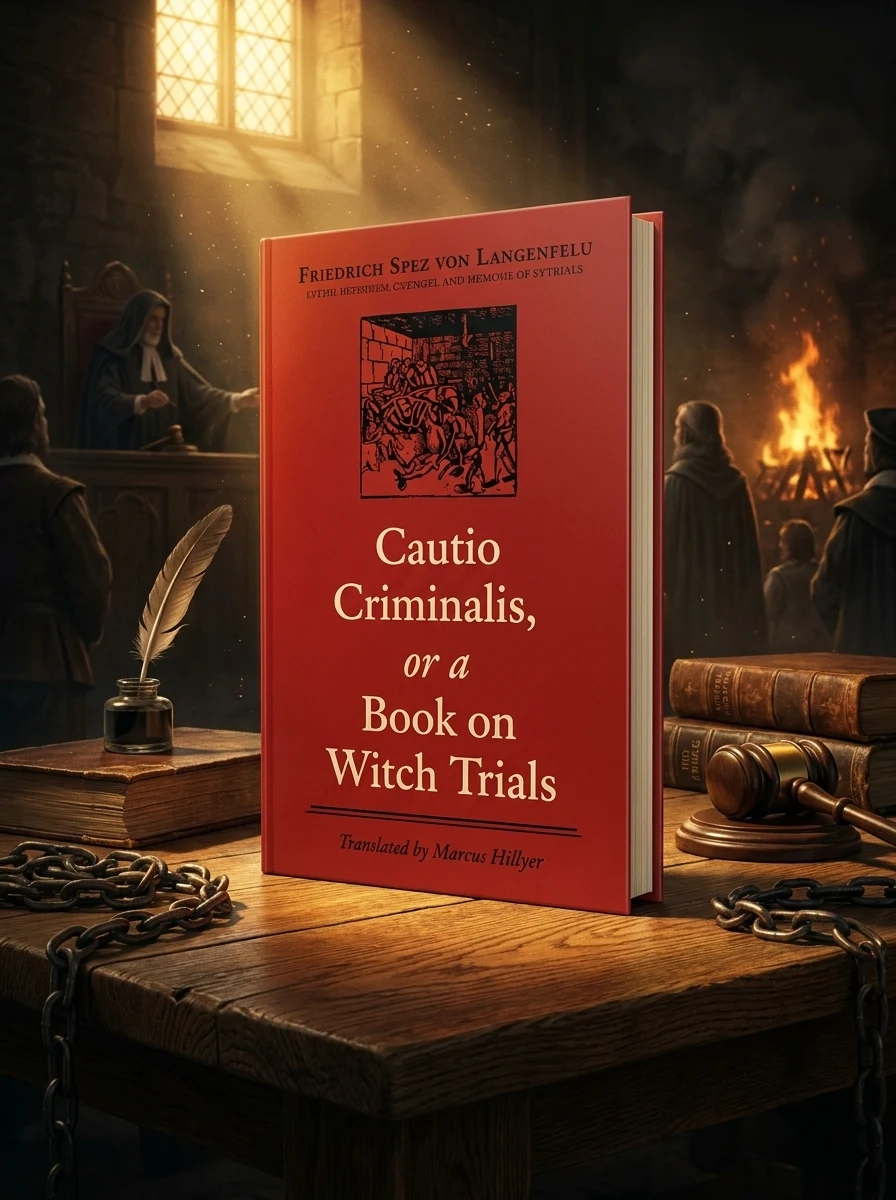
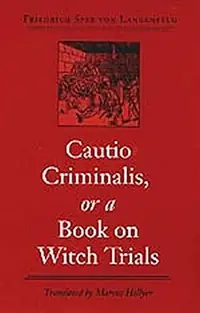
Cautio Criminalis, or a Book on Witch Trials Spee, Friedrich
Stock reported in the catalog; fulfillment is confirmed with your request.
Unmasking the dark logic of witch trials, a Jesuit's cry for justice echoes through history.
Friedrich Spee's groundbreaking 1631 work, "Cautio Criminalis," emerges from the heart of Europe's brutal witch hunts. As a Jesuit priest who witnessed the suffering of accused women firsthand, Spee courageously exposed the deeply flawed and cruel methods of his era's legal system. His relentless logical arguments dismantled the persecutors' justifications, revealing how torture inevitably led to false confessions and the denunciation of innocents. This vital text not only challenged the prevailing hysteria but also championed fundamental human rights, even for those condemned by society, driven by a profound sense of Christian compassion.
This text stands as a pivotal intervention in the history of European witchcraft persecutions, emerging directly from the intense religious and legal turmoil of the early seventeenth century. It represents a rare internal critique within the Jesuit order, challenging the prevailing hysteria that defined its era.


📝 Description: Cautio Criminalis, or a Book on Witch Trials Spee, Friedrich
💎 Expert review
📖 Why choose it
Why this book is worth reading
Readers interested in the intersection of theology, law, and human rights will find profound value in this work. It offers a unique window into the moral courage required to challenge systemic injustice during Europe's brutal witch hunts. Those who appreciate historical accounts that dismantle legal cruelty through logical argumentation will gain insight into how Christian compassion can serve as a powerful force for justice. The book is essential for understanding how one individual's witness can unmask the dark logic of state-sanctioned violence, providing a timeless lesson on the importance of protecting the accused even when society demands their condemnation.
⭐ Reader reviews
Reader rating
This volume is a serious historical document that demands patience and intellectual engagement from its audience. It is not suitable for readers seeking narrative thrillers or simplified summaries of witchcraft history; those preferring dramatic storytelling may find its logical dissection dry. Additionally, individuals with little interest in Jesuit theology or early modern legal systems might struggle to connect with the text's specific arguments. However, for scholars and serious enthusiasts of esoteric history who value rigorous analysis over entertainment, this work provides an indispensable, candid look at the mechanisms of persecution and the birth of modern human rights concepts within a religious framework.
❓ Frequently asked questions
📖 Who should read this
If you are drawn to the history of human rights, legal philosophy, or the dark chapters of European history, this book offers a profound and challenging perspective. It's essential reading for anyone seeking to understand the power of reason against mass hysteria and injustice.
🎯 Key themes and symbolism
Critique of Legal Injustice
Spee meticulously dissects the judicial processes of the witch trials, exposing their inherent contradictions and systemic unfairness. He argues that the procedures were designed to ensure guilt, making it impossible for an accused person to prove their innocence, thereby undermining the very concept of justice and due process in the eyes of the law.
Truth and Torture
This book powerfully demonstrates how torture, a common practice at the time, produced unreliable confessions and endless accusations. Spee questions the validity of testimony extracted under duress, highlighting that such methods coerce individuals into admitting to crimes they did not commit, thus perpetuating a cycle of unfounded persecution and suffering.
Advocacy for Human Rights
Driven by Christian charity, Spee insists that all individuals, regardless of the severity of their alleged crimes, possess fundamental rights. He advocates for humane treatment and fair legal standards, emphasizing that even those accused of consorting with evil are still entitled to a just hearing and protection from cruel, unfounded prosecution.
💬 Quotes from the book
“When the accused, under agony, names others, does this reveal truth or merely amplify the tormentor's cruel intent?”
“If an innocent cannot prove innocence, and every defense is twisted into further proof of guilt, then justice has abandoned its seat.”
📜 Historical context
📚 Glossary
- Cautio Criminalis
- Witch Trials
- Jesuit
📔 Questions to reflect on
- Reflect on how Spee's arguments against torture and false confession resonate with contemporary discussions about justice and human rights. What parallels can you draw?
- Consider the role of 'Christian charity' as Spee understood it. How did this theological concept compel him to challenge the brutal practices of his time, and how might it inform ethical action today?
- Spee published his work anonymously at first. What does this tell us about the risks involved in speaking truth to power, then and now?
📖 From the series “Studies in Early Modern German History”
All books in the series →

🏛 Books from this publisher University of Virginia Press
All books from this publisher →

You might also like
See more →


 91
91
 91
91