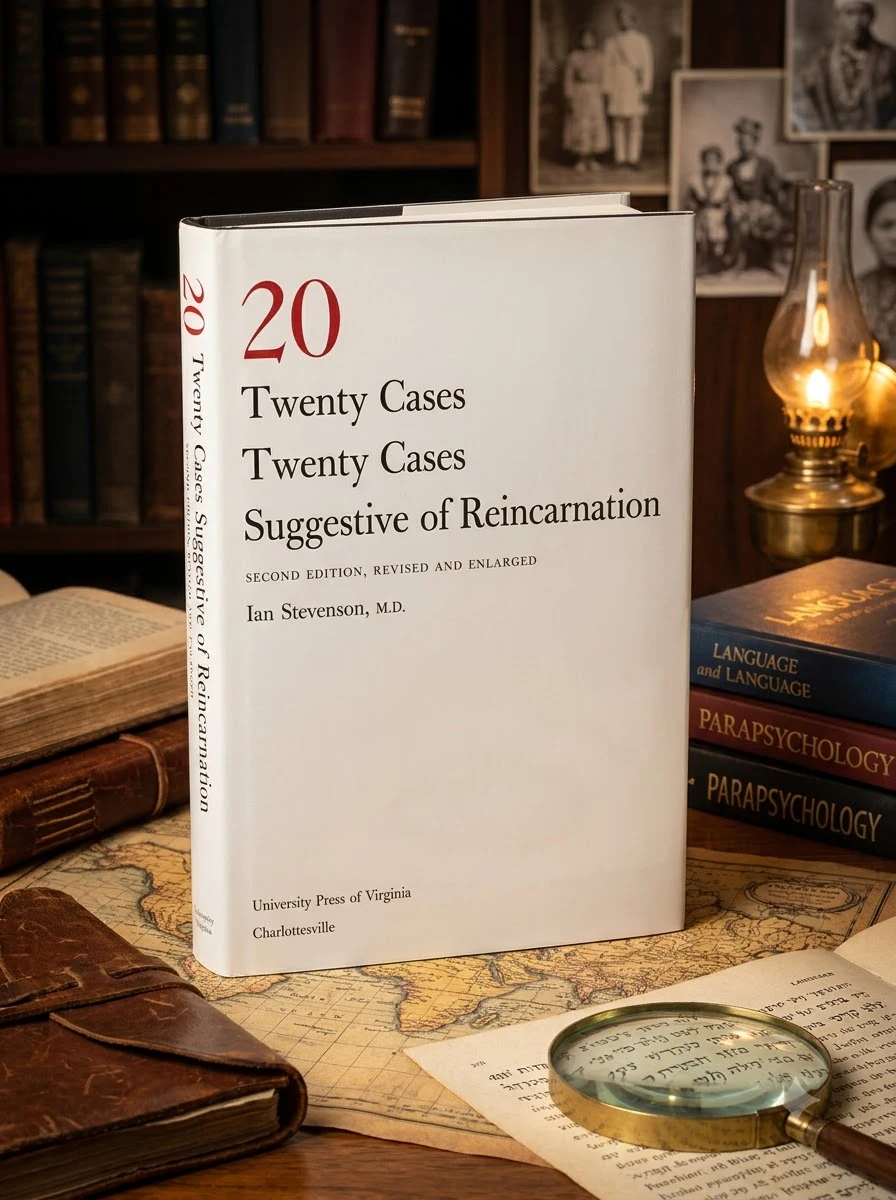
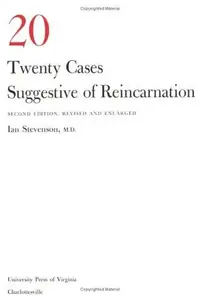
Twenty Cases Suggestive of Reincarnation (Rev and Enl)
Stevenson, IanStock reported in the catalog; fulfillment is confirmed with your request.
Xenoglossy cases defy logic, hinting at souls who speak tongues they never learned.
Dr. Ian Stevenson presents rigorous documentation of responsive xenoglossy, where individuals suddenly articulate languages without prior study. These rare, authenticated instances challenge materialist views of consciousness. By analyzing the linguistic competence and contextual accuracy of these utterances, Stevenson argues that such phenomena provide compelling evidence for the survival of personality beyond physical death. This work invites readers to reconsider the boundaries of the mind and the potential continuity of identity in the afterlife.
This text belongs to the rigorous parapsychological tradition of investigating reincarnation and consciousness survival, bridging academic inquiry with esoteric philosophy. It serves as a foundational case study for those exploring the boundaries between scientific documentation and metaphysical belief.


📝 Description: Twenty Cases Suggestive of Reincarnation (Rev and Enl)
💎 Expert review
📖 Why choose it
Why this book is worth reading
This book is essential for the intellectually curious skeptic who demands evidence before accepting metaphysical claims. Readers interested in the intersection of psychology, linguistics, and spiritual continuity will find value in Stevenson’s methodical approach to xenoglossy cases. It appeals to those seeking to understand how personality might persist beyond death through documented, responsive linguistic phenomena. The work offers a structured examination of consciousness that challenges materialist views without resorting to blind faith, making it ideal for scholars and open-minded seekers alike who wish to explore the potential continuity of identity in the afterlife through authenticated instances.
⭐ Reader reviews
Reader rating
I collect works on this subject and this is a worthy addition. I found myself reading passages aloud just to sit with them. The font runs small in the appendices. Recommended with reservations.
Stevenson’s documentation is undeniably thorough, yet this volume is not for readers seeking mystical inspiration or easy answers. It requires patience for detailed case analysis and linguistic scrutiny rather than narrative flair. Those expecting a spiritual guidebook will find it dry and overly academic. However, for those willing to engage with rigorous parapsychological evidence, it provides a compelling argument against strict materialism. The focus on xenoglossy offers unique insights into consciousness, but the lack of emotional resonance may alienate casual readers. It is best suited for those prepared to evaluate data over dogma.
❓ Frequently asked questions
📖 Who should read this
Seekers of evidence for life after death, parapsychology students, and skeptics open to rigorous scientific inquiry into consciousness. Those interested in linguistics, the nature of identity, and the intersection of psychology and the occult will find this study particularly provocative.
🎯 Key themes and symbolism
Linguistic Survival
The text examines how specific, unlearned languages emerge from subjects with no educational background in them. Stevenson details the grammatical accuracy and cultural nuance of these spontaneous utterances, suggesting they originate from a distinct consciousness rather than subconscious memory or fraud.
Personality Continuity
Stevenson treats these cases as proof that the human psyche does not vanish at death. The ability to access complex linguistic structures implies that the personality retains its acquired knowledge and skills, persisting as a coherent entity that can inhabit new biological forms or states of being.
Empirical Anomaly
The author approaches the subject with scientific detachment, filtering out supernatural speculation to focus on observable facts. By meticulously cross-referencing claims with historical records, Stevenson establishes a methodological framework for studying psychic phenomena, treating xenoglossy not as magic, but as a documented psychological anomaly.
💬 Quotes from the book
“Claims of speaking unlearned languages are rare and rarely supported by careful examination.”
“These cases suggest another personality had learned the language.”
📜 Historical context
📚 Glossary
- Responsive Xenoglossy
- Parapsychology
- Materialism
📔 Questions to reflect on
- If your consciousness survived, what knowledge or skills might you still possess?
- How would you distinguish between a subconscious memory and a voice from another life?
- What role does language play in defining the boundaries of the self?
✍️ More books by this author Stevenson, Ian
All books by this author →
🏛 Books from this publisher University of Virginia Press
All books from this publisher →





You might also like
See more →


 91
91