
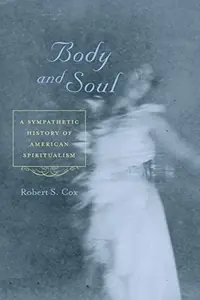
Body and Soul: A Sympathetic History of American Spiritualism
Stock reported in the catalog; fulfillment is confirmed with your request.
Unearth how spirit communication reshaped 19th-century American society and identity.
In "Body and Soul," Robert Cox unveils the profound societal impact of American Spiritualism, an explosive religious movement born from the fervent climate of the Second Great Awakening. He reveals how Spiritualism, far from being mere parlor tricks, offered a radical vision for social cohesion. By promoting "sympathetic bonds" between individuals, both living and deceased, it sought to mend a fragmented nation, seeing phenomena like séances and spirit photography as vital tools for transcending societal divides and even the ultimate boundary of death.
This work situates American Spiritualism within the fervent religious climate of the Second Great Awakening, exploring its role as a significant social and cultural movement in nineteenth-century America. It examines how this phenomenon emerged not merely as entertainment but as a serious attempt to address national fragmentation through spiritual connection.


📝 Description: Body and Soul: A Sympathetic History of American Spiritualism
💎 Expert review
📖 Why choose it
Why this book is worth reading
Scholars of American religious history and sociology will find this text invaluable for understanding how Spiritualism functioned as a mechanism for social cohesion during a turbulent era. Readers interested in the intersection of faith, identity, and national unity will appreciate Cox’s nuanced argument that spirit communication was not mere frivolity but a profound response to societal fractures. By viewing séances and spirit photography as tools for transcending divides, including death itself, this book offers a sympathetic lens on a movement often misunderstood. It is essential for those seeking to grasp how the living and deceased were linked in the public imagination, reshaping American identity through the promise of sympathetic bonds that healed a fragmented nation.
⭐ Reader reviews
Reader rating
Cox provides a compelling historical analysis that challenges dismissive views of Spiritualism as simple parlor tricks. However, this academic approach may feel dense to casual readers seeking sensational ghost stories or immediate practical guidance on mediumship. Those expecting a narrative-driven biography or theological defense might find the focus on societal impact and 'sympathetic bonds' somewhat dry. The book is best suited for historians and sociologists analyzing the Second Great Awakening’s aftermath rather than practitioners looking for esoteric techniques. It is a rigorous examination of cultural identity, not a guide to the supernatural.
❓ Frequently asked questions
📖 Who should read this
If you're fascinated by the intersection of religion, social history, and the esoteric in 19th-century America, this book is essential. It offers a fresh perspective on how spiritual beliefs actively shaped cultural and political landscapes, challenging conventional understandings of historical spiritual movements.
🎯 Key themes and symbolism
Spiritualism's Social Genesis
Cox masterfully traces Spiritualism's origins to the intense religious and social ferment of the mid-19th century. This book illustrates how the movement emerged as a powerful response to a perceived societal atomization, offering a collective identity through shared mystical experiences and communal belief.
The Nexus of Sympathy
At its heart, Spiritualism aimed to operationalize sympathy, transforming it into a practical social force. Cox argues that the belief in interconnectedness, extending even to the dead, was central to fostering a new, integrated community and healing a divided body politic through shared emotional and spiritual experiences.
Reform and Radicalism
The book highlights how Spiritualism's unique "social physiology"—integrating mind, body, and society—propelled its adherents into various earthly reform movements. It explores the diverse, often progressive, stances Spiritualists took on crucial issues like women's rights and the abolition of slavery during their era.
💬 Quotes from the book
“Beyond mere contact with the departed, Spiritualism forged a revolutionary social fabric, binding individuals in a shared affective landscape.”
“The convergence of occult phenomena, physiological understanding, and societal anxieties formed the fertile ground for Spiritualism's unique worldview.”
📜 Historical context
📚 Glossary
- Second Great Awakening
- Sympathetic Bonds
- Social Physiology
📔 Questions to reflect on
- Consider how contemporary spiritual or philosophical movements might be seen as responses to modern societal fragmentation, similar to Spiritualism's role in the 19th century.
- Reflect on the concept of "sympathetic bonds" extending beyond death. How might such a belief influence an individual's sense of social responsibility or connection to history?
- How does the book's framing of Spiritualism as a force for social reform challenge or reinforce your previous understanding of esoteric practices?
🏛 Books from this publisher University of Virginia Press
All books from this publisher →




You might also like
See more →
 91
91