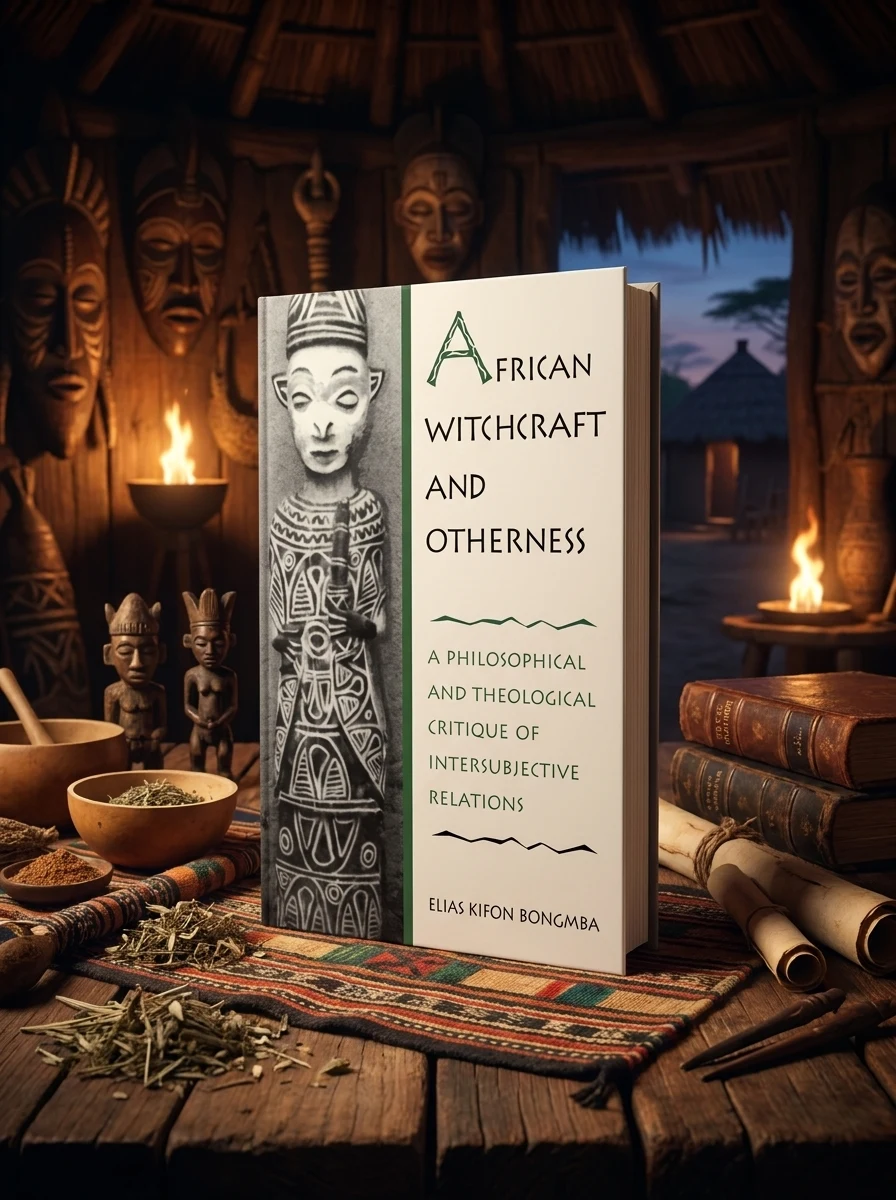
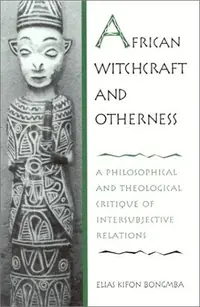
African Witchcraft and Otherness: A Philosophical and Theological Critique of Intersubjective Relations
Bongmba, Elias Kifon

This edition can be ordered. No arrival date is confirmed.
Unravel the intricate ethics of African witchcraft through a unique philosophical lens.
Elias Bongmba offers a groundbreaking philosophical and theological exploration of 'tfu,' the concept of witchcraft among Cameroon's Wimbum people. Employing Emmanuel Levinas's philosophy, particularly his ideas on the 'Other,' Bongmba meticulously analyzes the nature of intersubjective relations. His 'critical contextualism' allows for a deep dive into cultural perspectives without imposing external judgments, revealing how powerful practices can be both beneficial and tragically abused, ultimately critiquing the totalizing impulses that lead to harm.
This work sits at the intersection of contemporary African philosophy and Western theological critique, specifically engaging with post-colonial discourse and phenomenological ethics. It bridges indigenous Cameroonian concepts of witchcraft with modern continental philosophy.


📝 Description: African Witchcraft and Otherness: A Philosophical and Theological Critique of Intersubjective Relations
💎 Expert review
📖 Why choose it
Why this book is worth reading
Readers deeply interested in the philosophical underpinnings of African cosmologies will find this text invaluable. It offers a rare, nuanced exploration of 'tfu' among the Wimbum people, moving beyond superficial exoticism to examine complex intersubjective relations. Those seeking to understand how ethical frameworks can be constructed within specific cultural contexts without imposing external judgments will appreciate Bongmba’s critical contextualism. It is essential for scholars and enthusiasts who wish to grasp the dual nature of witchcraft practices as both beneficial community mechanisms and potential sources of harm, all while engaging with rigorous theological critique.
⭐ Reader reviews
Reader rating
This monograph demands serious academic engagement from its audience. While Bongmba’s application of Levinasian ethics to African witchcraft is intellectually stimulating, it is not suited for casual readers or those seeking practical Wiccan guides. The dense theoretical framework and focus on Cameroon’s Wimbum people may alienate generalists looking for broad overviews. It is strictly for those comfortable with heavy philosophical jargon and theological analysis. Readers preferring accessible narratives or hands-on ritual instruction will likely find this work too abstract and detached from immediate practice, serving instead as a specialized critique of totalizing impulses in cultural interpretation.
❓ Frequently asked questions
📖 Who should read this
If you're drawn to the ethical dimensions of spiritual practices, cross-cultural philosophy, or critical theory, this book is essential. It's for those eager to engage with complex African thought systems through a rigorous philosophical framework, offering profound insights into human interaction.
🎯 Key themes and symbolism
African Witchcraft Explored
Bongmba delves into the nuanced understanding of 'tfu' within the Wimbum culture, illustrating that this power is not simply evil. He distinguishes various categories, demonstrating that while 'tfu' can be a force for good, it also carries the potential for significant misuse and manipulation, challenging simplistic Western interpretations of witchcraft.
Levinasian Ethics Applied
The book brilliantly applies Emmanuel Levinas's philosophy of the 'Other' to African spiritual concepts. This framework provides a robust ethical lens to examine how individuals relate to one another and to powerful forces. Bongmba uses Levinas's insights to critique interactions where the 'Other' is not fully acknowledged, leading to exploitation and totalization.
Critique of Power Abuse
Central to Bongmba's argument is an ethical critique of how power, whether 'tfu' or any other form, can be abused. Drawing on Levinas, he identifies negative uses of power as a 'totalizing praxis' — an act that reduces the 'Other' to an object. The work calls for an ethical recognition of alterity to prevent such destructive outcomes.
💬 Quotes from the book
“The power known as 'tfu' among the Wimbum is not a monolithic force of malevolence but a complex energy, capable of both profound healing and destructive manipulation, reflecting the inherent duality within human agency itself.”
“True ethical encounter demands a recognition of the Other's irreducible uniqueness, resisting any attempt to reduce their being to our own categories, for in such totalization lies the genesis of profound injustice and spiritual violence.”
📜 Historical context
📚 Glossary
- Tfu
- Intersubjective Relations
- Totalizing Praxis
📔 Questions to reflect on
- How might understanding 'tfu' as a dual-natured power challenge your preconceived notions about 'witchcraft' or spiritual forces?
- Reflect on a situation where you might have inadvertently engaged in a 'totalizing praxis.' How did this impact the 'Other,' and what could have been done differently?
- In what ways can a philosophical framework (like Levinas's) help us interpret and ethically engage with diverse cultural spiritual practices without dismissing or exoticizing them?
✍️ More books by this author Bongmba, Elias Kifon
All books by this author →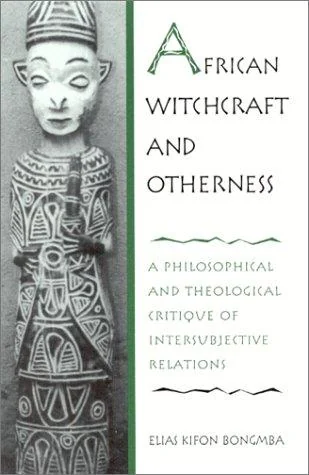
🏛 Books from this publisher State University of New York Press
All books from this publisher →
You might also like
See more →