US shipping Secure card payment Occult and esoteric books

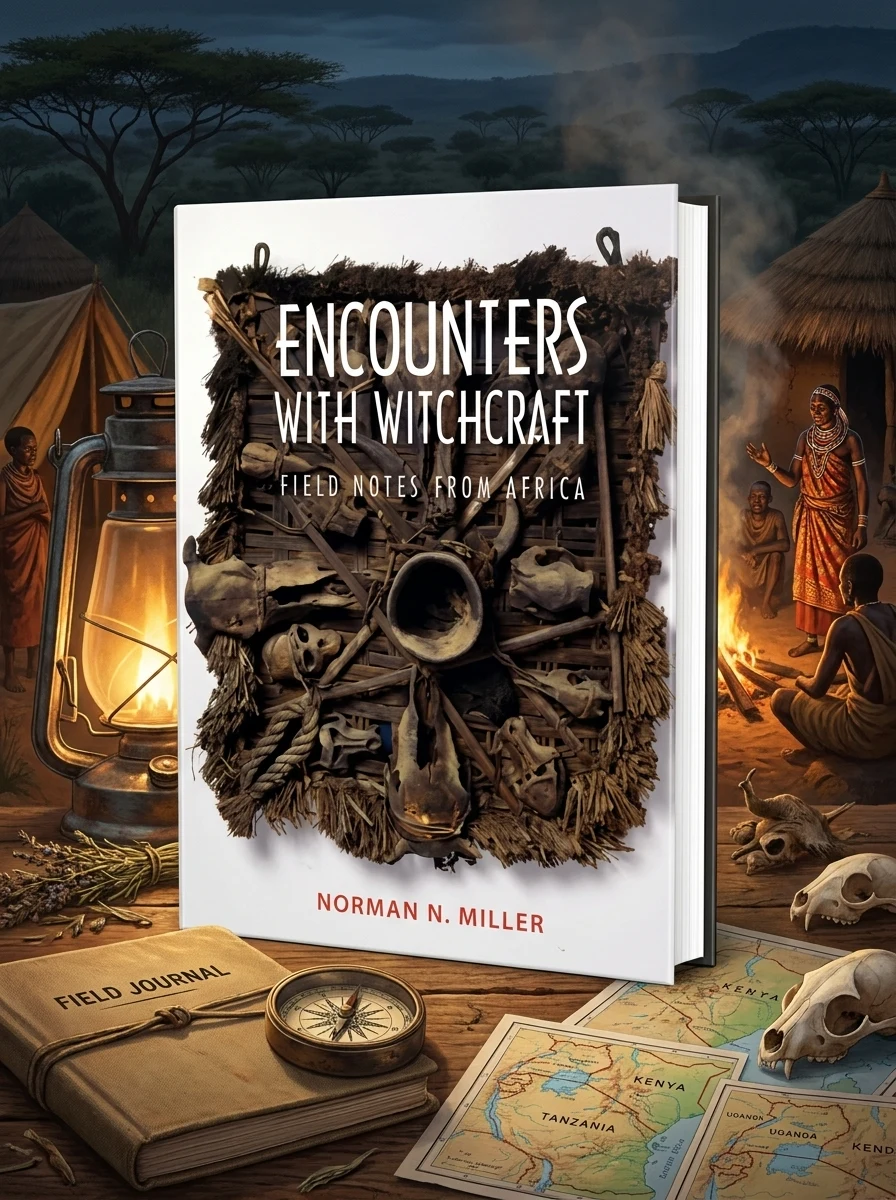
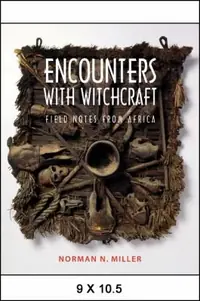
Encounters with Witchcraft: Field Notes from Africa

Miller, Norman N
Reader rating
4.7
(1 reviews) 87 sold
Availability to be confirmed

This edition can be ordered. No arrival date is confirmed.

📚 ABOUT THE BOOK

Decades of deep immersion reveal witchcraft's profound, often tragic, grip on East African life.

This compelling narrative chronicles an anthropologist's profound, four-decade immersion into the intricate world of East African witchcraft. Beginning with an initial journey through Kenya, Tanzania, and Uganda, the author delves deep into the local understanding of these potent beliefs. Through direct engagement with villagers, healers, witch-hunters, and even self-proclaimed practitioners, the work illuminates how witchcraft profoundly shapes daily life, politics, and social structures. It offers a unique, first-hand perspective, moving beyond academic theory to reveal the human experience of living amidst these powerful, often terrifying, forces.

Key themes
Witchcraft's Social Impact Deep Field Anthropology Personal Narratives of Belief
Historical context

This work sits firmly within the tradition of anthropological field studies focusing on East African societies, specifically examining the intersection of indigenous belief systems and modern social structures in Kenya, Tanzania, and Uganda.


Difficulty
●● Moderate
Fans will love it
E.E. Evans-Pritchard · Margaret Mead · Clifford Geertz
🌙 Witchcraft & Wicca
🏛 State University of New York Press 📅 2012 📖 240 pages 📔 Paperback 📐 Paperback ISBN: 9781438443584
Fun fact
This is an absolutely essential text for anyone seeking to understand the intricate realities of African witchcraft beyond sensationalism. Miller's four-decade dedication provides unparalleled depth, showcasing how these beliefs are woven into the very fabric of East African life, influencing everything from family dynamics to political processes. While it offers profound insights for anthropologists and curious readers alike, those expecting a sensationalized account of dark magic will find a more academic, yet deeply human, exploration. It firmly establishes itself as a benchmark ethnographic study.

📝 Description: Encounters with Witchcraft: Field Notes from Africa

A renowned authority on East Africa examines the effects of witchcraft beliefs on African culture, politics, and family life. Encounters with Witchcraft is a personal story of a young man's fascination with African witchcraft discovered first in a trek across East Africa and the Congo. The story unfolds over four decades during the author's long residence in and many trips to Kenya, Tanzania and Uganda. As a field researcher he learns from villagers what it is like to live with witches, and how witches are seen through African eyes. His teachers are healers, cult leaders, witch-hunters and self-proclaimed "witches" as well as policemen, politicians and judges. A key figure is Mohammadi Lupanda, a frail village woman whose only child has died years before. In her dreams, however, she believes the little girl is not dead, but only lost in the fields. Mohammadi is discovered wandering at night, wailing and calling out for the child. Her neighbors are terror-stricken and she is quickly brought to a village trial and banished as a witch. The author is able to watch and listen to the proceedings and later investigate the deeper story. He discovers mysteries about Mohammadi that are only solved when he returns to the village three decades later. Today, witch-hunting and witchcraft-related crimes are found in more than seventy developing countries. Epidemics of violence against alleged witches, mainly women, but including elders of both genders, and even children is on the increase in some parts of the world. Witchcraft beliefs may lie behind vigilante murders, political assassinations, revenge killings and commercial murders for human body parts. Through African voices the author addresses key questions. Do witchcraft powers exist? Why does witchcraft persist? What are its historic roots? Why is witchcraft-based violence so often found within families? Does witchcraft serve as a hidden legal and political system, a mafia-like under-government? The author holds up a mirror for us to think about religious beliefs in our own experience that rely heavily on myth and superstition.

💎 Expert review

💎
Esoterica Books editorial team
Occult literature desk
Miller provides a compelling, decades-long narrative that illuminates the terrifying grip of witchcraft on East African life. While valuable for its depth of immersion and access to healers and hunters, this book is not suited for readers seeking quick, sensationalist ghost stories or those who prefer detached, purely theoretical anthropological texts. It demands patience and a willingness to engage with complex social dynamics. The work is candid about the tragic aspects of these beliefs, making it potentially heavy for those expecting light entertainment. However, for serious students of culture and society, it offers an unparalleled, first-hand perspective on how powerful forces shape reality.
✓ EDITOR'S REVIEW

📖 Why choose it

📖

Why this book is worth reading

Readers fascinated by the tangible impact of belief on human behavior will find this book indispensable. It offers a rare, intimate glimpse into how witchcraft is not merely superstition but a living force that dictates politics, daily interactions, and social cohesion in East Africa. Those seeking to understand the psychological weight of these beliefs on individuals, from villagers to self-proclaimed practitioners, will gain profound empathy and insight. It bridges the gap between academic theory and raw human experience, making it essential for anyone interested in the complex realities of cultural anthropology.

⭐ Reader reviews

The starting rating comes from the team Esoterica Books —
⭐ Esoterica editorial review Editorial rating 4.7/5
★★★★
If you seek a nuanced, firsthand account of witchcraft's profound influence on African societies, venturing beyond sensationalism to genuine cultural understanding, this book is for you. It offers a deep dive into anthropological field research and the complex human dimensions of belief.

Reader rating

4.7
Based on 1 reviews
5
0
4
1
3
0
2
0
1
0
E
Esoterica Books editorial team

Miller provides a compelling, decades-long narrative that illuminates the terrifying grip of witchcraft on East African life. While valuable for its depth of immersion and access to healers and hunters, this book is not suited for readers seeking quick, sensationalist ghost stories or those who prefer detached, purely theoretical anthropological texts. It demands patience and a willingness to engage with complex social dynamics. The work is candid about the tragic aspects of these beliefs, making it potentially heavy for those expecting light entertainment. However, for serious students of culture and society, it offers an unparalleled, first-hand perspective on how powerful forces shape reality.

❓ Frequently asked questions

No, this is an anthropological study. It explores the cultural perceptions and societal impacts of witchcraft beliefs in East Africa, rather than serving as a guide or instruction manual for magical practices.
Its distinctiveness lies in the author's extraordinary forty-year commitment to field research across East Africa. This extended, immersive period offers an unparalleled depth of insight into the evolving nature of witchcraft beliefs and their lasting community effects.

📖 Who should read this

If you seek a nuanced, firsthand account of witchcraft's profound influence on African societies, venturing beyond sensationalism to genuine cultural understanding, this book is for you. It offers a deep dive into anthropological field research and the complex human dimensions of belief.

🎯 Key themes and symbolism

Witchcraft's Social Impact

This book meticulously details how witchcraft beliefs permeate all layers of African society, influencing community cohesion, political decisions, and even family structures. It showcases the lived experience of these forces, demonstrating their tangible effects on everyday interactions and the formation of social order within East African villages.

Deep Field Anthropology

Miller's work exemplifies profound immersive research, spanning over forty years. He doesn't merely observe; he lives among the people, directly engaging with a diverse range of individuals from spiritual leaders to community elders and those accused of witchcraft, providing unparalleled insight into their perspectives and realities.

Personal Narratives of Belief

Beyond theoretical analysis, the text grounds its exploration in poignant human stories, most notably that of Mohammadi Lupanda. Her tragic experience, perceived through the lens of witchcraft by her community, unveils the profound emotional and social consequences of these beliefs on individual lives within the collective.

💬 Quotes from the book

“To truly grasp the terror and logic of a witchcraft accusation, one must witness the communal shunning, the whispers, the desperate pleas, and the stark, unyielding judgment in the village square.”

“Mohammadi's cries for her lost child echoed not just grief, but the communal fear of a mother's perceived unnatural attachment, twisted into a terrifying accusation of dark power.”

📜 Historical context

This work stands within a long tradition of anthropological studies exploring spiritual beliefs and their societal functions, particularly in African contexts. It builds upon foundational ethnographic research, offering a contemporary, deeply personal, and sustained engagement with the subject, distinguishing itself through its multi-decade observational span and direct interactions with practitioners and those affected by witchcraft accusations.

📚 Glossary

Witchcraft (African context)
Field Research
East Africa

📔 Questions to reflect on

  1. How do pervasive belief systems, even those deemed 'superstitious', shape governance and social order in any community?
  2. Consider the ethical implications of an outsider observing deeply personal cultural practices like witchcraft accusations. What responsibilities does the researcher hold?
  3. Reflect on a time a community's collective fear or belief system profoundly impacted an individual's fate. How does this compare to the Mohammadi story?

🏛 Books from this publisher State University of New York Press

All books from this publisher →

You might also like

See more →