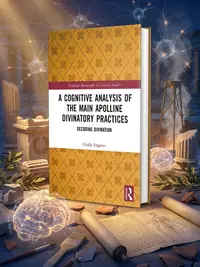

A Cognitive Analysis of the Main Apolline Divinatory Practices: Decoding Divination Frigerio, Giulia
Frigerio, Giulia 90
90
 Editorial score
How we rate
Editorial score
How we rate
Stock reported in the catalog; fulfillment is confirmed with your request.
Unravel the cognitive secrets behind ancient Greek oracles.
Giulia Frigerio's groundbreaking work redefines our understanding of ancient Greek divination, specifically at Apolline sanctuaries. By merging modern neuroscience, psychology, and behavioral studies with rigorous archaeological analysis, she meticulously reconstructs the cognitive experiences of both seekers and prophets. This book delves into how environmental factors—like landscape and architecture—influenced neural processes, shaping the divinatory encounter. It offers a fresh, interdisciplinary lens to decipher the profound interplay between belief, mind, and environment in the ancient world, providing new hypotheses for future research.
This work sits at the intersection of classical archaeology and modern cognitive science, offering a contemporary scholarly re-evaluation of ancient Greek religious practices within Apolline sanctuaries.


📝 Description: A Cognitive Analysis of the Main Apolline Divinatory Practices: Decoding Divination Frigerio, Giulia
💎 Expert review
📖 Why choose it
Why this book is worth reading
This book is ideal for intellectually curious readers who seek a rigorous, evidence-based explanation of how ancient divination actually functioned on a neurological level. You will gain from this text if you are tired of mystical romanticism and desire a clear, interdisciplinary framework that combines neuroscience, psychology, and archaeology. It provides a fascinating glimpse into the physical and mental mechanisms that shaped the experiences of both seekers and prophets in ancient Greece. If you appreciate how environmental factors like landscape and architecture influence human cognition, this work offers profound insights into the interplay between belief, mind, and setting, making it essential for understanding the historical reality behind the myths.
⭐ Reader reviews
Reader rating
Frigerio delivers a dense, academic reconstruction of Apolline divination through the lens of cognitive science. While innovative, this text is strictly for scholars and serious enthusiasts comfortable with scientific terminology and archaeological analysis. It does not suit casual readers seeking mystical guides, practical divination instructions, or narrative histories. Those expecting a spiritual journey or accessible storytelling will find the rigorous focus on neural processes and environmental influences dry and overly technical. This is a specialized study for those willing to engage with complex hypotheses about the ancient mind, rather than a general interest overview of Greek mythology or oracle lore.
❓ Frequently asked questions
📖 Who should read this
For curious minds bridging ancient mystery and modern science. If you're a student or scholar of Greek religion, cognitive studies, or archaeology, seeking a fresh perspective on how beliefs manifest in the brain and environment, this book is essential.
🎯 Key themes and symbolism
Cognitive Science & Antiquity
This book pioneers the application of modern cognitive sciences—neuroscience, psychology, and behavioral studies—to ancient religious practices. It demonstrates how contemporary understanding of the human mind can illuminate the mechanics and experiences of divination in Classical and Hellenistic Greece, moving beyond purely historical or theological interpretations.
Decoding Apolline Oracles
Focusing exclusively on the sanctuaries of Apollo, the author provides a granular analysis of specific divinatory procedures. She meticulously reconstructs the precise schema of knowledge and cognitive associations that ancient visitors and prophets experienced, offering insights into the unique mechanisms and interpretations characteristic of Apolline cults.
Archaeology as Cognitive Input
Frigerio innovatively uses archaeological records not just as historical evidence, but as direct indicators of cognitive input. She explores how physical elements—such as the surrounding landscape, architectural design, and even temperature within sacred sites—directly influenced the sensory and neural experiences of those seeking or delivering divine messages.
💬 Quotes from the book
“The sacred landscape itself was not merely a backdrop; it was a potent neural input, shaping the very cognitive associations within the minds of ancient seekers.”
“To truly understand ancient prophecy, we must move beyond belief systems alone and reconstruct the precise cognitive schemata that guided perception and interpretation.”
📜 Historical context
📚 Glossary
- Apolline
- Divination
- Cognitive Analysis
📔 Questions to reflect on
- Consider a significant historical or religious experience. How might modern cognitive science shed new light on the participants' subjective reality?
- Reflect on environments you find particularly inspiring or disorienting. How might these physical spaces influence your own thoughts and perceptions, consciously or unconsciously?
- If ancient divination were primarily a cognitive phenomenon, what implications does this have for our understanding of contemporary spiritual or intuitive practices?
📖 From the series “Routledge Monographs in Classical Studies”
All books in the series →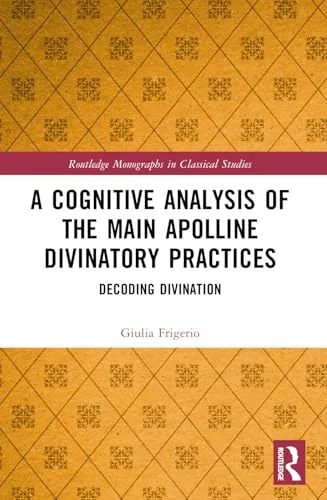
✍️ More books by this author Frigerio, Giulia
All books by this author →🏛 Books from this publisher Routledge
All books from this publisher →


 89
89


You might also like
See more →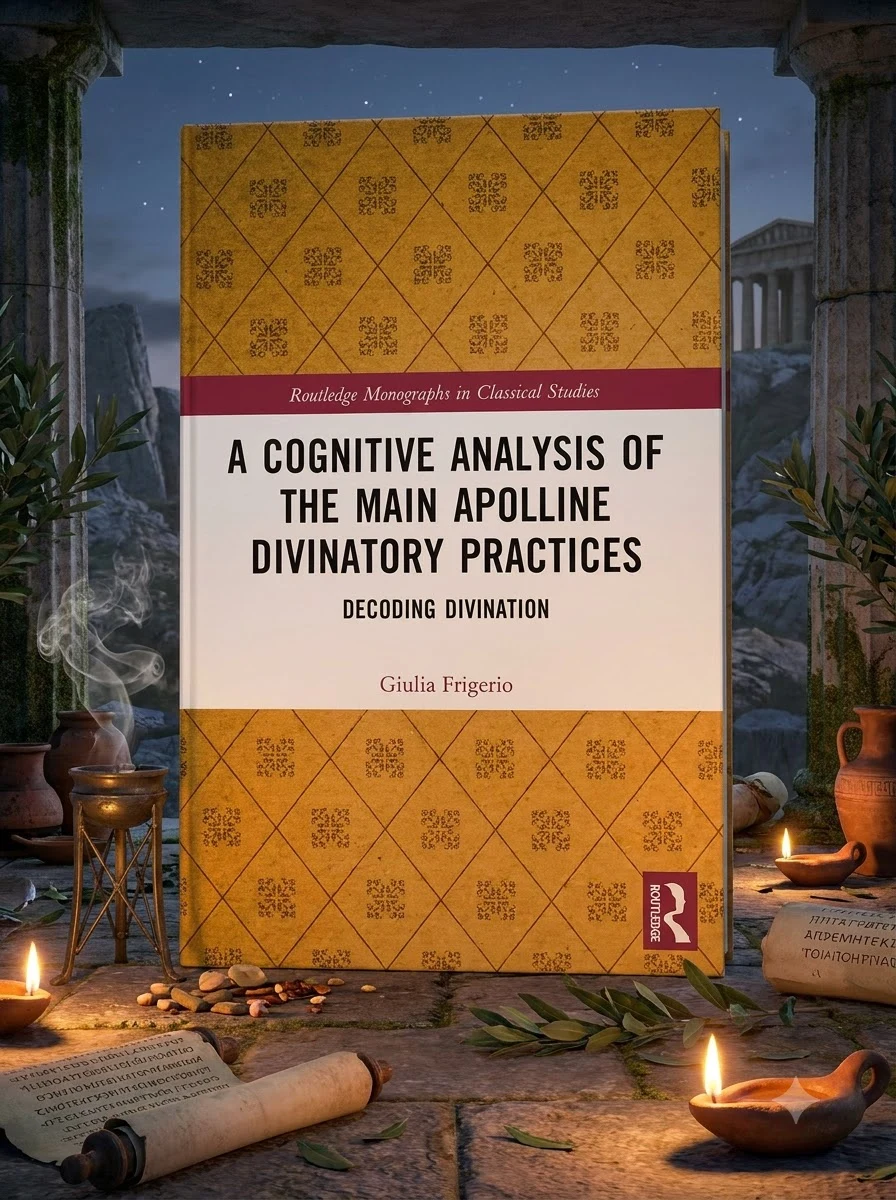

 91
91