US shipping Secure card payment Occult and esoteric books

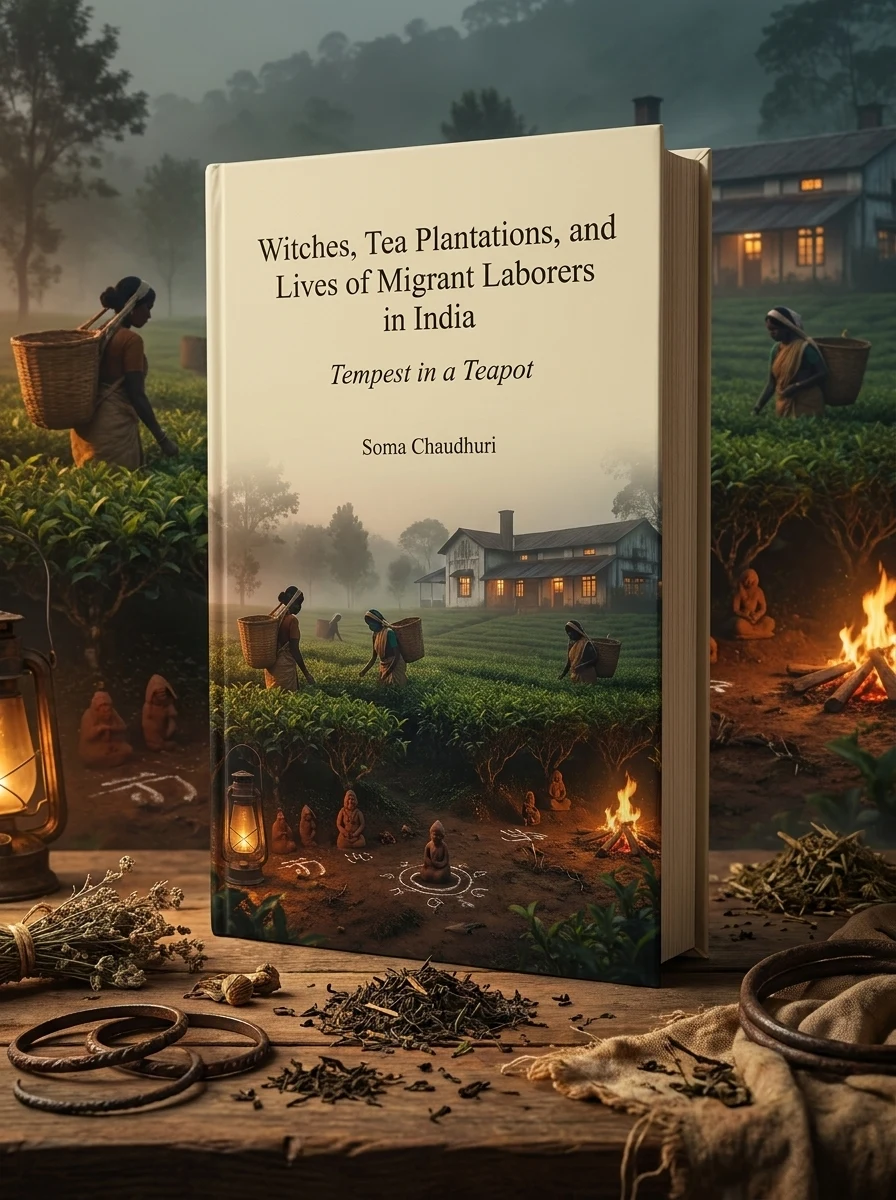
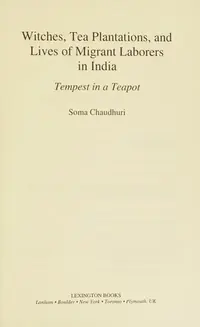
Witches, Tea Plantations, and Lives of Migrant Laborers in India: Tempest in a Teapot

Chaudhuri, Soma
Reader rating
4.5
(2 reviews) 151 sold
In stock

Stock reported in the catalog; fulfillment is confirmed with your request.

📚 ABOUT THE BOOK

Witchcraft as the final weapon of the oppressed in India's tea estates.

This rigorous study reframes the witch hunts of Indian tea plantations not as superstitious relics, but as calculated acts of resistance by marginalized Adivasi laborers. Chaudhuri demonstrates how the lack of political leverage forces workers to utilize the figure of the 'dain' to challenge plantation management. By weaving sociology, anthropology, and history, the text reveals how these accusations serve as a vital, albeit tragic, mechanism for asserting agency against systemic economic exploitation and social erasure.

Key themes
Structural Violence Ritualized Protest Labor Marginalization
Historical context

This academic work situates itself within the critical intersection of postcolonial sociology and anthropological studies of labor in India. It challenges traditional esoteric categorizations by framing witchcraft not as mystical practice, but as a sociopolitical tool for resistance among marginalized Adivasi communities.


Difficulty
●●● Demanding
Fans will love it
Upendra Baxi · Martha M. Eby · Amitav Ghosh
🌙 Witchcraft & Wicca
🏛 Lexington Books 📖 190 pages 📔 Paperback 📐 Paperback ISBN: 9780739185247
Fun fact
Chaudhuri delivers a piercing critique that elevates witchcraft from superstition to sociology. The theoretical framework is robust, successfully linking historical oppression to modern labor disputes. However, readers seeking ethnographic narrative or magical theory will find the academic density challenging. It stands as a vital, albeit dry, contribution to critical labor studies and anthropological sociology.
📚 This book appears in Esoterica Books

📝 Description: Witches, Tea Plantations, and Lives of Migrant Laborers in India: Tempest in a Teapot

Witches, Tea Plantations, and Lives of Migrant Laborers in India: Tempest in Teapot is a unique book that brings together a holistic theoretical approach on the subject of witchcraft accusations, specifically those taking place inside a tea workers' community in India. Using a combination of in-depth and extensive qualitative methods, and drawing on sociological, anthropological, and historical perspectives, Chaudhuri explores how adivasi (tribal) migrant workers use witchcraft accusations to deal with worker-management conflict. Chaudhuri argues that witchcraft accusations can be interpreted as a periodic reaction of the adivasi worker community against their oppression by the plantation management. The typical avenues of social protest are often unavailable to marginalized workers due to lack of organizational and political representation and resources. As a result, the dain (witch) becomes a scapegoat for the malice of the plantation economy. Within this discourse, witch hunts can be seen not as exotic and primitive rituals of a backward community, but rather as a powerful protest by a community against its oppressors. The book attempts to understand the complex network of relationships--ties of friendship, family, politics, and gender--that provide the necessary legitimacy for the witch hunt to take place. In most cases examined here, seemingly petty conflicts within the villagers often escalate to a hunt. At the height of the conflict, the exploitative relationship between the plantation management and the adivasi migrant workers often gets hidden. The book demonstrates how witchcraft accusations should be interpreted within this backdrop of labor-planters relationship, characterized by rigidity of power, patronage, and social distance. Witches, Tea Plantations, and Lives of Migrant Laborers in India should appeal to criminologists, sociologists, anthropologists, labor historians, gender scholars, labor migration scholars, witch hunt and witchcraft accusation global scholars, adivasi scholars, South Asian scholars, and anyone interested in India's tribes, witchcraft accusations, gender in a global world, labor conflict, and Indian tea plantations.

💎 Expert review

💎
Esoterica Books editorial team
Occult literature desk
Chaudhuri presents a rigorous, albeit dense, academic analysis that demands patience from the reader. While intellectually robust, this text is not suitable for those seeking narrative fiction or practical Wiccan guidance. It may frustrate readers looking for supernatural explanations, as it strictly demystifies witchcraft through sociology and history. The tone is clinical and scholarly, lacking the warmth of popular occult literature. However, for academics in anthropology, postcolonial studies, and labor history, it offers a compelling, evidence-based argument that fundamentally shifts our understanding of resistance in industrialized rural India.
✓ EDITOR'S REVIEW

📖 Why choose it

📖

Why this book is worth reading

Readers interested in the tangible realities of social justice and the anthropology of power will find profound value here. It is ideal for those who wish to understand how systemic oppression forces marginalized groups into unconventional forms of agency. By reframing witch hunts as calculated political acts rather than superstition, Chaudhuri offers a vital lens for analyzing economic exploitation in India's tea industry. This book empowers readers to see the 'dain' not as a monster, but as a symbol of desperate resistance against social erasure and management control. It is essential for scholars and activists seeking to connect historical labor struggles with contemporary sociological frameworks.

⭐ Reader reviews

The starting rating comes from the team Esoterica Books —
⭐ Esoterica editorial review Editorial rating 4.4/5
★★★★
Scholars of labor rights, anthropologists studying indigenous resistance, and readers interested in the intersection of colonial history and modern social justice movements will find this analysis essential and deeply illuminating.

Reader rating

4.5
Based on 2 reviews
5
1
4
1
3
0
2
0
1
0
O
Oscar M. ✓ Verified purchase
February 15, 2026
A serious text

Been hunting for a decent copy of this text for ages. Plenty of passages worth underlining; my copy is already full of margin notes. One of my better finds this year.

E
Esoterica Books editorial team

Chaudhuri presents a rigorous, albeit dense, academic analysis that demands patience from the reader. While intellectually robust, this text is not suitable for those seeking narrative fiction or practical Wiccan guidance. It may frustrate readers looking for supernatural explanations, as it strictly demystifies witchcraft through sociology and history. The tone is clinical and scholarly, lacking the warmth of popular occult literature. However, for academics in anthropology, postcolonial studies, and labor history, it offers a compelling, evidence-based argument that fundamentally shifts our understanding of resistance in industrialized rural India.

❓ Frequently asked questions

No. It is a sociological analysis of how folk beliefs function as tools for political and economic protest among migrant workers.
It examines the social utility of witchcraft accusations, not the magical mechanics themselves, focusing on their role in labor disputes.

📖 Who should read this

Scholars of labor rights, anthropologists studying indigenous resistance, and readers interested in the intersection of colonial history and modern social justice movements will find this analysis essential and deeply illuminating.

🎯 Key themes and symbolism

Structural Violence

Ritualized Protest

Labor Marginalization

💬 Quotes from the book

“The witch hunt is a cry for justice from those silenced by the ledger.”

“Not primitive ritual, but political weapon.”

📜 Historical context

Emerging from post-colonial Indian labor studies, the work bridges the gap between classic anthropological accounts of witchcraft and contemporary critical theory. It situates the 'witch' within the lineage of dissent, moving away from viewing such practices through a lens of cultural primitivism toward understanding them as responses to industrial capitalism and racialized labor hierarchies established during the British Raj.

📚 Glossary

Adivasi
Dain
Structural Violence

📔 Questions to reflect on

  1. How do marginalized groups create alternative systems of justice when formal channels are closed?
  2. In what ways do economic structures dictate the form of social protest?
  3. How might modern corporate dynamics mirror the power imbalances described in these tea plantations?

You might also like

See more →