US shipping Secure card payment Occult and esoteric books

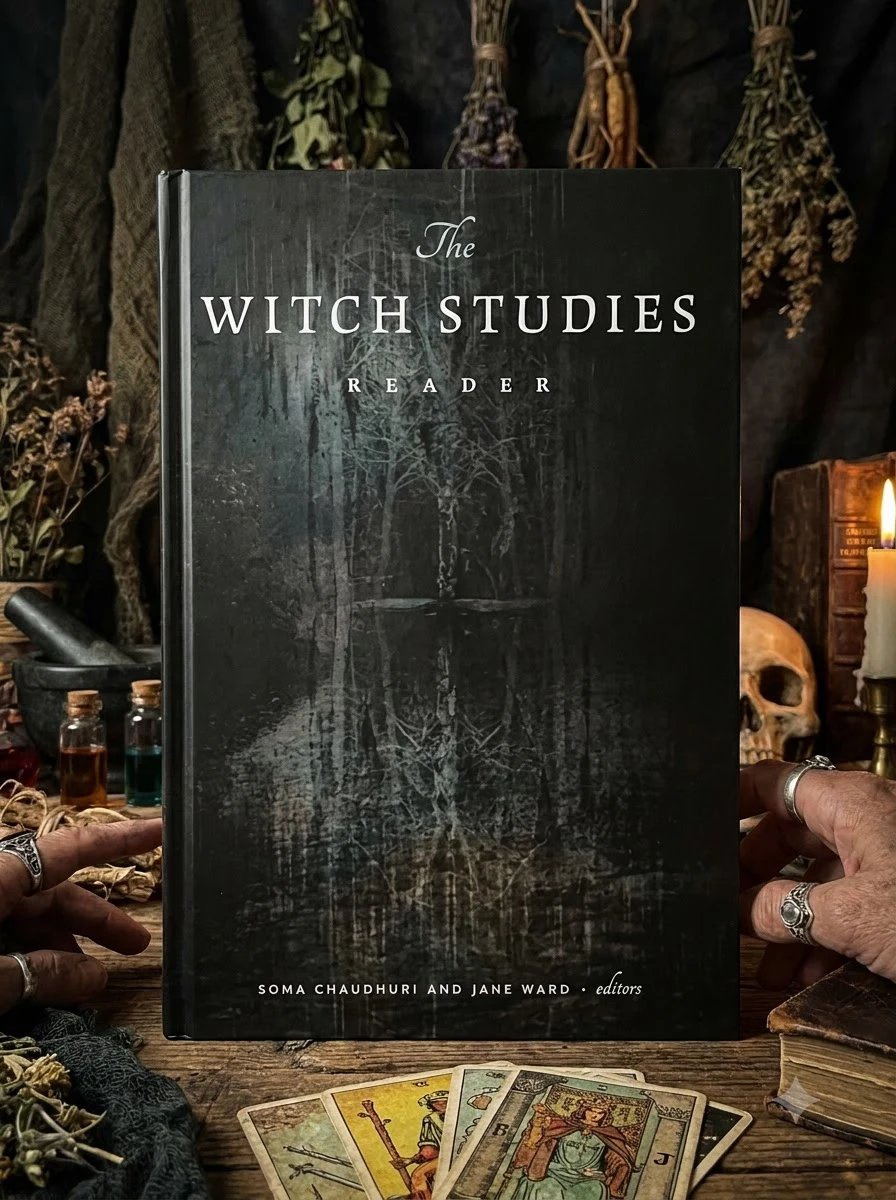
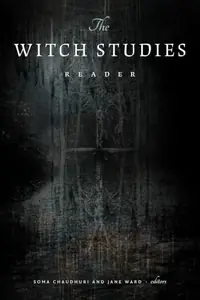
The Witch Studies Reader

Chaudhuri, Soma
Reader rating
4.6
(1 reviews) 39 sold
In stock

Stock reported in the catalog; fulfillment is confirmed with your request.

📚 ABOUT THE BOOK

Uncover the true power of the witch, beyond colonial myths.

This groundbreaking collection redefines "the witch" in academia, moving beyond traditional, often exoticizing narratives. Soma Chaudhuri assembles a unique blend of scholars and practitioners who explore witchcraft from a critical, decolonial, and feminist standpoint. It challenges Eurocentric biases and pathologizing portrayals, particularly regarding the Global South, revealing witches as custodians of overlooked wisdom, architects of future possibilities, and vital theorists. The book navigates the complex ways "the witch" is understood and contested across diverse global contexts, dismantling patriarchal and colonial knowledge systems.

Key themes
Decolonial Feminist Witchcraft Reclaiming Suppressed Knowledges Global Witchcraft Perspectives
Historical context

This volume sits firmly within contemporary critical witch studies and decolonial feminist theory, offering a modern academic re-evaluation of historical narratives.


Difficulty
●●● Demanding
Fans will love it
Gilles Deleuze · Donna Haraway · Silvia Federici · The Witchcraft Sourcebook
🌙 Witchcraft & Wicca
🏛 Duke University Press 📅 2025 📖 520 pages 📔 Paperback 📐 Paperback ISBN: 9781478031352
Fun fact
Soma Chaudhuri's *The Witch Studies Reader* is an indispensable addition for anyone serious about contemporary witchcraft. It masterfully decenters Eurocentric perspectives, providing a vital decolonial feminist lens often missing in scholarship. While not a practical guide for spellcasting, it excels at showcasing the witch as a complex, globally resonant figure of resistance and profound knowledge. Essential reading for redefining the field.

📝 Description: The Witch Studies Reader

Stories about witches are by their nature stories about the most basic and profound of human experiences--healing, sex, violence, tragedies, aging, death, and encountering the mystery and magic of the unknown. It is no surprise, then, that witches loom large in our cultural imaginations. In academia, studies of witches rarely emerge from scholars who are themselves witches and/or embedded in communities of witchcraft practitioners. The Witch Studies Reader brings together a diverse group of scholars, practitioners, and scholar-practitioners who examine witchcraft from a critical decolonial feminist perspective that decenters Europe and departs from exoticizing and pathologizing writing on witchcraft in the global South. The authors show how witches are keepers of suppressed knowledges, builders of new futures, exemplars of praxis, and theorists in their own right. Throughout, they account for the vastly different national, political-economic, and cultural contexts in which "the witch" is currently being claimed and repudiated. Offering a pathbreaking transnational feminist examination of witches and witchcraft that upends white supremacist, colonial, patriarchal knowledge regimes, this volume brings into being the interdisciplinary field of feminist witch studies. Contributors. Maria Amir, Ruth Asiimwe, Bernadette Barton, Ethel Brooks, Shelina Brown, Ruth Charnock, Soma Chaudhuri, Carolyn Chernoff, Saira Chhibber, Simon Clay, Krystal Cleary, Adrianna L. Ernstberger, Tina Escaja, Laurie Essig, Marcelitte Failla, D Ferrett, Marion Goldman, Jaime Hartless, Margaretha Haughwout, Patricia Humura, Apoorvaa Joshi, Govind Kelkar, Oliver Kellhammer, Ayça Kurtoğlu, Helen Macdonald, Isabel Machado, Brandy Renee McCann, Dev Nathan, Mary Jo Neitz, Amy Nichols-Belo, Allison (or AP) Pierce, Emma Quilty, Anna Rogel, Karen Schaller, Jacquelyn Marie Shannon, Shashank Shekhar Sinha, Gabriella V. Smith, Nathan Snaza, Shannon Hughes Spence, Eric Steinhart, Morena Tartari, Nicole Trigg, Katie Von Wald, Tushabe wa Tushabe, Jane Ward

💎 Expert review

💎
Esoterica Books editorial team
Occult literature desk
This text is a rigorous academic intervention, not a casual guide for curious beginners. It demands engagement with complex theoretical frameworks regarding colonialism and patriarchy. Readers looking for practical spell-casting instructions or lighthearted folklore will likely find the tone too dense and political. However, for those willing to confront challenging scholarly arguments about the construction of 'the witch,' it is an essential, provocative contribution to esoteric literature.
✓ EDITOR'S REVIEW

📖 Why choose it

📖

Why this book is worth reading

Readers seeking to dismantle Eurocentric biases in occult history will find profound value here. It is ideal for scholars and practitioners interested in decolonial perspectives who wish to move beyond exoticizing myths. By centering the Global South, it reveals witches as vital theorists and custodians of wisdom rather than pathological figures. This collection empowers those eager to understand witchcraft through feminist and critical lenses, offering a robust framework for reimagining power structures.

⭐ Reader reviews

The starting rating comes from the team Esoterica Books —
⭐ Esoterica editorial review Editorial rating 4.6/5
★★★★
If you're a scholar, practitioner, or curious mind seeking a rigorous, globally-aware exploration of witchcraft, this book is essential. It challenges conventional narratives, inviting you to embrace the radical potential of the witch from a decolonial feminist perspective.

Reader rating

4.6
Based on 1 reviews
5
0
4
1
3
0
2
0
1
0
E
Esoterica Books editorial team

This text is a rigorous academic intervention, not a casual guide for curious beginners. It demands engagement with complex theoretical frameworks regarding colonialism and patriarchy. Readers looking for practical spell-casting instructions or lighthearted folklore will likely find the tone too dense and political. However, for those willing to confront challenging scholarly arguments about the construction of 'the witch,' it is an essential, provocative contribution to esoteric literature.

❓ Frequently asked questions

While academically rigorous, its inclusive approach and diverse perspectives make it accessible and valuable for practitioners, feminists, and anyone deeply interested in critical social theory applied to witchcraft.
No, a core strength of this collection is its explicit decolonial focus, actively decentering Europe to explore witchcraft across diverse global contexts, especially in the Global South.

📖 Who should read this

If you're a scholar, practitioner, or curious mind seeking a rigorous, globally-aware exploration of witchcraft, this book is essential. It challenges conventional narratives, inviting you to embrace the radical potential of the witch from a decolonial feminist perspective.

🎯 Key themes and symbolism

Decolonial Feminist Witchcraft

This collection rigorously applies a decolonial feminist framework to witchcraft studies, challenging Eurocentric, patriarchal lenses. It actively dismantles colonial narratives and uplifts perspectives from the Global South, providing crucial counter-narratives to dominant academic thought, empowering marginalized voices.

Reclaiming Suppressed Knowledges

The book highlights how witches throughout history and in contemporary practice act as keepers of invaluable, often suppressed, knowledge systems. It examines diverse forms this wisdom takes, from healing arts and spiritual traditions to social justice activism, demonstrating how practitioners offer alternative ways of understanding the world.

Global Witchcraft Perspectives

Departing from a common Eurocentric focus, this reader offers a truly global examination of witchcraft. It explores how "the witch" is claimed and repudiated across varied national, political, and cultural landscapes, particularly emphasizing experiences from the Global South. This transnational approach enriches our understanding of witchcraft's diverse manifestations.

💬 Quotes from the book

“The witch is not merely a figure of folklore but a living testament to resistance, a keeper of knowledges purposefully suppressed by dominant narratives.”

“Understanding witchcraft demands we dismantle colonial lenses, recognizing its diverse manifestations as powerful sites of feminist and decolonial praxis across the globe.”

📜 Historical context

While academic interest in witchcraft has grown, much scholarship remains rooted in Eurocentric views. This reader marks a significant departure, building upon emerging critical theory by integrating decolonial and feminist thought. It uniquely bridges the gap between academic study and the lived experiences of practitioners, setting a new standard for inclusive scholarship.

📚 Glossary

Decolonial Feminism
Praxis
Eurocentrism

📔 Questions to reflect on

  1. How do prevailing cultural narratives about "the witch" in your own society reflect or challenge colonial and patriarchal power structures?
  2. In what ways might integrating practitioner voices into academic studies of esoteric traditions deepen our understanding and challenge existing biases?
  3. Consider a "suppressed knowledge" from your own cultural background. How might a "witch" figure embody or transmit such knowledge?

🏛 Books from this publisher Duke University Press

All books from this publisher →
You might also like

See more →