US shipping Secure card payment Occult and esoteric books

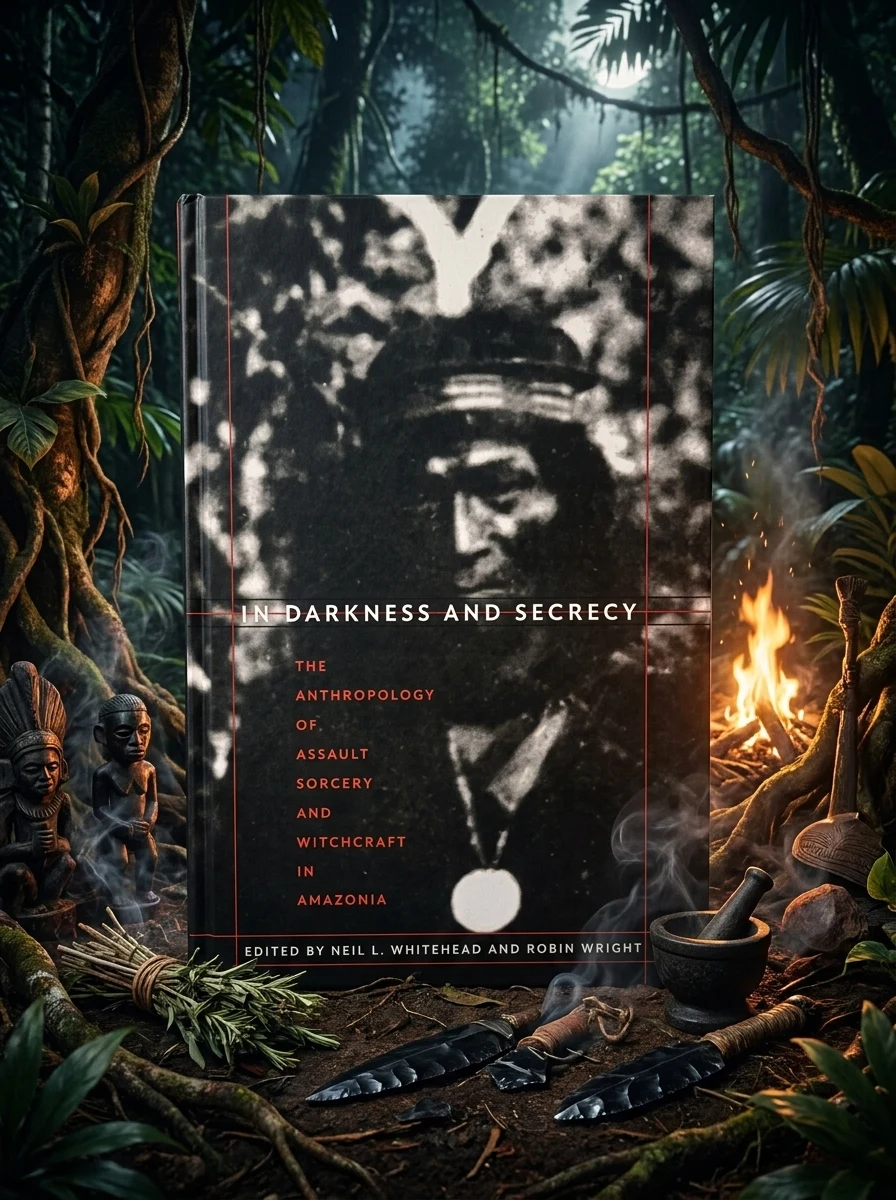
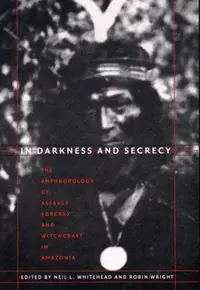
In Darkness and Secrecy: The Anthropology of Assault Sorcery and Witchcraft in Amazonia

Whitehead, Neil L
Reader rating
4.6
(5 reviews) 171 sold
In stock

Stock reported in the catalog; fulfillment is confirmed with your request.

📚 ABOUT THE BOOK

Uncover the violent, shadowed roots of Amazonian magic beyond the healing light.

This volume dismantles the romanticized view of shamanism by focusing on the darker, more aggressive aspects of Amazonian spiritual practice. It explores how assault sorcery and injurious magic function not merely as malevolent acts, but as complex social mechanisms. The text reveals that these 'dark shamans' serve distinct roles from healing counterparts, often engaging with modern political pressures and cultural continuity. Through rigorous ethnographic analysis across Brazil, Guyana, Venezuela, and Peru, the authors demonstrate that witchcraft is integral to societal structure, cosmology, and the negotiation of power in contemporary indigenous communities.

Key themes
Dark Shamanism Social Dynamics of Violence Anthropological Modernity
Historical context

This academic work sits within the rigorous field of anthropological studies on Amazonian spirituality, challenging romanticized narratives by focusing on the aggressive mechanics of indigenous magic. It serves as a critical text for understanding the complex social structures and cosmological negotiations in contemporary Brazil, Guyana, Venezuela, and Peru.


Difficulty
●●● Demanding
Fans will love it
Neil Whitehead's other ethnographic works · Scholars of Amazonian political ecology · Readers interested in the anthropology of violence
🌙 Witchcraft & Wicca
🏛 Duke University Press 📖 256 pages 📔 Paperback 📐 Paperback ISBN: 9780822333456
Fun fact
Whitehead’s collection is a vital corrective to the sanitized narratives often found in esoteric literature. It excels in rigorously detailing the mechanics of social power through sorcery, offering readers a stark, unromanticized look at Amazonian cosmology. However, casual readers seeking practical spellwork or mystical inspiration will find it dry and overly academic. It sits firmly in the realm of critical anthropology, essential for serious scholars but likely too dense for the general occultist.
📚 This book appears in Esoterica Books

📝 Description: In Darkness and Secrecy: The Anthropology of Assault Sorcery and Witchcraft in Amazonia

In Darkness and Secrecy brings together ethnographic examinations of Amazonian assault sorcery, witchcraft, and injurious magic, or "dark shamanism." Anthropological reflections on South American shamanism have tended to emphasize shamans' healing powers and positive influence. This collection challenges that assumption by showing that dark shamans are, in many Amazonian cultures, quite different from shamanic healers and prophets. Assault sorcery, in particular, involves violence resulting in physical harm or even death. While highlighting the distinctiveness of such practices, In Darkness and Secrecy reveals them as no less relevant to the continuation of culture and society than curing and prophecy. The contributors suggest that the persistence of dark shamanism can be understood as a form of engagement with modernity. These essays, by leading anthropologists of South American shamanism, consider assault sorcery as it is practiced in parts of Brazil, Guyana, Venezuela, and Peru. They analyze the social and political dynamics of witchcraft and sorcery and their relation to cosmology, mythology, ritual, and other forms of symbolic violence and aggression in each society studied. They also discuss the relations of witchcraft and sorcery to interethnic contact and the ways that shamanic power may be co-opted by the state. In Darkness and Secrecy includes reflections on the ethical and practical implications of ethnographic investigation of violent cultural practices. Contributors. Dominique Buchillet, Carlos Fausto, Michael Heckenberger, Elsje Lagrou, E. Jean Langdon, George Mentore, Donald Pollock, Fernando Santos-Granero, Pamela J. Stewart, Andrew Strathern, Márnio Teixeira-Pinto, Silvia Vidal, Neil L. Whitehead, Johannes Wilbert, Robin Wright

💎 Expert review

💎
Esoterica Books editorial team
Occult literature desk
Whitehead delivers a dense, rigorous ethnographic analysis that dismantles romanticized views of Amazonian magic. This is not a guide for practitioners seeking spells or healing rituals; it is a scholarly examination of injurious magic as a social tool. Readers looking for accessible mystical experiences will find this dry and academic. It suits those interested in the structural role of witchcraft within indigenous societies. The work is intellectually demanding, requiring patience for its complex arguments about power and cosmology. It is a vital resource for academics but may alienate casual readers of esoteric topics who prefer practical or inspirational content over strict anthropological scrutiny.
✓ EDITOR'S REVIEW

📖 Why choose it

📖

Why this book is worth reading

This book is essential for anthropologists, sociologists, and serious students of esoteric traditions who seek to move beyond simplistic or mystical interpretations of shamanism. It offers a profound look at how assault sorcery functions as a vital social mechanism rather than mere malevolence. Readers will gain insight into the intricate relationship between spiritual practice, power dynamics, and cultural continuity in indigenous communities. It is particularly valuable for those analyzing how modern political pressures reshape traditional cosmologies. By examining these 'dark' aspects across multiple nations, the text provides a nuanced understanding of societal structure that is often overlooked in popular occult literature.

⭐ Reader reviews

The starting rating comes from the team Esoterica Books —
⭐ Esoterica editorial review Editorial rating 4.7/5
★★★★
If you are drawn to the unvarnished realities of indigenous magic and seek to understand the intersection of ritual violence and social order, this text offers a crucial, albeit challenging, perspective on esoteric anthropology.

Reader rating

4.6
Based on 5 reviews
5
2
4
3
3
0
2
0
1
0
E
Elena A. ✓ Verified purchase
December 14, 2025
A treasure

Perfect companion for my morning study sessions. It rewards patience more than any book I've bought this year. Recommended if you're ready to do the work.

C
Cora S.
August 27, 2025
Good addition to the shelf

Been hunting for a decent copy of this text for ages. There's real depth here that reveals itself on a second reading. Delivery took a bit longer than quoted. Good, with the caveats above.

G
Grace R. ✓ Verified purchase
March 28, 2025
Almost perfect

This has been on my wishlist for months. The ideas are old but land with surprising force today. Some chapters demand a slow, careful read, and that's exactly the point. My only quibble is the cover feels thinner than expected. Good, with the caveats above.

S
Simon V. ✓ Verified purchase
February 28, 2025
Worth every penny

Came across this title in a footnote and had to track it down. It connects ideas I'd only seen treated separately elsewhere. Would buy from this store again.

E
Esoterica Books editorial team

Whitehead delivers a dense, rigorous ethnographic analysis that dismantles romanticized views of Amazonian magic. This is not a guide for practitioners seeking spells or healing rituals; it is a scholarly examination of injurious magic as a social tool. Readers looking for accessible mystical experiences will find this dry and academic. It suits those interested in the structural role of witchcraft within indigenous societies. The work is intellectually demanding, requiring patience for its complex arguments about power and cosmology. It is a vital resource for academics but may alienate casual readers of esoteric topics who prefer practical or inspirational content over strict anthropological scrutiny.

❓ Frequently asked questions

No. It is an academic ethnographic study analyzing the social and cultural functions of assault sorcery, not a practical guide for practitioners.
It spans multiple regions, including Brazil, Guyana, Venezuela, and Peru, offering a comparative view of these practices across different Amazonian cultures.

📖 Who should read this

If you are drawn to the unvarnished realities of indigenous magic and seek to understand the intersection of ritual violence and social order, this text offers a crucial, albeit challenging, perspective on esoteric anthropology.

🎯 Key themes and symbolism

Dark Shamanism

Social Dynamics of Violence

Anthropological Modernity

💬 Quotes from the book

“Dark shamans are, in many Amazonian cultures, quite different from shamanic healers and prophets.”

“The persistence of dark shamanism can be understood as a form of engagement with modernity.”

📜 Historical context

Traditional anthropological narratives often prioritized the benevolent, healing aspects of shamanism, ignoring its aggressive counterparts. This work corrects that imbalance by positioning assault sorcery within the broader framework of South American ethnography. It bridges the gap between classical studies of myth and contemporary analyses of how indigenous groups navigate modernity, conflict, and cultural preservation through the lens of injurious magic.

📚 Glossary

Dark Shamanism
Assault Sorcery
Injurious Magic

📔 Questions to reflect on

  1. How does your culture distinguish between protective magic and aggressive sorcery?
  2. What social functions might 'dark' rituals serve in maintaining community boundaries?
  3. In what ways do spiritual practices evolve to address modern political or social conflicts?

🏛 Books from this publisher Duke University Press

All books from this publisher →
You might also like

See more →