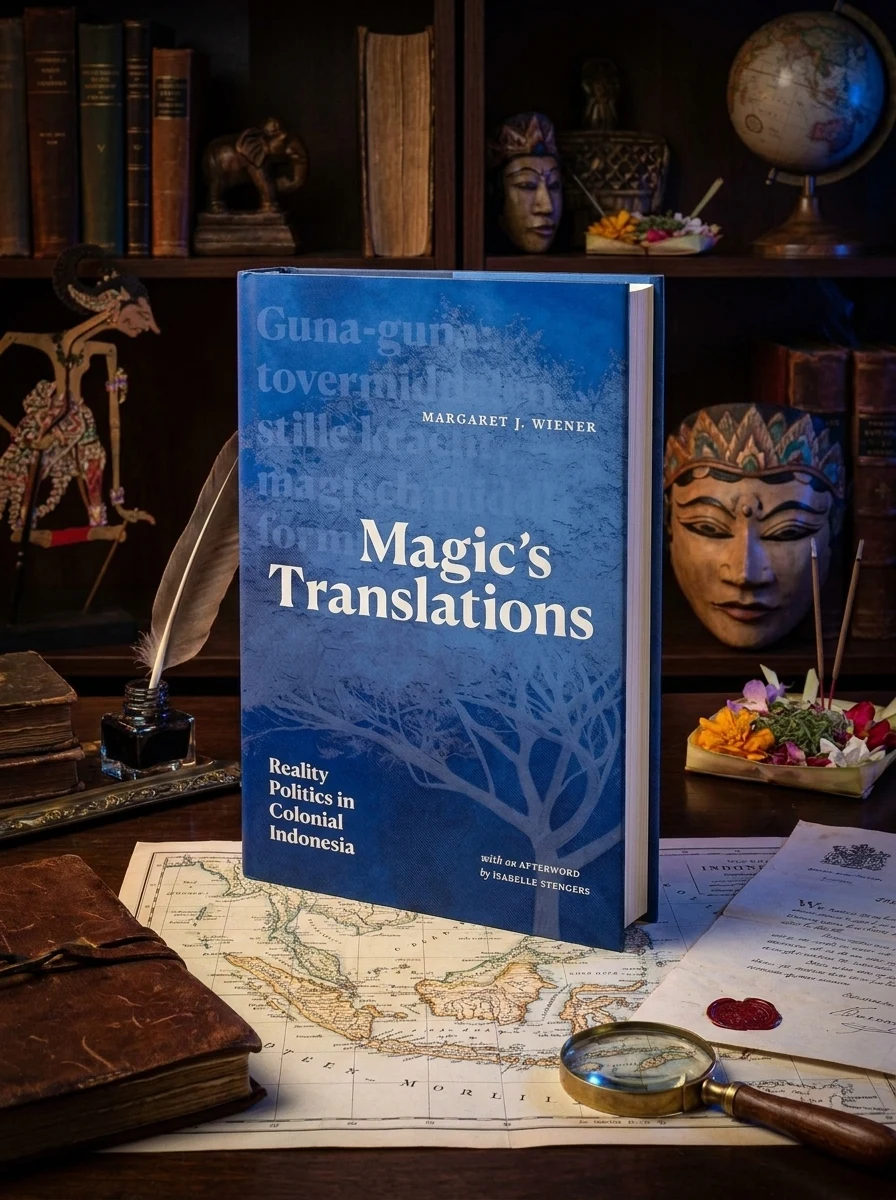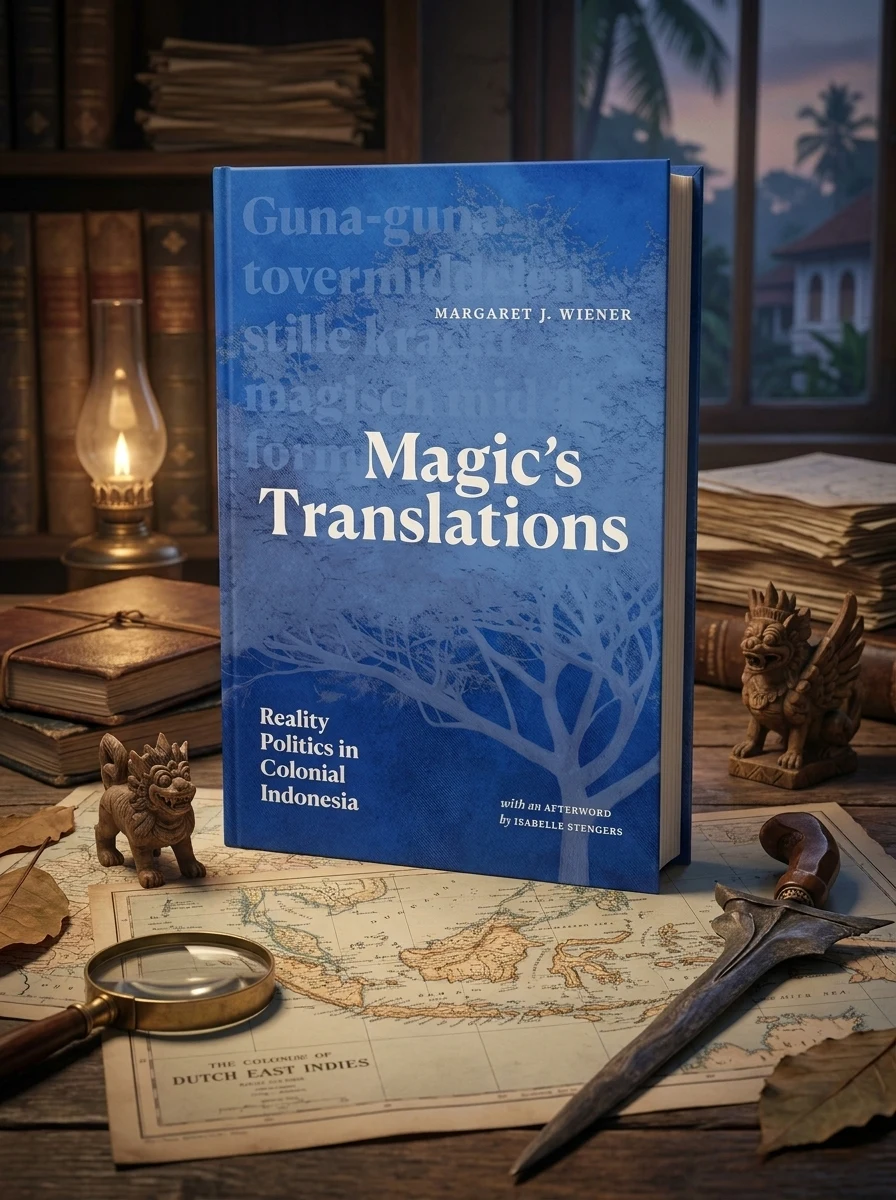
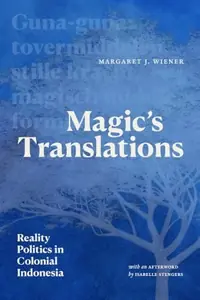
Magic's Translations: Reality Politics in Colonial Indonesia
Wiener, Margaret J; , Stengers, Isabelle 82
82
 Editorial score
How we rate
Editorial score
How we rate
Stock reported in the catalog; fulfillment is confirmed with your request.
Unmasking 'magic' as a colonial weapon, this book shatters conventional notions of reality.
Margaret J. Wiener's incisive work dissects how the concept of "magic" was strategically constructed and deployed by European colonial powers, particularly in 19th and 20th-century Indonesia. Far from a neutral term, "magic" served as a tool for colonial agents to categorize, Other, and control indigenous practices, framing them as irrational against a backdrop of European reason. The book reveals how these power-laden translations not only shaped perceptions but also had unexpected consequences, demonstrating the enduring, untamed influence of what was deemed "magic" despite colonial efforts to contain it. It's a critical examination of how reality itself is negotiated through power.
This work sits at the intersection of postcolonial studies and critical theory, examining how European colonial powers constructed the concept of 'magic' as a tool for control in Indonesia. It challenges conventional epistemological boundaries by revealing reality as a negotiated political construct rather than an objective truth.


📝 Description: Magic's Translations: Reality Politics in Colonial Indonesia
💎 Expert review
📖 Why choose it
Why this book is worth reading
Readers interested in the intricate mechanics of colonial power and the construction of cultural identity will find this book profoundly illuminating. It offers a vital lens for understanding how language functions as a weapon of domination, specifically through the categorization of indigenous practices as irrational 'magic.' By uncovering these hidden dynamics, the text empowers readers to see beyond surface-level historical narratives and recognize the enduring, untamed influence of suppressed realities. It is essential for those seeking to deconstruct the legacy of colonialism and understand how reality itself is politically negotiated, providing a deep, critical engagement with the intersections of power, knowledge, and cultural othering.
⭐ Reader reviews
Reader rating
This academic text provides a rigorous dissection of how 'magic' was weaponized by European agents in Indonesia to enforce rationality and control. While intellectually stimulating for scholars of postcolonial theory and anthropology, it is dense with complex arguments about reality politics that may alienate casual readers. It does not suit those seeking accessible narratives or straightforward historical accounts without theoretical framing. The book demands patience and a willingness to engage with abstract concepts of power and translation. However, for those committed to critical theory, it offers an indispensable, unmasking perspective on how colonial categories continue to shape our understanding of the world today.
❓ Frequently asked questions
📖 Who should read this
If you question the origins of "truth" and "superstition," or seek to understand how power shapes perception, this book offers profound insights. Essential for critical thinkers exploring colonialism, anthropology, the philosophy of knowledge, and the intricate relationship between belief and political control.
🎯 Key themes and symbolism
Colonial Deconstruction of Magic
The book meticulously unpicks how European colonial authorities, particularly the Dutch, deliberately defined indigenous Indonesian practices as "magic." This wasn't an objective classification but a strategic act to differentiate, control, and assert dominance, creating a stark contrast between "reason" and "superstition" to legitimize colonial rule and its supposed civilizing mission.
Power & Perception
Wiener explores how the colonial framing of "magic" was intrinsically linked to power dynamics. By labeling certain phenomena as irrational, colonizers sought to establish their worldview as the sole arbiter of reality. Yet, the text also highlights how these imposed definitions often failed to fully contain or neutralize the very practices they sought to dismiss, revealing the limits of colonial power.
Anthropology's Entanglement
The work critically examines the historical role of anthropology as a discipline in translating and interpreting "magic" across cultures. It questions how early ethnological approaches, while seemingly scientific, often perpetuated colonial biases, contributing to the academic construction of "magic" and influencing subsequent understandings of non-Western spiritual and ritual practices.
💬 Quotes from the book
“The demarcation of 'magic' was never a neutral act of classification, but a strategic maneuver within the colonial project, designed to delineate the boundaries of reason and civility.”
“Even as colonial powers sought to contain and define 'magic' within their rational frameworks, its inherent fluidity often defied rigid taxonomies, demonstrating a persistent, untamed influence.”
📜 Historical context
📚 Glossary
- Colonial Discourse
- Epistemology
- Othering
📔 Questions to reflect on
- How have colonial definitions of 'magic' influenced contemporary perceptions of non-Western spiritual or healing practices, even today?
- Consider a concept you once believed was universally true; how might it be a product of specific historical or power dynamics, similar to the colonial construction of 'magic'?
- In what ways do modern institutions or media continue to 'translate' or categorize unfamiliar beliefs or phenomena, and what are the implications of these translations?
✍️ More books by this author Wiener, Margaret J; , Stengers, Isabelle
All books by this author →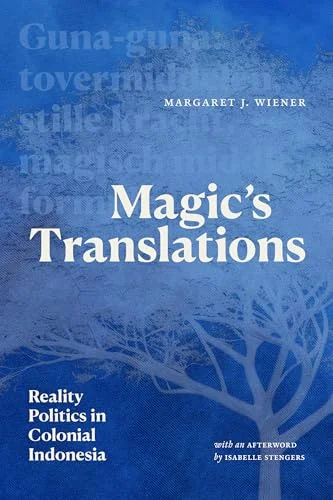
🏛 Books from this publisher Duke University Press
All books from this publisher →
You might also like
See more →