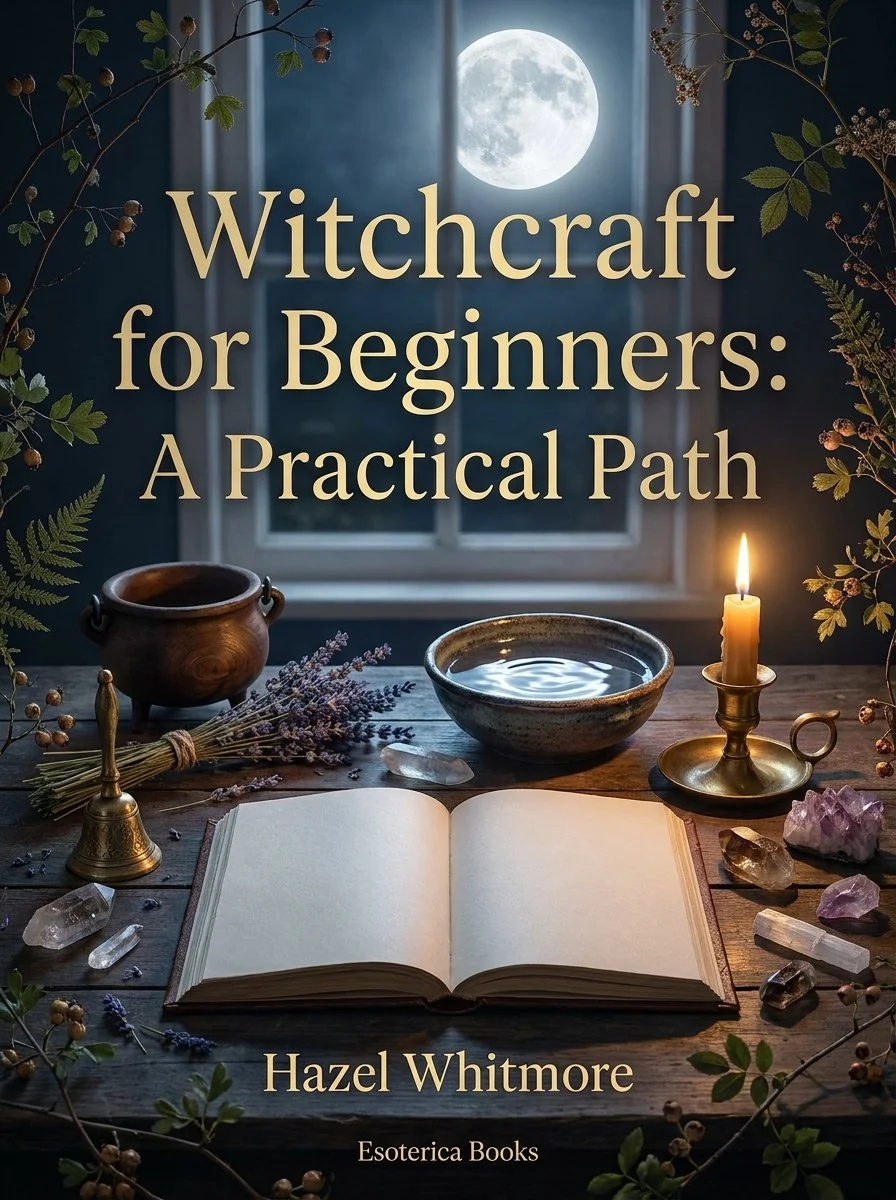

Witchcraft for Beginners: A Practical Path
Contents
- Your First Little Act of Magic
Forget the elaborate altar and shopping list: begin with a simple intention-setting ritual using a piece of paper and an everyday object. Follow your first R.O.O.T. exercise, discover what witchcraft can mean as a personal practice, and learn how to reflect on the experience without expecting supernatural guarantees. - The Tools That Make a Practice Yours
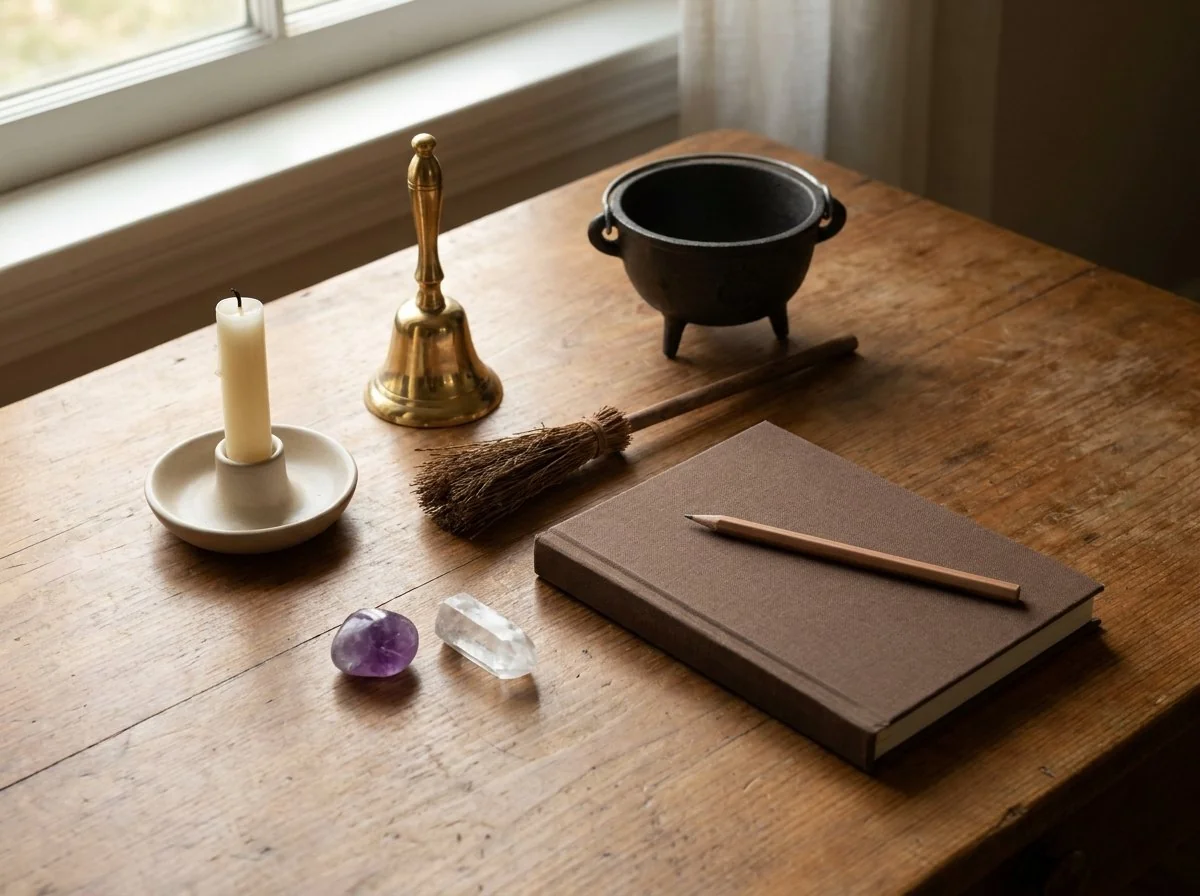
Meet the traditional tools of witchcraft, from candles, bells, and brooms to cauldrons, crystals, and journals. Learn their symbolic associations, discover which objects are genuinely useful for your practice, and understand why intention matters more than owning a complete collection. - Find Your Own Way Into the Craft
Explore what witchcraft is, how different contemporary approaches understand it, and how personal practice differs from organized spiritual traditions. Discover the relationship between witchcraft and Wicca without treating them as interchangeable, and identify the values that will guide your own path. - A Place for Your Practice to Take Root
Create a simple personal altar or sacred corner using objects that have meaning to you. Explore traditional altar arrangements, witchcraft symbols, protective symbolism as a form of personal intention, and practical ways to keep your space welcoming rather than cluttered. - The Language of Earth, Air, Fire, and Water
Discover the four-element framework and the symbolic correspondences traditionally associated with colors, seasons, directions, and natural materials. Learn to use these associations as a flexible language for reflection rather than a rigid system with universal rules. - Small Rituals, Thoughtfully Prepared
Put the Organize and Try stages of the R.O.O.T. Method into practice with approachable candle, water, and written-intention rituals. Follow clear preparation and closing instructions, understand the symbolism behind each action, and learn essential safety practices for working with flames and ritual materials. - Herbs, Crystals, and the Meanings We Give Them
Explore traditional herbal and crystal correspondences, including the symbolic associations of familiar colors, plants, stones, and natural objects. Learn how to research materials responsibly, distinguish personal interpretation from tradition, and make choices without treating objects as medical treatments or guaranteed sources of change. - Water, Weather, and the Living Landscape
Build a nature-centered practice through observation of water, rain, rivers, gardens, and changing seasons. Explore water symbolism and simple water-based rituals while learning to work respectfully with the environment and avoid appropriating the ceremonies or sacred traditions of others. - Choose Your Symbols, Write Your Own Meaning
Explore common witchcraft symbols, personal ritual names, and the role of meaningful objects in shaping a spiritual identity. Learn to create a personal symbol or choose a witchcraft name through reflection, while understanding that symbols can carry different meanings across traditions and individuals. - Working With the Moon and the Turning Seasons
Explore lunar symbolism and seasonal reflection as ways to structure personal rituals and notice recurring themes in everyday life. Create a simple observation journal and seasonal ritual calendar without treating celestial cycles as predictions or promises about future events. - A Practice With Boundaries and Good Sense
Develop an ethical framework for independent witchcraft, including consent, personal responsibility, cultural respect, and the limits of spiritual interpretation. Learn to distinguish open practices from closed or initiatory traditions, approach divination as reflection rather than prediction, and recognize when a ritual needs to be simplified or reconsidered. - Make the Craft Your Own
Bring all four R.O.O.T. stages together to design complete personal rituals, from identifying an intention to choosing correspondences, preparing a space, and recording reflections. Finish by creating a flexible personal practice that can grow with your interests, values, and understanding without depending on fixed rules or promised outcomes.
Curious about witchcraft but unsure where to start? Hazel Whitmore introduces a practical, beginner-friendly approach built around the R.O.O.T. Method: Recognize your intention, Observe traditional and personal symbolism, Organize your tools and sacred space, and Try simple rituals. Explore candles, crystals, herbs, elemental correspondences, personal altars, lunar phases, and seasonal observations without expensive supplies or rigid rules. Across 12 chapters, you will move from a first intention-setting exercise to designing independent rituals guided by your interests, values, and understanding of the craft.


📝 Description: Witchcraft for Beginners: A Practical Path
📖 Why choose it
Why this book is worth reading
Starting witchcraft does not require a complete altar, an extensive collection of crystals, or mastery of complicated rituals. This book makes the first steps manageable by giving readers a repeatable method for turning curiosity into intentional practice. Its strongest feature is the balance between traditional correspondences and personal interpretation. Rather than insisting that every practitioner follow identical rules, it encourages readers to understand the symbolism, make informed choices, and develop their own ethical approach.
⭐ Reader reviews
Reader rating
Hazel Whitmore takes a refreshingly accessible approach to beginner witchcraft. The R.O.O.T. Method gives the book a recognizable structure, moving logically from intention and observation to preparation, practice, and reflection. The strongest material is its emphasis on starting with ordinary household objects, understanding personal correspondences, and distinguishing witchcraft from Wicca. The contents also show welcome attention to ethical boundaries, cultural respect, and practical ritual safety. Rather than promising supernatural results, the book treats ritual as a meaningful personal activity. One limitation is its introductory scope: readers looking for advanced spellcraft, detailed Wiccan theology, or extensive historical research will need more specialized resources. **Editorial assessment: a clear and approachable starting point.**
❓ Frequently asked questions
📖 Who should read this
Ideal for complete beginners, spiritually curious readers, and anyone interested in building a personal witchcraft practice without expensive equipment or rigid traditions. Also suitable for readers who want to understand the distinction between witchcraft and Wicca before choosing their own direction.
🎯 Key themes and symbolism
Beginner Witchcraft
Ritual and Intention
Elemental Correspondences
Personal Spiritual Practice
📜 Historical context
📚 Glossary
- Witchcraft
- Wicca
- Correspondence
- Altar
- Elemental Framework
- Lunar Phases
📔 Questions to reflect on
- What draws me to witchcraft, and which personal values would I like my practice to reflect?
- Which natural objects, elements, colors, or seasonal changes hold personal meaning for me, and why?
- If I designed a simple ritual using only objects already available to me, what intention would guide it, and how would I reflect on the experience afterward?
📖 Read on the blog
✍️ More books by this author Hazel Whitmore


🏛 Books from this publisher Esoterica Books
You might also like
See more →
Have a question about this item?
Ask about the edition, condition, delivery or anything else — we reply by email or phone, usually within a day.
