Free preview
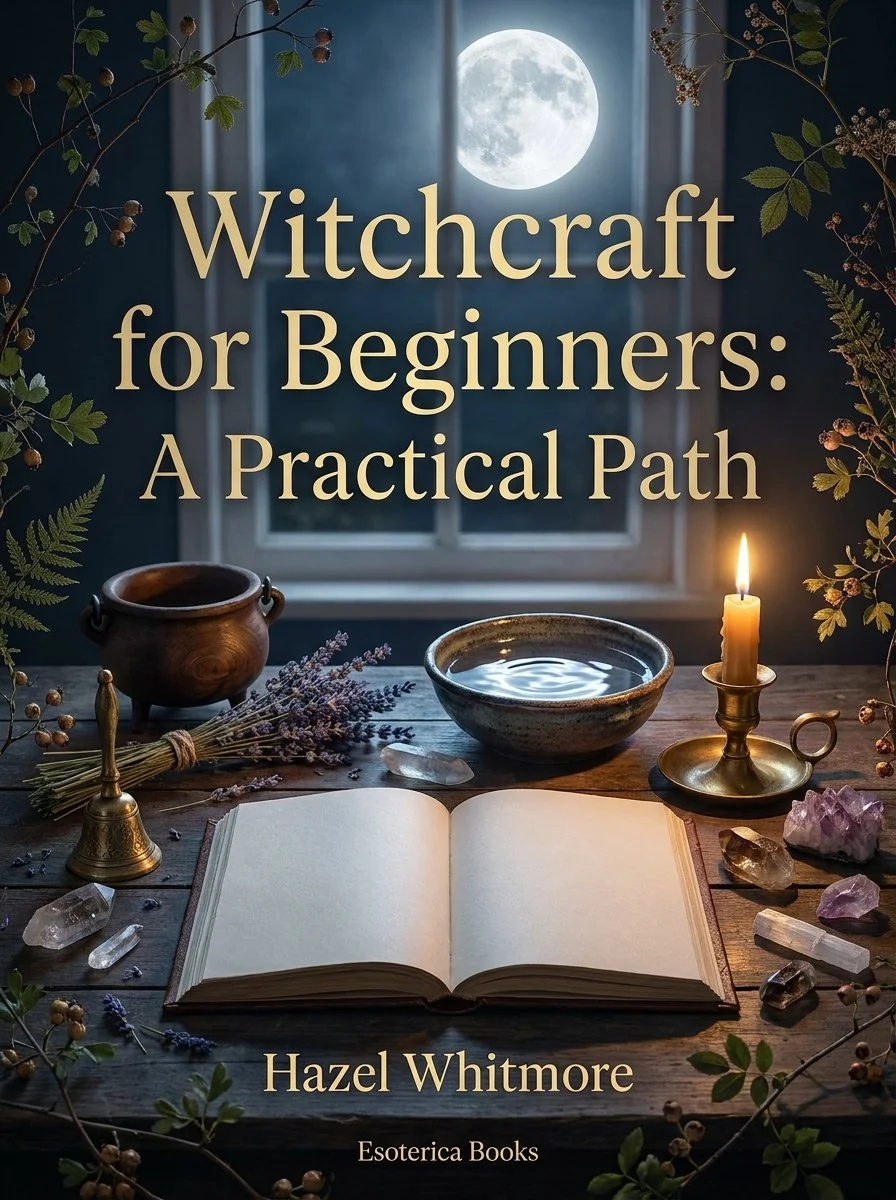
Witchcraft for Beginners: A Practical Path
by Hazel Whitmore
Get the e-book — $4.99Available — EPUB for your phone, tablet or e-reader
Contents
-
Your First Little Act of Magic
Forget the elaborate altar and shopping list: begin with a simple intention-setting ritual using a piece of paper and an everyday object. Follow your first R.O.O.T. exercise, discover what witchcraft can mean as a personal practice, and learn how to reflect on the experience without expecting supernatural guarantees.

-
The Tools That Make a Practice Yours
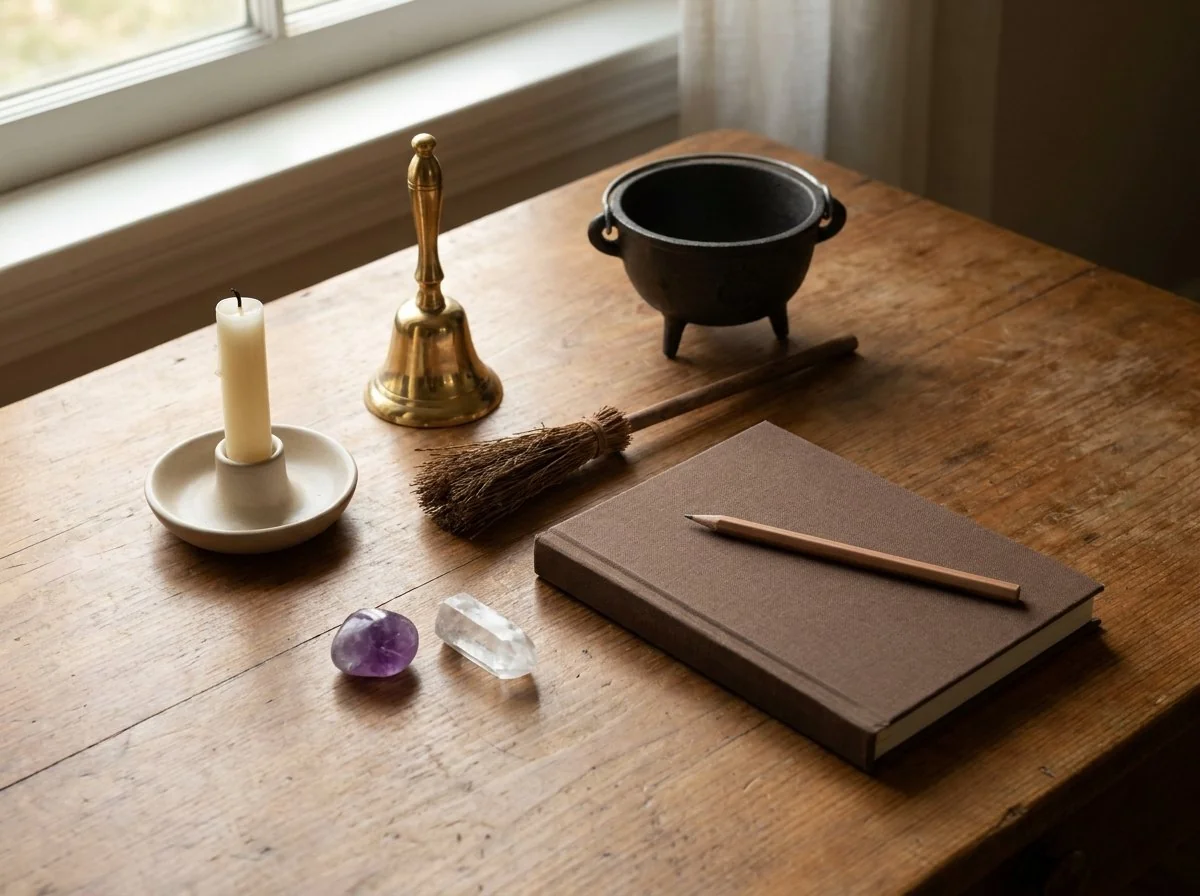
Meet the traditional tools of witchcraft, from candles, bells, and brooms to cauldrons, crystals, and journals. Learn their symbolic associations, discover which objects are genuinely useful for your practice, and understand why intention matters more than owning a complete collection.
-
Find Your Own Way Into the Craft
Explore what witchcraft is, how different contemporary approaches understand it, and how personal practice differs from organized spiritual traditions. Discover the relationship between witchcraft and Wicca without treating them as interchangeable, and identify the values that will guide your own path.

-
A Place for Your Practice to Take Root
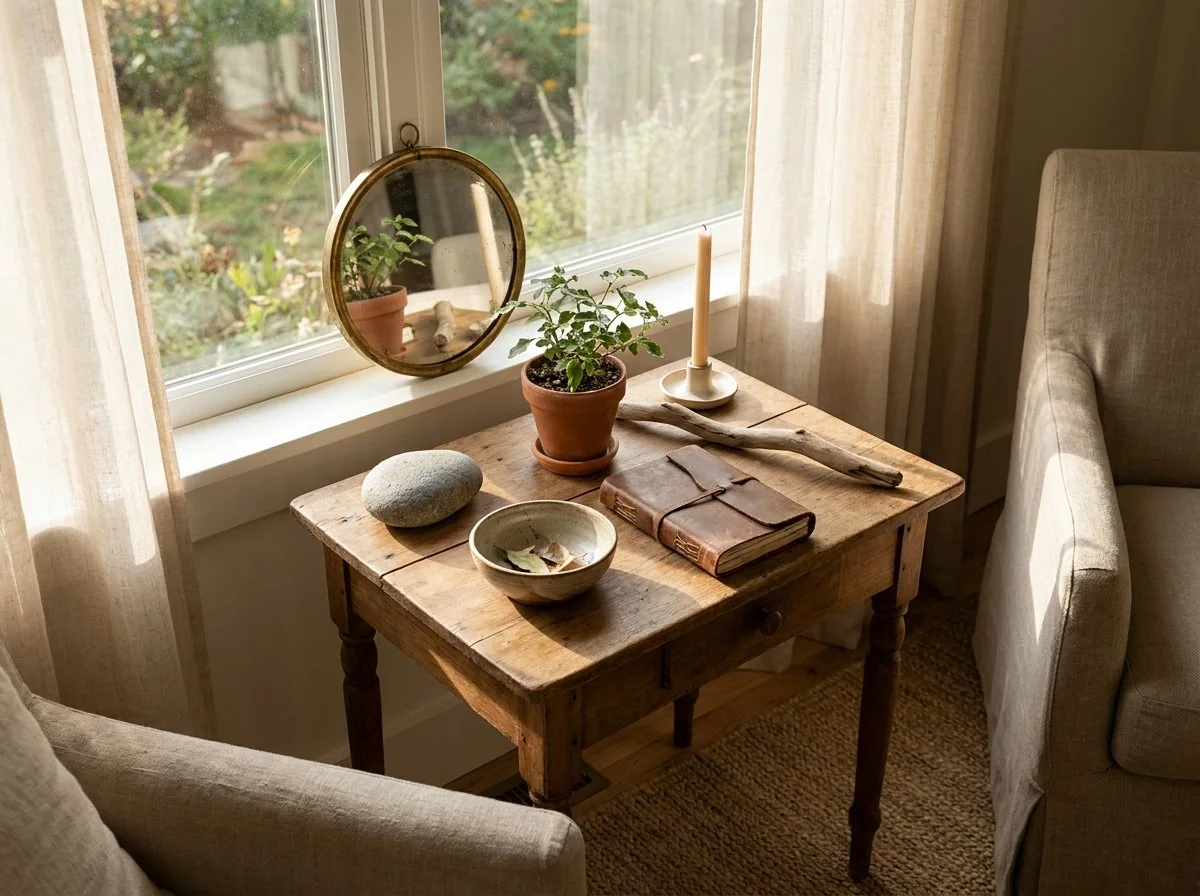
Create a simple personal altar or sacred corner using objects that have meaning to you. Explore traditional altar arrangements, witchcraft symbols, protective symbolism as a form of personal intention, and practical ways to keep your space welcoming rather than cluttered.
-
The Language of Earth, Air, Fire, and Water
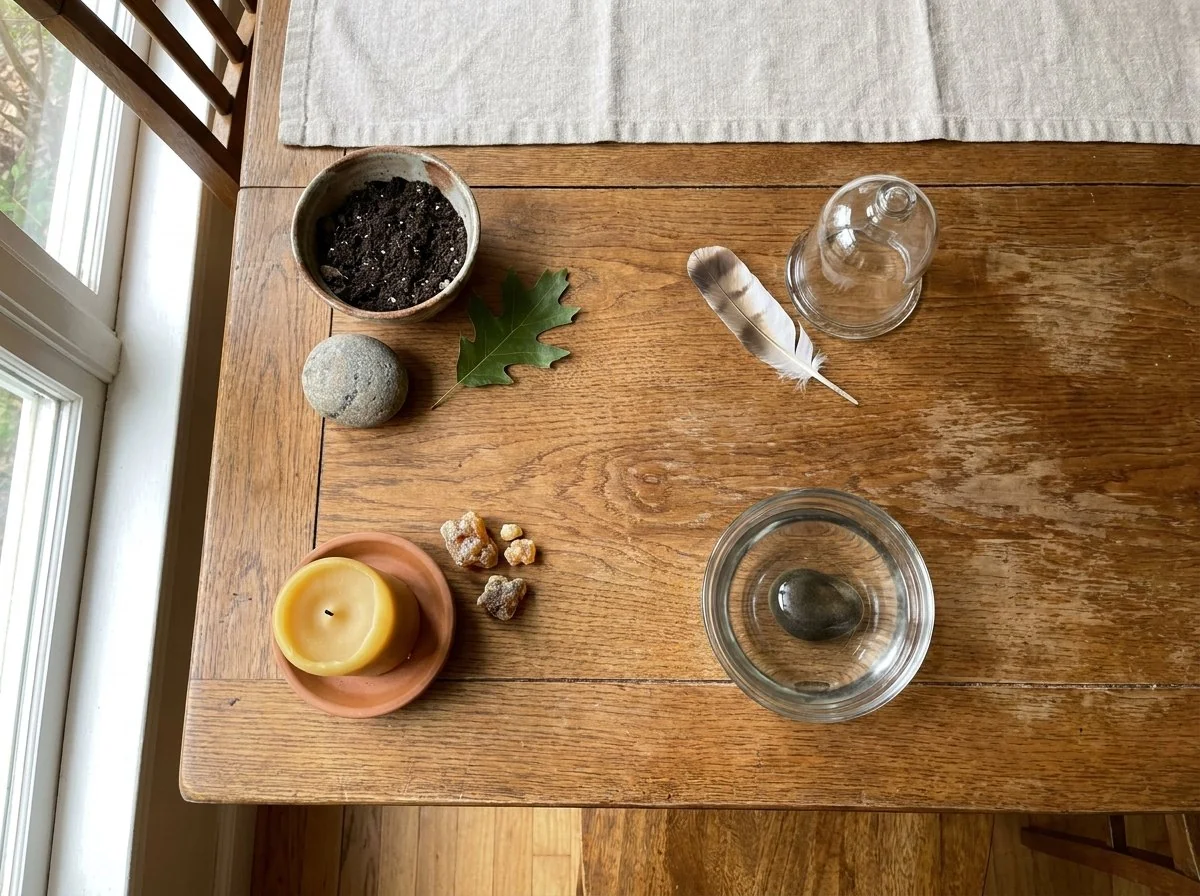
Discover the four-element framework and the symbolic correspondences traditionally associated with colors, seasons, directions, and natural materials. Learn to use these associations as a flexible language for reflection rather than a rigid system with universal rules.
-
Small Rituals, Thoughtfully Prepared
Put the Organize and Try stages of the R.O.O.T. Method into practice with approachable candle, water, and written-intention rituals. Follow clear preparation and closing instructions, understand the symbolism behind each action, and learn essential safety practices for working with flames and ritual materials.
-
Herbs, Crystals, and the Meanings We Give Them
Explore traditional herbal and crystal correspondences, including the symbolic associations of familiar colors, plants, stones, and natural objects. Learn how to research materials responsibly, distinguish personal interpretation from tradition, and make choices without treating objects as medical treatments or guaranteed sources of change.
-
Water, Weather, and the Living Landscape
Build a nature-centered practice through observation of water, rain, rivers, gardens, and changing seasons. Explore water symbolism and simple water-based rituals while learning to work respectfully with the environment and avoid appropriating the ceremonies or sacred traditions of others.
-
Choose Your Symbols, Write Your Own Meaning
Explore common witchcraft symbols, personal ritual names, and the role of meaningful objects in shaping a spiritual identity. Learn to create a personal symbol or choose a witchcraft name through reflection, while understanding that symbols can carry different meanings across traditions and individuals.
-
Working With the Moon and the Turning Seasons
Explore lunar symbolism and seasonal reflection as ways to structure personal rituals and notice recurring themes in everyday life. Create a simple observation journal and seasonal ritual calendar without treating celestial cycles as predictions or promises about future events.
-
A Practice With Boundaries and Good Sense
Develop an ethical framework for independent witchcraft, including consent, personal responsibility, cultural respect, and the limits of spiritual interpretation. Learn to distinguish open practices from closed or initiatory traditions, approach divination as reflection rather than prediction, and recognize when a ritual needs to be simplified or reconsidered.
-
Make the Craft Your Own
Bring all four R.O.O.T. stages together to design complete personal rituals, from identifying an intention to choosing correspondences, preparing a space, and recording reflections. Finish by creating a flexible personal practice that can grow with your interests, values, and understanding without depending on fixed rules or promised outcomes.
About this book
You feel drawn to witchcraft, but getting started can seem overwhelming: unfamiliar symbols, endless tool lists, conflicting advice, and uncertainty about what witches actually do. You may wonder whether you need to follow Wicca, buy crystals, build an elaborate altar, or learn complicated rituals before you can call yourself a practitioner. The most useful discovery is that witchcraft does not have one universal definition or a required collection of supplies. You can begin with a clear intention, an ordinary household object, and curiosity about the meanings people have traditionally given to nature, symbols, and ritual actions. The R.O.O.T. Method gives you a practical way to explore those ideas without treating any correspondence or tradition as an absolute rule.
By the end of this book, you will know how to choose meaningful tools, create a personal altar, explore Earth, Air, Fire, and Water, work thoughtfully with herbs and crystals, observe lunar phases and seasonal changes, and design simple rituals of your own. Most importantly, you will have the confidence to build a flexible, respectful practice guided by your values rather than expensive purchases, rigid instructions, or promises of supernatural results.
The R.O.O.T. Method: Four Steps to Growing a Practice of Your Own
- Recognize — Identify the intention behind your practice, consider your personal values, and decide what you want a particular ritual to represent before choosing any tools or actions.
- Observe — Explore traditional and personal correspondences involving Earth, Air, Fire, Water, seasons, colors, herbs, and natural objects while recognizing that meanings differ between traditions and practitioners.
- Organize — Give your intention a place and a form by selecting a few meaningful tools, preparing a simple altar or sacred space, and arranging the actions and materials of a ritual without unnecessary purchases or complicated preparations.
- Try — Perform your ritual mindfully, write down what you noticed and what the experience meant to you, and use reflection to adapt future practices to your changing interests and values.
Your First Ten Minutes: A Simple Ritual With What You Already Have
You do not need to wait until you have a dedicated altar or a cabinet full of herbs to begin. You can practice the R.O.O.T. method right now using items already sitting on your desk or kitchen table.
- Recognize: Put One Intention Into Words — Take a small piece of paper and write one sentence describing what you want your practice to represent, such as welcoming a new season, making room for creativity, or expressing gratitude. Read the sentence once and consider why it matters to you. (2 minutes)
- Observe: Choose an Everyday Symbol — Look around your room and select an ordinary object, such as a smooth stone, a small bowl, or a leaf. Consider what it personally represents to you and write down one association without worrying about whether it matches someone else's tradition. (1 minute)
- Organize: Make a Small Sacred Space — Clear a small surface and place your written intention beside the chosen object. Take a moment to arrange them in a way that feels meaningful and uncluttered; no special altar furniture or additional supplies are necessary. (1 minute)
- Try: Give Your Intention a Moment of Attention — Sit or stand comfortably, look at the object, and quietly read your intention. Let the action itself represent your decision to give this idea attention, without expecting an extraordinary or supernatural effect. (3 minutes)
- Reflect: Record What the Ritual Means — Write one or two sentences in a notebook about why you chose the object, how you arranged your space, and what you would keep or change next time. Your observations become the first entry in your ritual journal. (3 minutes)
Start with one small intention, follow the R.O.O.T. path at your own pace, and discover how an everyday object can become the beginning of a meaningful personal practice.
