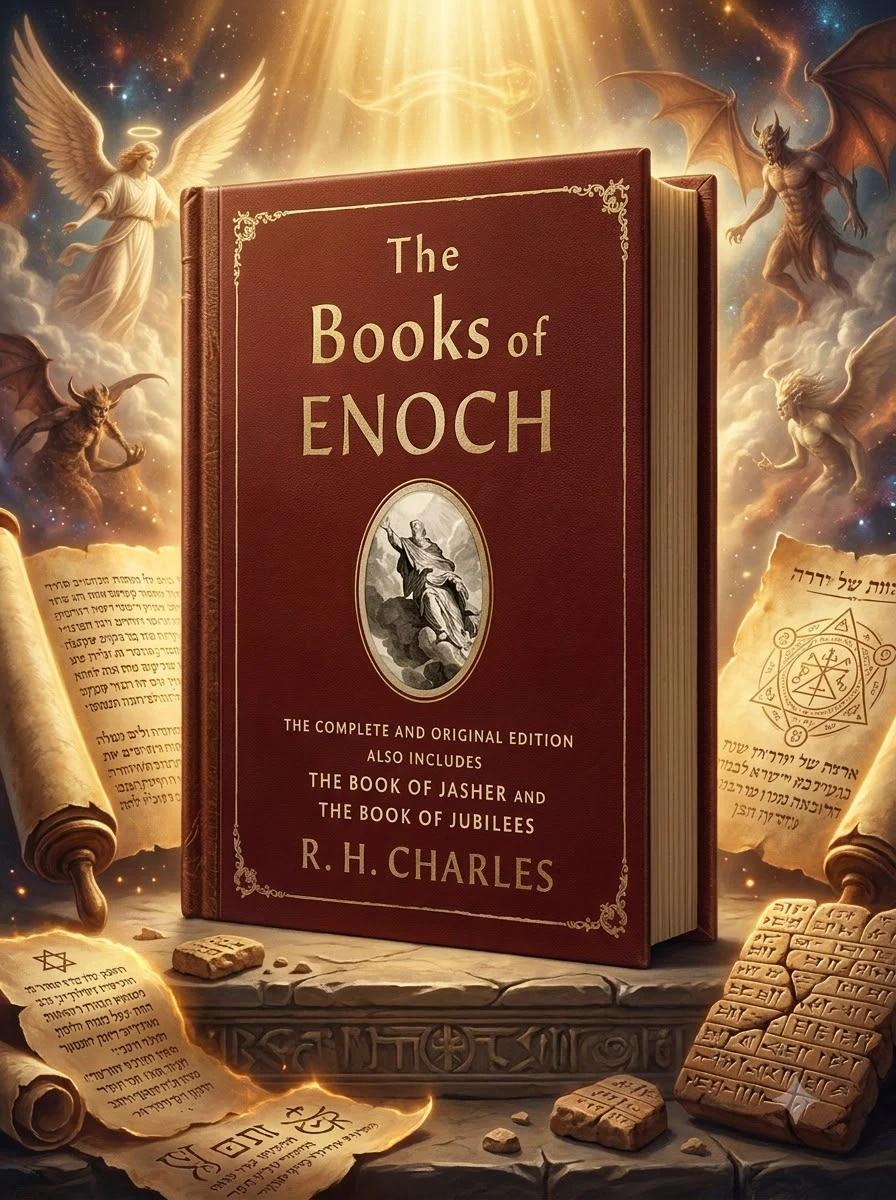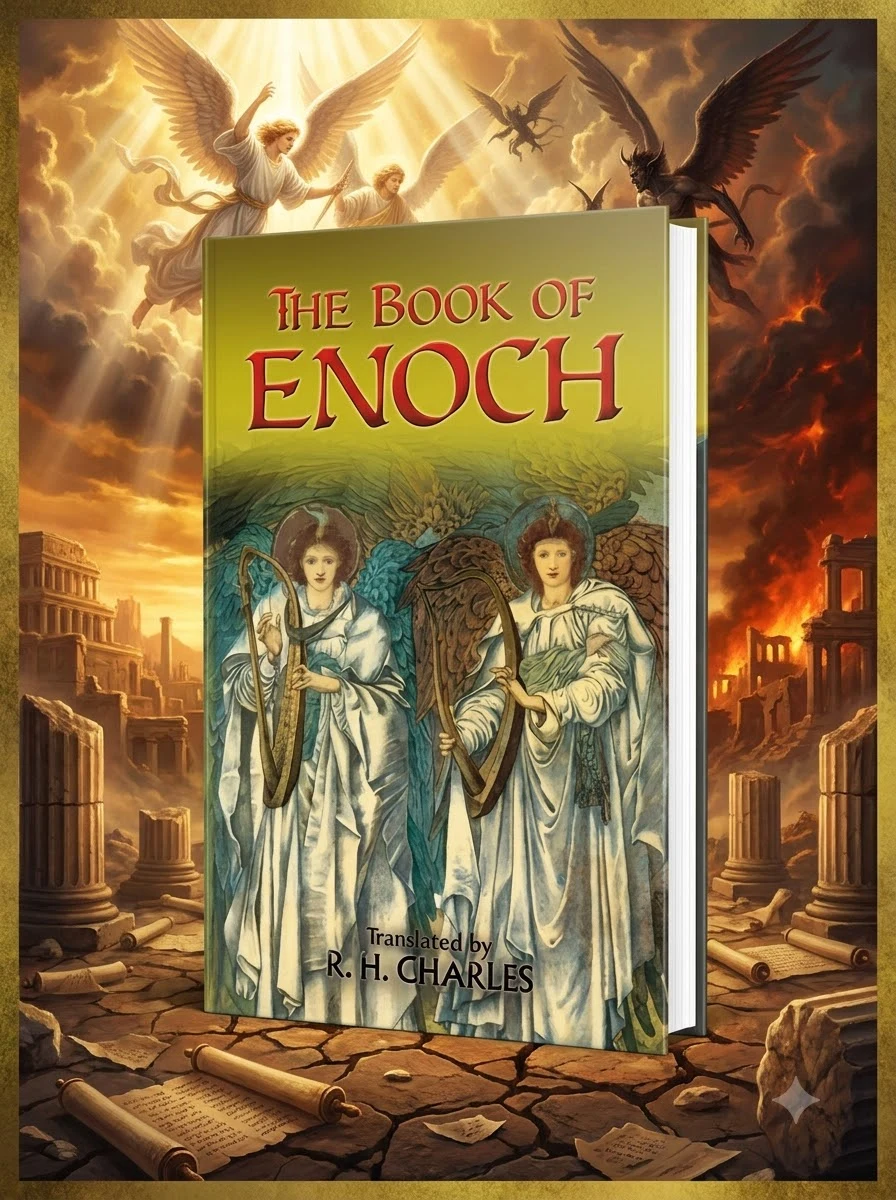
The Book of Enoch
✍️ Charles, R HA translation of ancient Palestinian apocalyptic writings on fallen angels, demonology, and judgment.
This volume brings together several independent works composed in Palestine during the first and second centuries B.C. The included texts range from celestial studies in The Book of the Courses of the Heavenly Luminaries to prophetic passages in The Dream Visions, alongside sections detailing Noah and various parables. R. H. Charles supplies notes to guide readers through these early Christian and biblical apocrypha sources. The collection centers on themes of divine judgment, spiritual warfare, resurrection, and ultimate redemption for the righteous.
Written in Palestine across the first and second centuries B.C., this material was embraced by early church fathers. The council of Laodicea later rejected it in A.D. 364, leaving it as a surviving remnant of early apocalyptic literature.


📝 Description: The Book of Enoch
💎 Expert review
📖 Why choose it
Why this book is worth reading
Readers with a deep curiosity about the origins of spiritual thought will find immense value in this volume. It offers an unvarnished look at forbidden wisdom that shaped early beliefs, making it essential for those studying the roots of Christianity and Jewish mysticism. R.H. Charles' scholarly apparatus provides necessary clarity for navigating complex narratives regarding divine judgment and redemption. For anyone seeking to understand the pivotal yet often overlooked documents that influenced ancient cosmology, this translation illuminates the cosmic struggle between good and evil with precision and depth.
⭐ Reader reviews
Reader rating
This edition serves as a vital resource for scholars and serious enthusiasts of esoteric history, offering R.H. Charles' meticulous translation of a text long absent from canonical scripture. The scholarly apparatus effectively guides readers through complex narratives spanning the fall of angels to new heavens. However, those seeking straightforward narrative fiction or simple devotional reading will likely find the dense theological content and apocalyptic symbolism difficult to engage with. It is not suited for casual readers expecting light entertainment; it demands a serious intellectual commitment to understanding pivotal spiritual documents.
❓ Frequently asked questions
📖 Who should read this
If you are captivated by biblical mysteries, the evolution of religious thought, or the esoteric roots of Western spirituality, this book is for you. Scholars, mystics, and curious readers alike will find rich material to explore within its pages.
🎯 Key themes and symbolism
Fallen Angels & Demonology
Explore the dramatic narrative of the Watchers, celestial beings who descended to Earth, corrupted humanity, and introduced forbidden knowledge. This book lays significant groundwork for later concepts of original sin and the origins of demonic forces, profoundly influencing subsequent Abrahamic esoteric traditions regarding the nature of evil and its earthly manifestations.
Cosmic Justice & Apocalypse
Witness a profound vision of divine retribution and ultimate triumph. 'The Book of Enoch' vividly details the impending punishment for the wicked and the promised blessedness for the righteous. It serves as a powerful testament to the enduring hope for cosmic balance, offering detailed prophecies concerning the Last Judgment and the dawn of a transformed world.
Early Christian Foundations
Uncover how this text, though later excluded, was revered by early Church Fathers and significantly informed early Christian theology. Its concepts of resurrection, the Son of Man, and the ultimate victory of good over evil resonated deeply, providing critical context for understanding the philosophical and spiritual landscape from which Christianity emerged. It's a key to unlocking many New Testament allusions.
📜 Historical context
📚 Glossary
- Pseudepigrapha
- Apocalyptic Literature
- Watchers
📔 Questions to reflect on
- How might the inclusion or exclusion of texts like 'The Book of Enoch' have shaped the foundational doctrines of your own spiritual path or worldview?
- Reflect on the concept of 'fallen angels' as depicted in this text. What does it suggest about the nature of evil, free will, and divine intervention?
- Considering the book's emphasis on cosmic justice, how do you reconcile its vision of divine retribution with contemporary understandings of compassion and redemption?