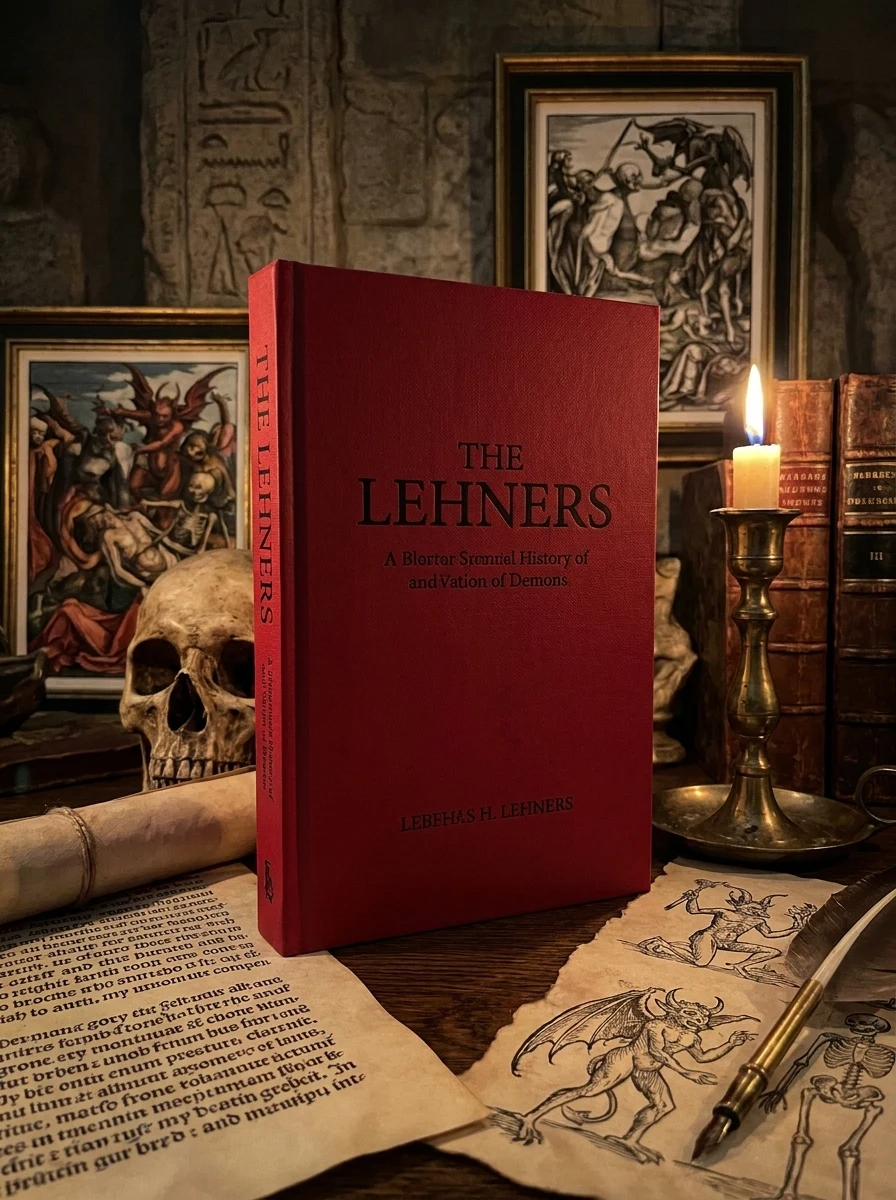

Devils, Demons, and Witchcraft: 244 Illustrations for Artists and Craftspeople
A historic sourcebook of 244 visual representations depicting death, devils, and witchcraft across human history.
Ernst and Johanna Lehner present a collection of 244 historic images, symbols, and manuscript pages documenting how artists visualised evil, mortality, and human suffering throughout history. Spanning from ancient Egyptian times through 1931, the material focuses most heavily on the fifteenth, sixteenth, and seventeenth centuries. Visual entries include notable artwork created by Dürer, Holbein, Cranach, and Rembrandt, together with creations by anonymous or lesser-known artists.
Drawing on artistic traditions from Egyptian times through 1931, the collection centers on Western Europe during the fifteenth, sixteenth, and seventeenth centuries. It reflects the visual culture of early modern religious conflicts, political disputes, and historical perceptions of death.


📝 Description: Devils, Demons, and Witchcraft: 244 Illustrations for Artists and Craftspeople
💎 Expert review
📖 Why choose it
Why this book is worth reading
Artists, craftspeople, and historians of the occult will find this collection an invaluable visual resource. The book offers a profound journey through the iconography of darkness, tracing humanity's enduring fascination with evil from ancient times to the modern era. By showcasing works by masters like Dürer and Holbein alongside anonymous creators, it provides essential reference material for understanding how devils, demons, witches, and Death have been visualized over millennia. This is not merely a book of pictures but a curated exploration of malevolent forces, perfect for those seeking to unmask the faces of darkness in their own creative or academic pursuits.
⭐ Reader reviews
Reader rating
This compilation serves as a specialized visual archive rather than a narrative text. It is ideal for illustrators and researchers needing reference material on historical depictions of evil. However, it does not suit readers seeking deep theological analysis, biographical details on the artists, or a chronological historical account. Those expecting textual commentary or philosophical discourse will find it lacking. The value lies strictly in its 244 illustrations, which capture the terrifying visages of malevolence across the 15th through 17th centuries and beyond. It is a tool for visual study, not a literary experience.
❓ Frequently asked questions
📖 Who should read this
If you're an artist seeking dark inspiration, a student of occult symbolism, or simply fascinated by the historical representation of evil and mortality, this visual compendium offers an unparalleled resource. It’s perfect for those who appreciate the macabre in art and history.
🎯 Key themes and symbolism
Faces of Infernal Power
This collection meticulously charts the evolution of demonic imagery, from classic figures like Belial and Beelzebub to the Anti-Christ. It reveals how artists across ages have sought to capture the essence of evil, offering a visual compendium of hellish entities and their changing forms in the human psyche.
The Witch's Shadow
Explore the historical depictions of witches and warlocks, their magical practices, animal familiars, and ritualistic gatherings. The book provides a fascinating visual record of societal fears and fascinations surrounding sorcery, showcasing how these figures were imagined and portrayed through various artistic lenses.
Echoes of Mortality
Journey through the chilling traditions of the Danse Macabre and Memento Mori. Witness the universal leveling force of death through Holbein's iconic alphabet and other grim reminders, from skull clocks to symbolic representations of life's fleeting nature, inviting contemplation on our inevitable end.
📜 Historical context
📚 Glossary
- Danse Macabre
- Memento Mori
- Beelzebub
📔 Questions to reflect on
- How do the historical depictions of evil influence your own understanding or fear of malevolent forces today?
- Consider how the 'Danse Macabre' and 'Memento Mori' traditions might be reinterpreted for a contemporary audience. What symbols would you use?
- Beyond religious contexts, what symbolic forms do 'devils' or 'demons' take in modern society or your personal experience?