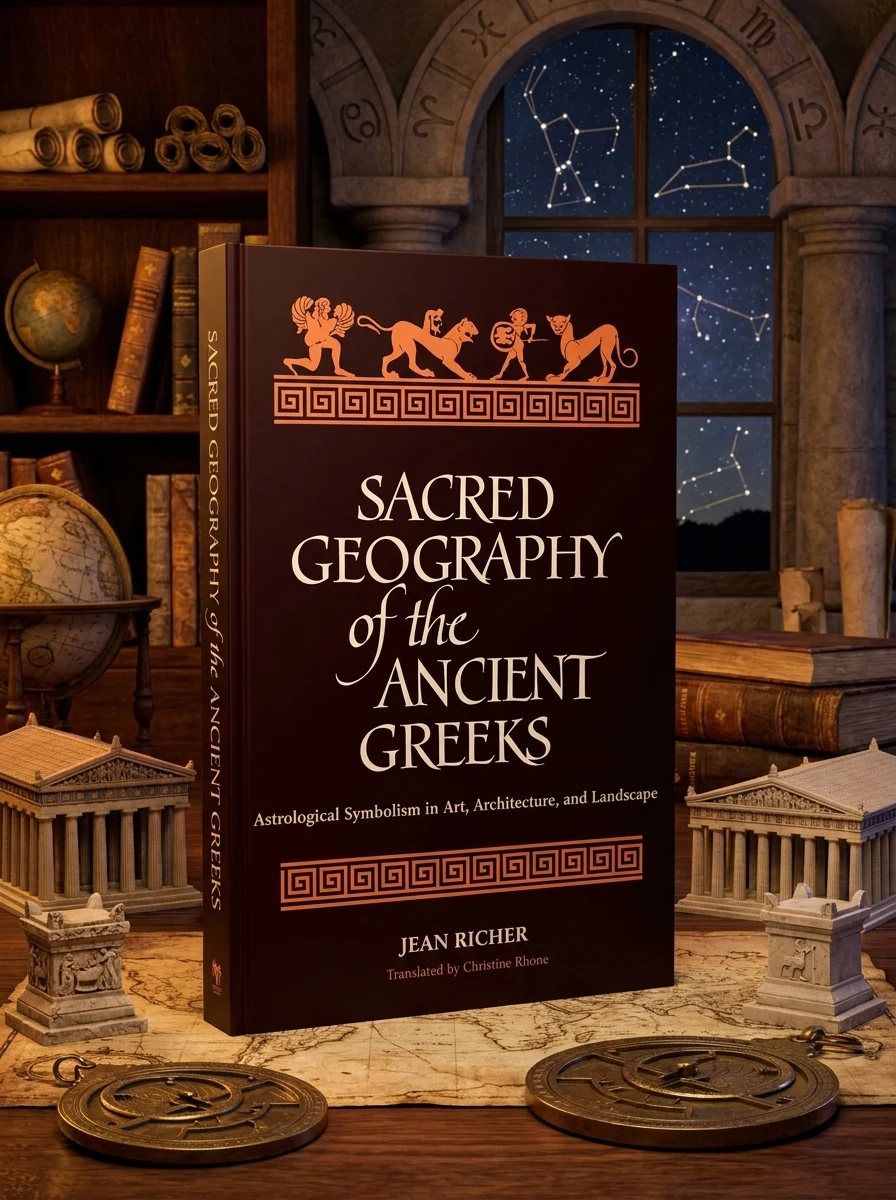
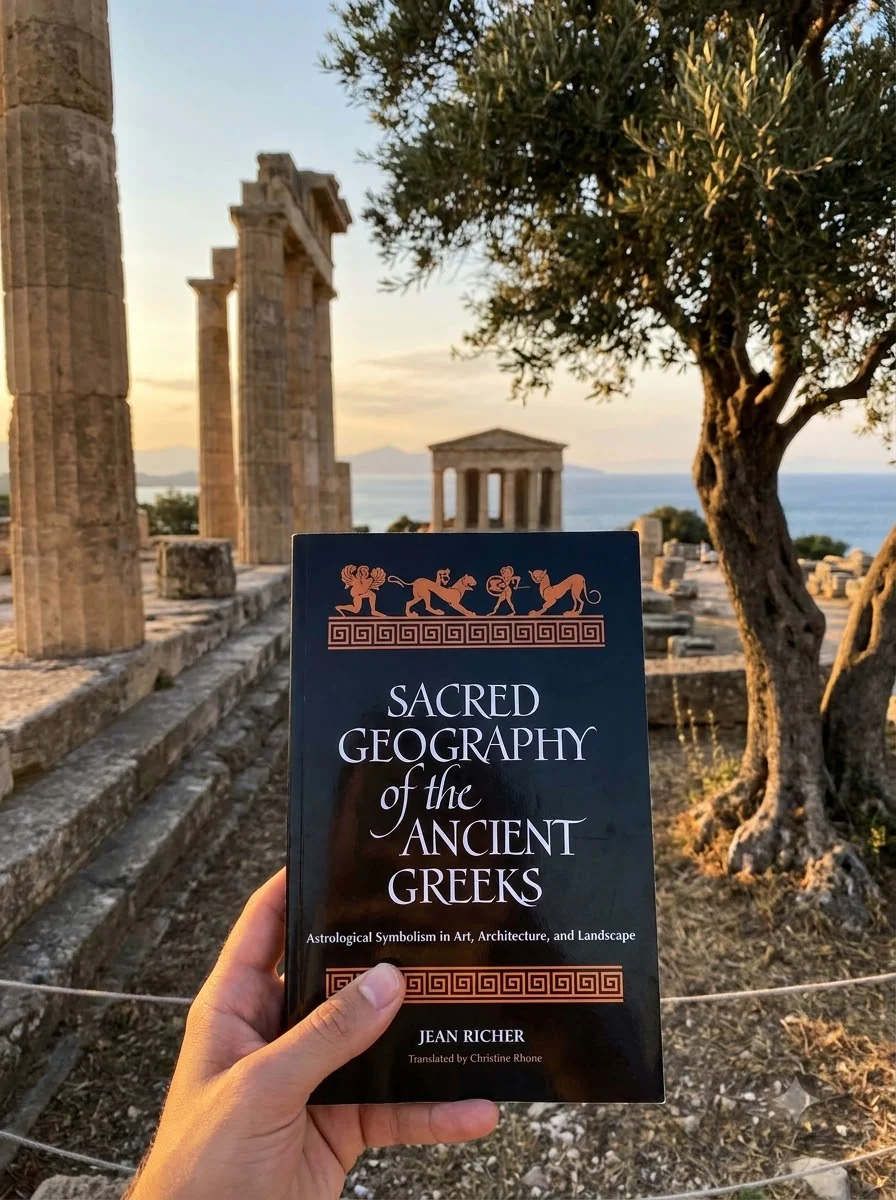
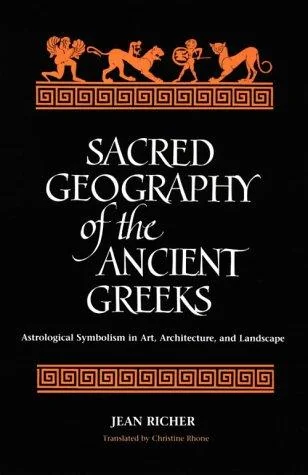
Sacred Geography of the Ancient Greeks: Astrological Symbolism in Art, Architecture, and Landscape Richer, Jean
A study of planned astrological alignments between ancient Greek temples and oracle sites across classical landscapes.
This volume examines how classical Greek builders aligned sacred architecture with astronomical principles across vast geographical distances. By examining the physical placement of ancient temples alongside regional oracle sites, Jean Richer establishes that early landscape planning relied on a cohesive astrological system. The material bridges classical history, astrology, and physical geography, showing that sanctuary placement was rarely accidental. It offers historical evidence for readers studying ancient sacred space rather than contemporary mystical practice.
This study focuses on classical antiquity, examining the geographical regions, temple architecture, and oracle sites of the ancient Greek world. It approaches these historical landscapes through the lens of ancient astrological planning systems.


📝 Description: Sacred Geography of the Ancient Greeks: Astrological Symbolism in Art, Architecture, and Landscape Richer, Jean
💎 Expert review
📖 Why choose it
Why this book is worth reading
Readers fascinated by the intersection of astronomy, architecture, and ancient mysticism will find this book indispensable. It offers a compelling argument that Greek temples were not merely religious structures but precise cosmic instruments designed to harness celestial power. If you have ever wondered if the placement of Delphi or Olympia was random, Richer provides a rigorous, evidence-based alternative. This volume is for those who seek to understand the hidden order behind classical antiquity, revealing how ancient minds perceived the universe as an interconnected, living map. It satisfies the deep curiosity about how spiritual beliefs physically shaped the world we study today.
⭐ Reader reviews
Reader rating
Jean Richer presents a bold thesis that will delight specialists in astrological archaeology but may frustrate traditional classicists seeking conventional historical narratives. The book demands patience and a willingness to accept complex astronomical alignments as intentional rather than coincidental. It is not suited for readers looking for light mythology or simple architectural guides. Those who prefer straightforward historical accounts without esoteric interpretation might find the dense synthesis of art, landscape, and star charts overwhelming. However, for those open to alternative histories, it offers a transformative perspective on the Greek world.
❓ Frequently asked questions
📖 Who should read this
If you're drawn to the mysteries of ancient civilizations, the forgotten wisdom of the stars, or the profound connections between spirit and landscape, this book will illuminate your understanding of classical Greece. Prepare to see familiar sites through an entirely new, cosmic lens.
🎯 Key themes and symbolism
Celestial Cartography
Richer meticulously maps out how ancient Greek architects and priests consciously designed their most significant structures, from grand temples to hallowed oracle sites, to mirror specific astrological configurations and cosmic principles, creating a terrestrial reflection of the celestial sphere.
Sacred Site Alignment
This book presents compelling evidence of purposeful alignments between geographically dispersed sacred locations. It argues that these sites were not randomly placed but were integrated into a vast, overarching network governed by astrological and astronomical calculations, revealing a unified worldview.
Ancient Cosmic Wisdom
Explore the profound intelligence of the ancient Greeks, whose esoteric knowledge extended beyond mere observation of the stars. Richer shows how they applied this understanding to shape their physical world, imbuing their landscape with sacred meaning and connecting human endeavors to divine cosmic order.
📜 Historical context
📚 Glossary
- Sacred Geography
- Astrological Alignment
- Oracle Sites
📔 Questions to reflect on
- Consider a significant ancient site you know. How might its placement or orientation reflect a forgotten cosmic understanding, even if not explicitly astrological?
- If modern cities were designed with sacred geography in mind, what celestial patterns or spiritual principles would you choose to embed in their layout?
- How does Richer's idea of a "sacred geography" challenge or expand your previous understanding of ancient Greek intellectual and spiritual life?