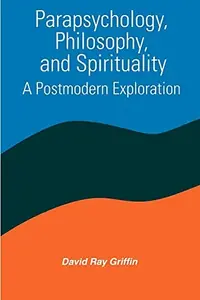
Parapsychology, Philosophy, and Spirituality: A Postmodern Exploration Griffin, David Ray


Stock reported in the catalog; fulfillment is confirmed with your request.
Unveil the hidden truths beyond conventional understanding and challenge materialist dogma.
David Ray Griffin, known for grappling with weighty philosophical questions, now confronts the controversial domain of parapsychology. He meticulously dissects why mainstream science, philosophy, and theology often reject psychic phenomena, arguing that such dismissals are frequently unfounded. Griffin then proposes a 'constructive postmodern' philosophical lens, enabling a serious appraisal of parapsychological evidence. He presents compelling cases for ESP, psychokinesis, and life after death, ultimately suggesting these findings offer a foundation for a profound and meaningful postmodern spirituality, challenging conventional reductionist views.
This work emerges from the intersection of contemporary philosophical discourse and esoteric inquiry, specifically within the constructive postmodern movement that seeks to reconcile scientific evidence with spiritual meaning. It stands as a significant intervention in the ongoing debate between materialist dogma and alternative metaphysical frameworks regarding consciousness.


📝 Description: Parapsychology, Philosophy, and Spirituality: A Postmodern Exploration Griffin, David Ray
💎 Expert review
📖 Why choose it
Why this book is worth reading
Readers seeking a rigorous intellectual foundation for spiritual beliefs will find profound value in Griffin’s courageous challenge to reductionist materialism. This book is essential for those weary of dismissing psychic phenomena as mere coincidence, offering instead a structured postmodern lens to evaluate evidence for ESP and life after death. It appeals to philosophers and theologians open to expanding their definitions of reality, providing a coherent bridge between empirical parapsychological data and meaningful spirituality. If you desire a work that does not shy away from controversial topics but treats them with academic seriousness, this text offers the necessary tools to rethink your worldview and embrace hidden truths beyond conventional understanding.
⭐ Reader reviews
Reader rating
Griffin delivers a formidable argument that demands attention from serious scholars of consciousness, yet it may frustrate readers seeking quick fixes or purely devotional content. The text is dense with philosophical nuance, requiring patience from those unaccustomed to academic rigor in occult studies. It does not suit skeptics entrenched in strict materialist paradigms, as the author explicitly aims to dismantle their dogma. Furthermore, casual readers looking for light paranormal anecdotes will likely find the systematic deconstruction of theological and scientific rejections tedious. It is a heavy, thoughtful contribution best appreciated by those willing to engage with complex arguments about the nature of existence.
❓ Frequently asked questions
📖 Who should read this
If you’re a seeker disillusioned by reductionist science, or if you possess an open mind towards psychic phenomena and the potential for consciousness beyond the physical, this book offers a profound intellectual journey. It's ideal for anyone ready to reconsider the boundaries of reality and spirituality.
🎯 Key themes and symbolism
Challenging Scientific Dogma
Griffin meticulously explores the historical and philosophical reasons behind the widespread skepticism toward parapsychology. He argues that prevailing scientific and philosophical paradigms often prematurely dismiss evidence that doesn't fit their established frameworks, hindering genuine inquiry into anomalous experiences and phenomena often deemed impossible by reductionist thought.
Validating Psychic Phenomena
The author presents a rigorous examination of various types of repeatable parapsychological phenomena. He delves into documented instances of extrasensory perception (ESP) and psychokinesis, offering a compelling argument that these events are not merely anecdotal but warrant serious consideration, challenging materialist explanations of reality and consciousness.
Consciousness Beyond Mortality
Griffin explores evidence suggesting consciousness persists beyond physical death. By proposing a non-reductive mind-brain distinction, he creates a framework for understanding phenomena like mediumship and apparitions. These insights contribute to building a more expansive and meaningful postmodern spiritual worldview, moving beyond purely materialist interpretations of existence.
💬 Quotes from the book
“The dismissal of parapsychological evidence often stems not from empirical refutation, but from an a priori philosophical commitment to a materialist worldview that simply cannot accommodate such data.”
“If we are to truly understand the full spectrum of reality, we must move beyond the reductionist paradigm and allow for a spirituality grounded not in dogma, but in empirical anomalies that point to a larger truth.”
📜 Historical context
📚 Glossary
- Parapsychology
- Psychokinesis
- Constructive Postmodernism
📔 Questions to reflect on
- How might acknowledging the reality of ESP or psychokinesis alter your understanding of human potential and the nature of consciousness?
- What preconceived notions do you hold about parapsychology, and how might a rigorous philosophical inquiry challenge or affirm them?
- If evidence for life after death were widely accepted, what implications would this have for your personal spiritual beliefs or lack thereof?
🏛 Books from this publisher State University of New York Press
All books from this publisher →




You might also like
See more →