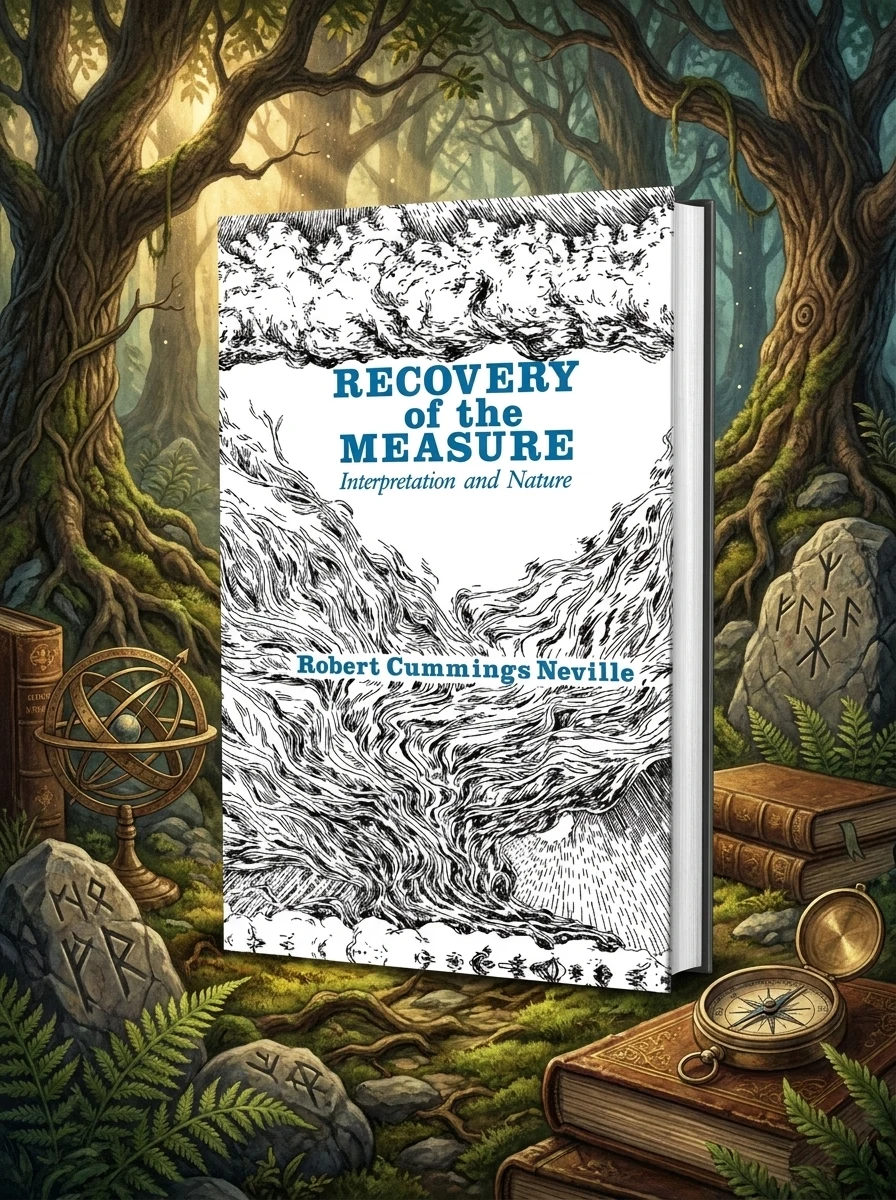
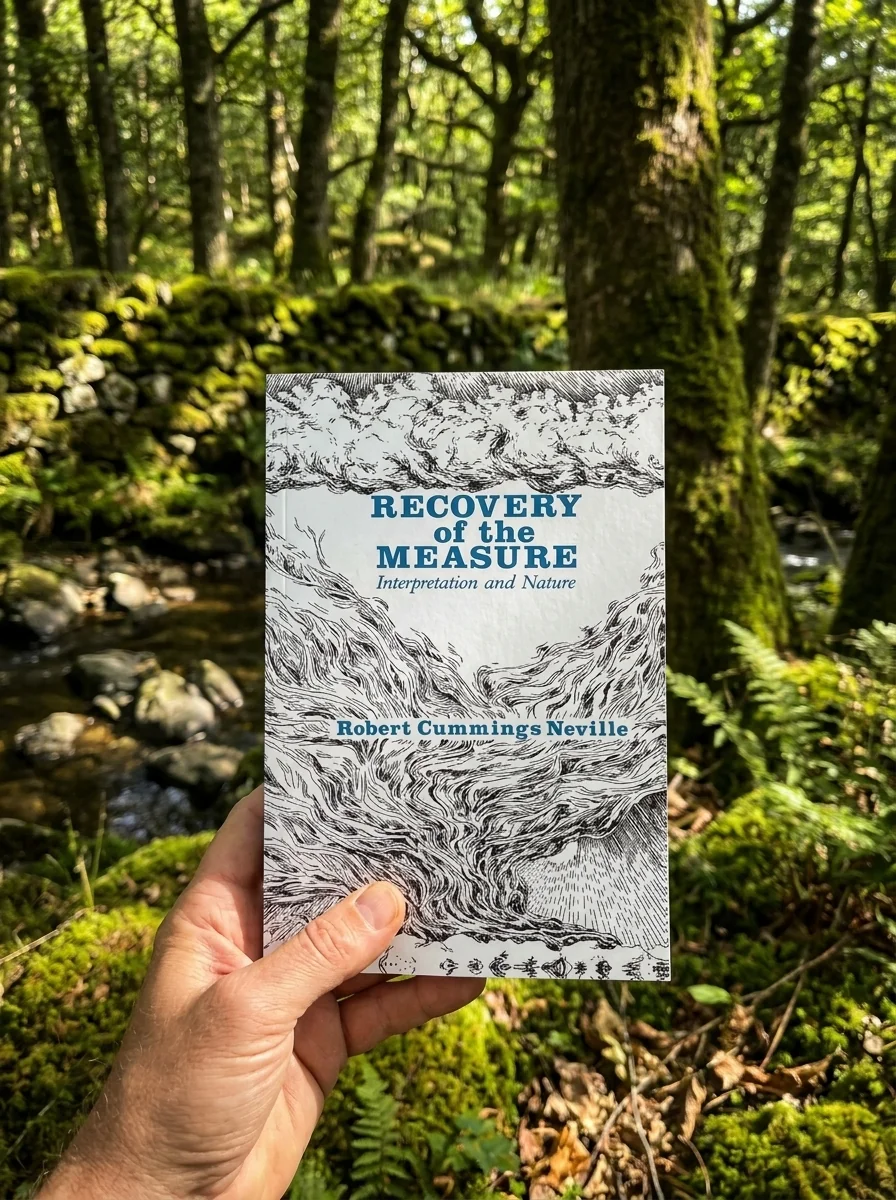
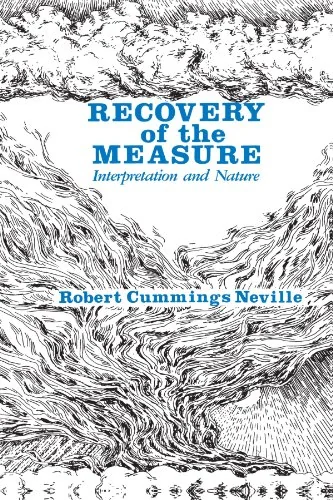
Recovery of the Measure: Interpretation and Nature
Currently unavailable
This book is sold out right now. Leave your email — we'll let you know if it comes back, and you'll get 10% off any book today.
In stock now — readers of this book also loved:





Robert Cummings Neville masterfully dismantles the pervasive belief that reality is solely a construct of our interpretations. Instead, he posits a radical reversal: the natural world fundamentally measures and shapes our understanding. By distinguishing between text-centric and nature-focused hermeneutics, Neville argues that interpretation itself is an integral part of nature. This necessitates a robust philosophy of nature, one capable of encompassing human intention and purpose, to provide a foundational theory of interpretation that transcends modern and postmodern limitations.


Praise for this book
“Neville's systematic, self-conscious employment of Peirce's theory of the sign as a means of locating the project of a philosophy of nature within the context of contemporary hermeneutical thinking is extremely fortunate. By so doing Neville has opened his thought to a ready assessment by continental thinkers and has placed himself near the center of contemporary philosophic debate.”
📝 Description: Recovery of the Measure: Interpretation and Nature
📑 What's inside
- Foreword
- Introduction
- Division One The World As Measure
- Preliminary Remarks
- 1 The problem of Truth
- I. Imagination and Interpretation II. Myth III. The Imperial Triumph of Interpretation IV. Fact and Value
- 2 Philosophical Strategies
- I. Cartesian Mechanism vs. Context Dependence II. Functionalism III. Hermeneutics IV. Pragmatism
- 3 Truth: An Axiological Hypothesis
- I. Interpretation II. Value and Valuation III. Truth as the Carryover of Value IV. The Hypothesis as a Theory of Truth
- 4 Participation: The Context of a Philosophy of Interpretation
- I. Biological Participation II. Cultural Participation III. Semiotic Participation IV. Purposive Participation
- Division Two Philosophic Foundations For A New Common Sense: An Axiological Metaphysics
- Preliminary Remarks
- 5 Identity
- I. The Problem of Identity II. Identity in Metaphysics and Cosmology III. Difference: Conditional Features IV. Self-identity: Essential Features
- 6 Being and Primary Cosmology
- I. Being and the Ontological Ground of Reality II. Primary Cosmology III. Form, Components, Actuality, and Goodness IV. A Summary Theory of Reality
- 7 Value
- I. Historical Reflections on "Value" II. The "Objectivity" of Value III. A Theory of Value IV. Form and Value
- 8 Harmony: A Theory of Components
- I. Claiming and Patterned Components: Extensionality II. Achieved Components: Actual Space-Time III. Harmonized Components: Cosmos and Chaos IV. Knowledge of Value
- Division Three Philosophy of Nature: A Cosmology of Participation
- Preliminary Remarks
- 9 Modalities of Time
- I. Present II. Past III. Future IV. The Being of Time
- 10 Temporal Things: Endurance, Perishing, and Change
- I. Endurance II. Perishing III. Discursive Actuality IV. The Temporal Structure of Human Being
- 11 Space and Motion
- I. Space and Extensionality II. Motion III. Dynamics of the Space-Time Field IV. Extensionality and the "Metaphysics of Presence"
- 12 Causation
- I. Causation, Endurance, and Growth II. Inertial Forces, Regularities, and Systems III. Discursive Individuals IV. Causation, Nature, and Interpretation
- Division Four Truth and Interpretation: A Measure Recovered Preliminary Remarks
- 13 Network Meaning
- I. On Language for Interpretation Theory II. Rules, Networks, and Reference III. The Development of Codes IV. Formal Structure of Network Meaning
- 14 Content Meaning
- I. Pragmatism and the Linguistic Turn II. The Structure of Content Meaning III. Human Representations IV. Value and Deficiency in Content Meaning
- 15 Intentionality
- I. Experience as Process II. The Vector Character of Experience III. Presentational Immediacy IV. The Temporality of Intentional Life
- 16 Interpretation
- I. Purpose II. Context III. Truth IV. The World as Measure
- Notes
- Bibliography
- Index
💎 Expert review
📖 Why choose it
Why this book is worth reading
Readers weary of the solipsistic traps inherent in extreme postmodernism will find profound relief in Neville’s rigorous defense of objective reality. This book is essential for philosophers, theologians, and spiritual seekers who feel that current interpretive frameworks have severed the vital link between human meaning-making and the natural world. It offers a robust framework for understanding how our interpretations are not free-floating constructs but are deeply measured and shaped by the environment itself. If you seek a philosophical foundation that honors both human intention and the autonomy of nature, this text provides the necessary tools to reclaim a coherent worldview without sacrificing intellectual depth.
⭐ Reader reviews
Reader rating
Neville’s argument is intellectually demanding and requires patience from readers accustomed to lighter literary theory or purely mystical texts. It does not suit those seeking quick answers or those who firmly believe that reality is entirely subjective. The dense philosophical terminology may alienate casual readers, but it rewards serious students of metaphysics with a coherent alternative to prevailing interpretive trends. While the prose is academic, the insights are transformative for anyone interested in the philosophy of nature.
❓ Frequently asked questions
📖 Who should read this
If you are drawn to profound philosophical inquiry into the nature of reality, knowledge, and the very act of understanding, this book is essential. It's for thinkers who question prevailing assumptions and seek a robust, alternative framework for interpreting the world and our place within it.
🎯 Key themes and symbolism
Nature's Interpretive Authority
Neville challenges the anthropocentric view that our interpretations define reality. He argues for the intrinsic authority of the natural world, asserting that it is the ultimate measure by which human understandings are judged. This perspective elevates nature from a passive object of study to an active participant in shaping our cognitive and experiential frameworks.
Hermeneutics Beyond Text
This work expands the traditional scope of hermeneutics, moving beyond its prevalent focus on textual analysis. Neville contends that interpretation is not merely a human act upon signs, but a natural phenomenon. By embedding the interpretive process within the broader context of nature, he opens new avenues for understanding how meaning arises in the world.
Reclaiming Philosophical Foundations
Offering a crucial alternative to contemporary thought, Neville navigates past the impasses of modern and postmodern philosophies. He constructs a non-reductive theory of interpretation by re-establishing a comprehensive philosophy of nature, one that is rich enough to account for being, identity, value, and causation within its framework.
📜 Historical context
📚 Glossary
- Hermeneutics
- Non-modernist
- Postmodernist
📔 Questions to reflect on
- How might the idea of nature as the 'measure' of your interpretations shift your understanding of truth or objective reality?
- Consider a deeply held belief or interpretation of yours. In what ways could the natural world itself have shaped or influenced its formation, beyond mere observation?
- If interpretation is an intrinsic part of the natural world, what implications does this have for our sense of human uniqueness or our role as conscious beings?
📖 Read on the blog
🏛 Books from this publisher State University of New York Press
All books from this publisher →


You might also like
See more →

Have a question about this item?
Ask about the edition, condition, delivery or anything else — we reply by email or phone, usually within a day.
