US shipping Secure card payment Occult and esoteric books

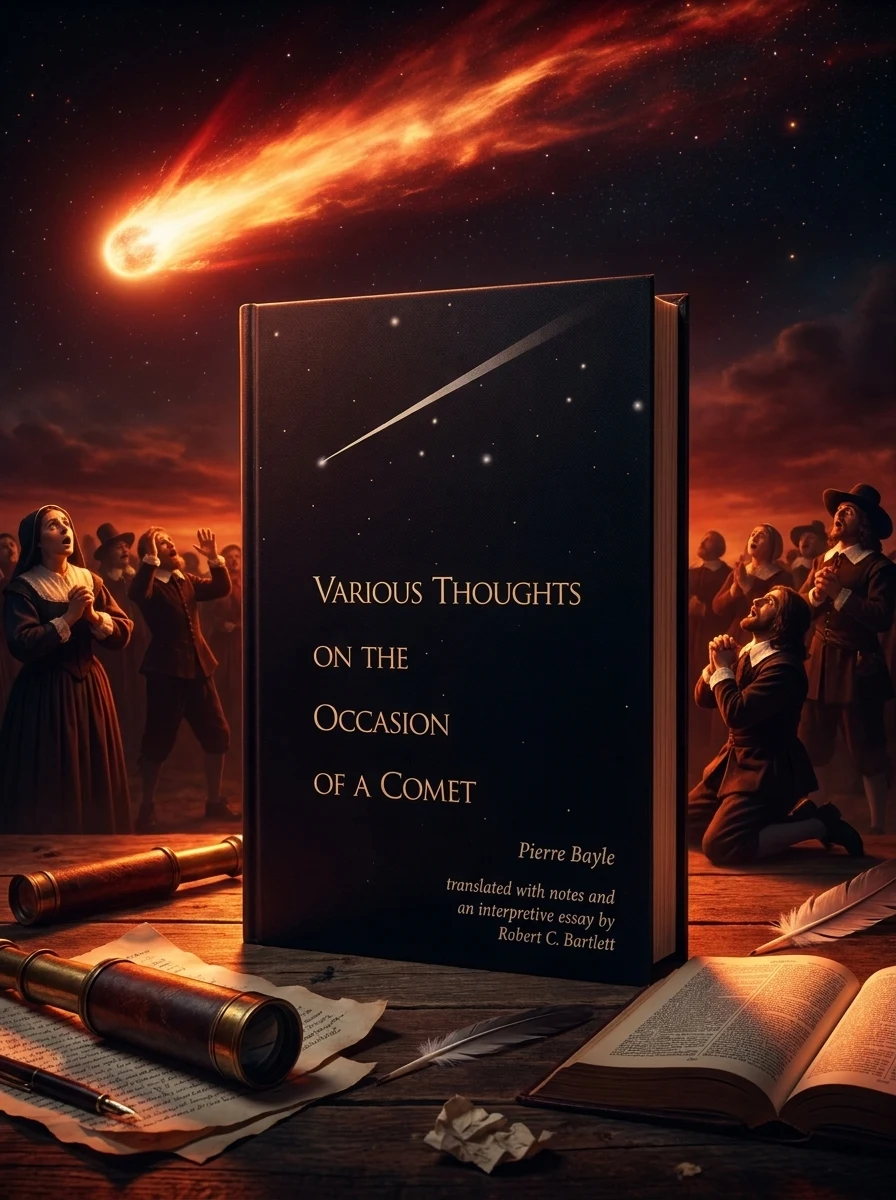
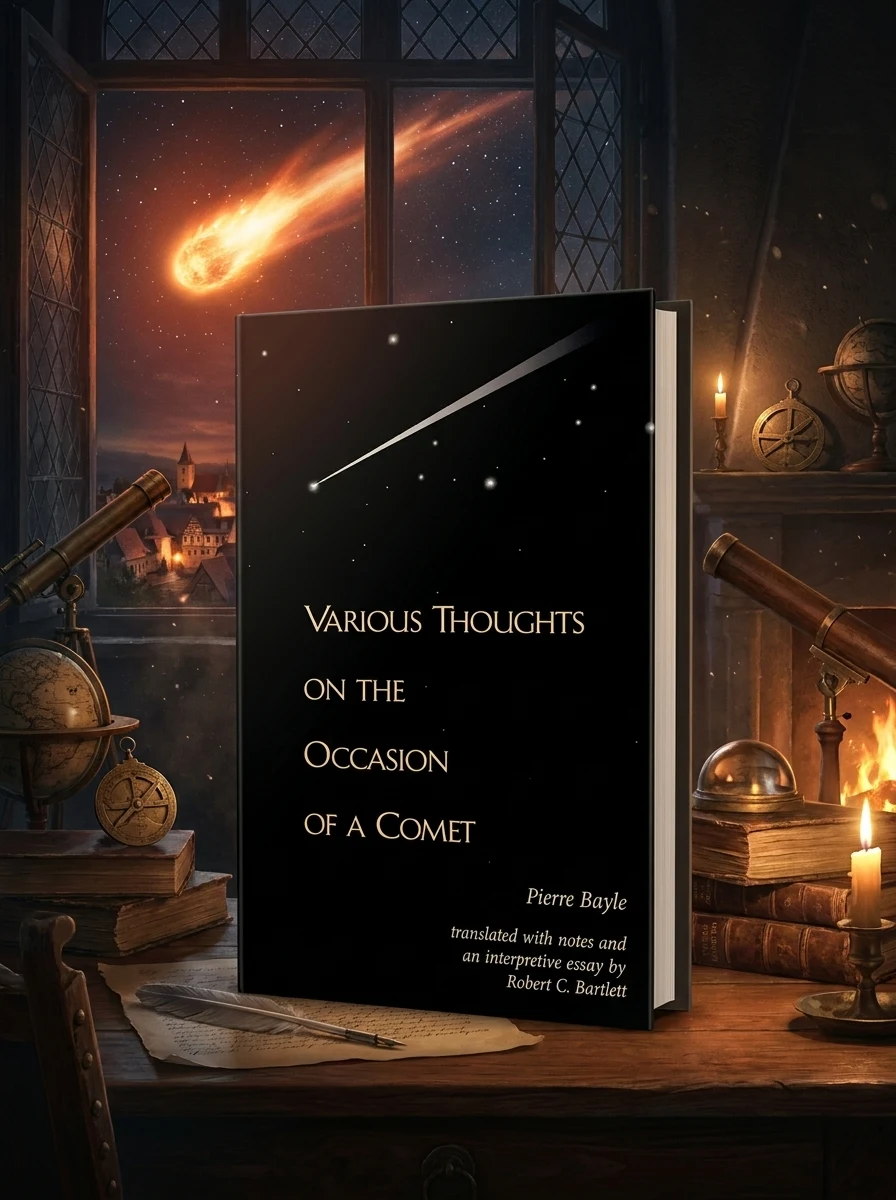
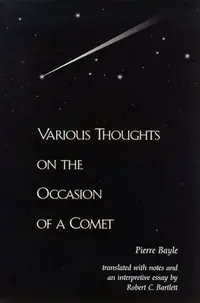
Various Thoughts on the Occasion of a Comet

Bayle, Pierre
Reader rating
4.7
(6 reviews) 171 sold
In stock

Stock reported in the catalog; fulfillment is confirmed with your request.

📚 ABOUT THE BOOK

A comet ignites panic, but Bayle’s reason cools the flames of superstition.

In 1682, Pierre Bayle responded to the public hysteria surrounding the Great Comet of 1680, not with astrological predictions, but with rigorous philosophical inquiry. This landmark text dismantles the medieval tendency to read divine wrath into celestial phenomena. By separating natural events from political or theological interpretation, Bayle argues for a rational public sphere. The work serves as a foundational critique of how fear of the unknown can be weaponized by religious authorities to control the populace, establishing a critical distance between empirical observation and dogmatic belief.

Key themes
Anti-superstition Church-state separation Enlightenment rationalism
Historical context

This text emerges as a pivotal work within the Enlightenment tradition, challenging medieval superstition by advocating for rational inquiry over astrological fatalism during times of public hysteria.


Difficulty
●●● Demanding
Fans will love it
Baruch Spinoza · David Hume · Voltaire · The Enlightenment critique of religious authority
🃏 Tarot & Divination
🏛 State University of New York Press 📖 271 pages 📔 Paperback 📐 Paperback ISBN: 9780791445488
Fun fact
Bayle’s prose is a masterclass in cool-headed skepticism amidst mass hysteria. This translation captures his wit and intellectual rigor, making it essential for understanding the birth of modern secular thought. However, readers expecting astronomical data will be disappointed; this is purely philosophical. It sits firmly alongside Locke and Voltaire as a pillar of Enlightenment political theory, perfect for those who value reason over ritual.
📚 This book appears in Esoterica Books

📝 Description: Various Thoughts on the Occasion of a Comet

A new translation of Pierre Bayle's first great work, which undermines the influence of "superstition" in political life and laid the groundwork for the separation of church and state. "I tremble when I recall the terrible appearance [the comet] had on Saturday evening in the clear sky, when it was observed by everybody with inexpressible astonishment. It seemed as though the heavens were burning, or as if the very air was on fire...[F]rom this little star stretched out such a wonderfully long tail that even an intellectual man was overcome with trembling; one's hair stood on end as this uncommon, terrible, and indescribable tail came into view... O wonderful almighty God! The heavens show thy might and the earth thy handiwork!" - Eyewitness account of a comet which appeared over Europe on December 24, 1680 The appearance of this comet caused so many panicked inquiries to be made of Pierre Bayle, one of the Enlightenment's greatest thinkers, that he decided to formally respond to them, hence the present work, which first appeared in 1682. The book's principle task was to undermine the influence of "superstition" in political life, and it was here that Bayle made the notorious suggestion, unique in the history of political thought until then, that a decent society of atheists is possible in principle. There is no other English translation of this book in print-the only other version was printed in 1708. This translation is based on a recently revised critical edition of the complete French text and includes a substantial interpretive essay that both elucidates the arguments of the work and indicates the importance of Bayle in the history of the modern Enlightenment.

💎 Expert review

💎
Esoterica Books editorial team
Occult literature desk
Bayle’s treatise is a formidable intellectual exercise that demands patience from its audience. While it offers a profound dismantling of medieval interpretations of celestial events, it is decidedly not for readers seeking quick astrological insights or lighthearted esoteric musings. Those expecting practical divination techniques will find this dry and overly philosophical. However, for scholars of early modern philosophy and the history of science, it is an indispensable resource. The text’s strength lies in its unyielding logic, though its density may alienate casual readers looking for accessible occult guides or simple answers to cosmic phenomena.
✓ EDITOR'S REVIEW

📖 Why choose it

📖

Why this book is worth reading

Readers seeking to understand the historical roots of secular thought will find this book invaluable. It appeals to those interested in the intersection of science, religion, and politics, offering a masterclass in how intellectual rigor can dismantle fear-based control. By witnessing Bayle’s courageous separation of empirical observation from dogmatic belief, modern skeptics and historians gain insight into the enduring struggle against superstition. This work is essential for anyone who wishes to comprehend how rational public discourse was forged in the fires of crisis, providing a timeless template for critical thinking when faced with panic or authoritarian narrative manipulation.

⭐ Reader reviews

The starting rating comes from the team Esoterica Books —
⭐ Esoterica editorial review Editorial rating 4.4/5
★★★★
Readers interested in the intellectual roots of secularism, the history of science, and those who appreciate how early modern thinkers challenged religious authority through logic and wit.

Reader rating

4.7
Based on 6 reviews
5
5
4
1
3
0
2
0
1
0
N
Nora T.
October 18, 2025
A treasure

As someone who reads a lot in this field, I can be picky. The language takes some getting used to, but it becomes part of the charm. Deserves a place on any esoteric bookshelf.

J
Jasper E. ✓ Verified purchase
July 13, 2025
Beautiful edition

I keep coming back to this one. A text you study rather than simply read. It rewards patience more than any book I've bought this year. Glad I finally picked this up.

V
Violet C. ✓ Verified purchase
June 23, 2025

Exactly what I was looking for. I appreciated how the argument builds steadily from first principles. Solid binding, decent paper — holds up to heavy use.

M
Maya N.
March 5, 2025
Excellent find

Needed this for my research. The symbolism is layered and generous to patient readers. Recommended if you're ready to do the work.

E
Eric L.
February 2, 2025

First purchase from this shop. It pairs well with more modern commentaries on the same tradition. A keeper.

E
Esoterica Books editorial team

Bayle’s treatise is a formidable intellectual exercise that demands patience from its audience. While it offers a profound dismantling of medieval interpretations of celestial events, it is decidedly not for readers seeking quick astrological insights or lighthearted esoteric musings. Those expecting practical divination techniques will find this dry and overly philosophical. However, for scholars of early modern philosophy and the history of science, it is an indispensable resource. The text’s strength lies in its unyielding logic, though its density may alienate casual readers looking for accessible occult guides or simple answers to cosmic phenomena.

❓ Frequently asked questions

No. While it begins with the comet, the work is a philosophical and political treatise using the event to critique superstition and advocate for rational discourse.
It lays the intellectual groundwork for separating religious influence from political life, a cornerstone of modern secular democracies and free thought.

📖 Who should read this

Readers interested in the intellectual roots of secularism, the history of science, and those who appreciate how early modern thinkers challenged religious authority through logic and wit.

🎯 Key themes and symbolism

Anti-superstition

Church-state separation

Enlightenment rationalism

💬 Quotes from the book

“It seemed as though the heavens were burning... one's hair stood on end as this uncommon, terrible, and indescribable tail came into view.”

“O wonderful almighty God! The heavens show thy might and the earth thy handiwork!”

📜 Historical context

Published during the dawn of the Enlightenment, this work emerged when celestial anomalies were still routinely interpreted as divine omens. Bayle’s intervention marks a pivotal shift toward secular political theory, influencing later debates on religious tolerance and the separation of ecclesiastical power from civil governance in Europe.

📚 Glossary

Superstition
Secularism
Enlightenment

📔 Questions to reflect on

  1. When have you felt fear influencing your interpretation of current events?
  2. How can we distinguish between natural phenomena and perceived omens today?
  3. What role does reason play in calming collective anxiety?

🏛 Books from this publisher State University of New York Press

All books from this publisher →

You might also like

See more →