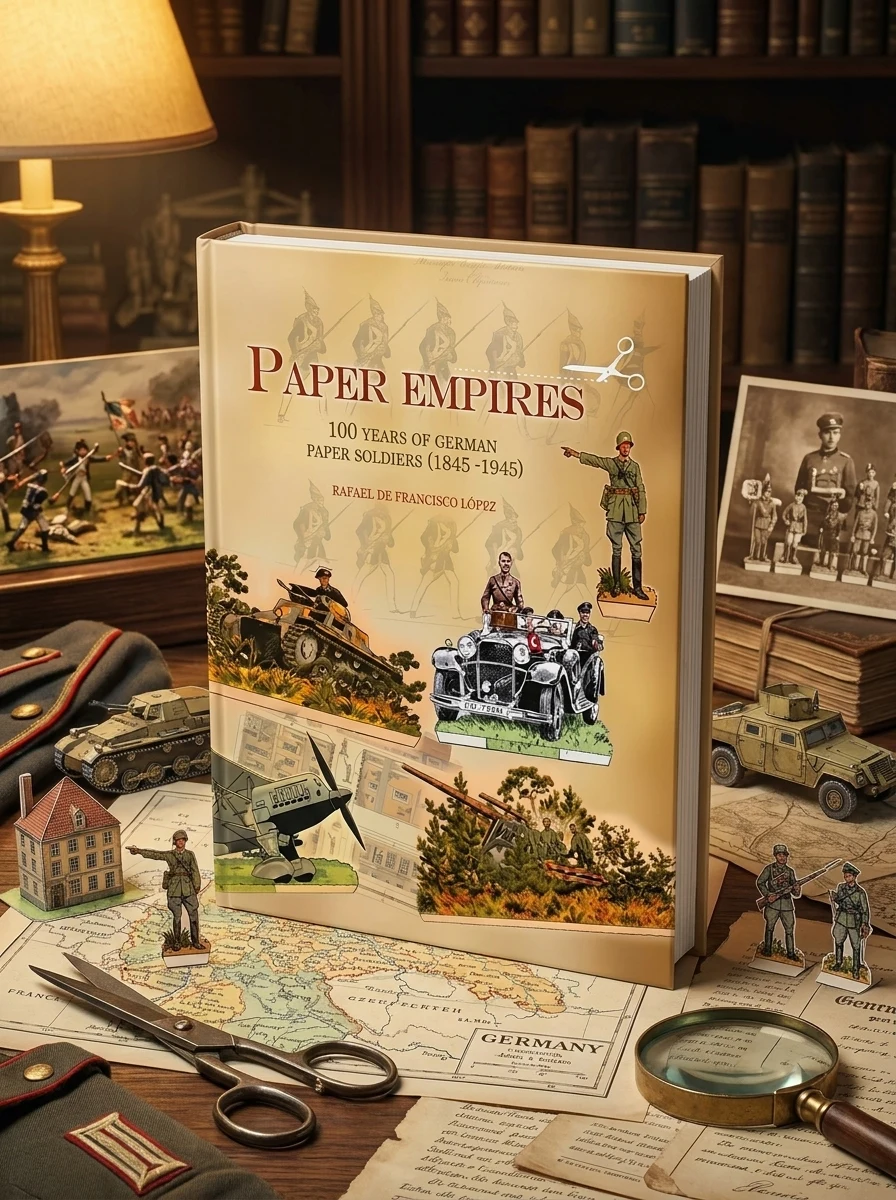
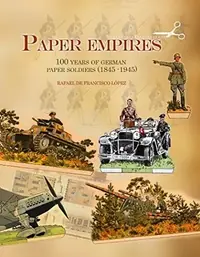
Paper Empires: 100 Years of German Paper Soldiers (1845 - 1945)
This edition can be ordered. No arrival date is confirmed.
Unfold a century of German history, one delicate paper soldier at a time.
This extraordinary volume delves into the fascinating world of German paper soldiers, tracing their evolution from simple playthings to profound historical documents between 1845 and 1945. Rafael de Francisco López meticulously curates a visual journey, showcasing how these fragile cut-outs mirror Germany's military advancements, societal structures, and political shifts, culminating in their poignant role during the Third Reich. With thousands of figures across 173 color images, this book offers an unparalleled look at artifacts rarely seen outside private collections or forgotten archives.
This volume situates itself within the niche intersection of military history and material culture, documenting the evolution of German paper soldiers as significant historical artifacts rather than mere toys. It bridges the gap between leisurely pastimes and serious political documentation during a transformative century in Germany.


📝 Description: Paper Empires: 100 Years of German Paper Soldiers (1845 - 1945)
💎 Expert review
📖 Why choose it
Why this book is worth reading
This book is an essential treasure for collectors of ephemera, historians of German militarism, and enthusiasts of paper crafts who appreciate the deeper narrative hidden within fragile artifacts. Readers fascinated by how mundane objects reflect grand historical shifts will find immense value in López’s curation. It offers a tactile connection to the past, revealing how societal structures and political ideologies were encoded into delicate cut-outs. For those who enjoy uncovering the stories behind forgotten archives, this volume provides a unique lens through which to view 100 years of German history, transforming simple playthings into profound documents of a turbulent era.
⭐ Reader reviews
Reader rating
Came across this title in a footnote and had to track it down. Solid binding, decent paper — holds up to heavy use. A few pages arrived with light corner wear, though nothing serious.
Not my usual area but wanted to branch out. The text itself is dense but rewarding — you get out what you put in. The ideas are old but land with surprising force today. Recommended if you're ready to do the work.
Arrived faster than expected and well packaged. There's real depth here that reveals itself on a second reading. Plenty of passages worth underlining; my copy is already full of margin notes.
Arrived faster than expected and well packaged. A text you study rather than simply read. Will be gifting a copy to a friend.
Exactly what I was looking for. I found myself reading passages aloud just to sit with them. Highly recommend to serious students.
Been hunting for a decent copy of this text for ages. The symbolism is layered and generous to patient readers. Plenty of passages worth underlining; my copy is already full of margin notes. Shipping was quick too.
I collect works on this subject and this is a worthy addition. It pairs well with more modern commentaries on the same tradition. You can tell why this work has endured. My only quibble is the cover feels thinner than expected. Recommended with reservations.
While visually stunning with its 173 color images, this book is strictly for those interested in German military history and paper art. It will likely disappoint readers seeking a traditional narrative history or political analysis, as it focuses heavily on visual artifacts rather than textual argumentation. Those uninterested in the Third Reich’s material culture or those who find paper dolls trivial may feel alienated by the subject matter. It is not a general history book but a specialized catalog of ephemera. Readers expecting dense academic theory will be disappointed; this is a curated visual journey, demanding an appreciation for historical artifacts over conventional storytelling.
❓ Frequently asked questions
📖 Who should read this
For the discerning collector of historical ephemera, military historians seeking unconventional sources, or anyone fascinated by how everyday objects can embody profound cultural and political narratives, this volume offers an unexpected and richly rewarding visual exploration.
🎯 Key themes and symbolism
Miniature Military History
Discover how these paper armies chronicle the changing face of German warfare. From the uniforms of the Napoleonic era's aftermath to the strategies hinted at by figures facing the Maginot Line, the book illustrates military evolution through an engaging, accessible medium. It's a unique perspective on a century of martial development, captured in cardboard.
Societal Reflections in Cardboard
Beyond battle, these figures reveal much about German society. They depict not only soldiers but also civilians and social strata, evolving from innocent toys to instruments subtly reflecting nationalistic fervor and propaganda, especially during the 20th century's darker periods. They offer a tangible link to the public imagination of the time.
Ephemeral Art & Archeology
Consider the inherent fragility and rarity of these paper ephemera. Often discarded after play, their survival is a testament to their hidden value. This collection elevates them to archaeological artifacts, offering a crucial visual archive of items that are exceedingly difficult to find and are scarcely preserved even in major German institutions.
💬 Quotes from the book
“Each delicate figure, once a child's fleeting joy, now stands as a silent sentinel, bearing witness to a nation's martial evolution and its shifting self-perception.”
“To unearth these vibrant, yet fragile, cardboard armies is to touch the very fabric of a bygone era, revealing visual narratives often overlooked by grander, more formal histories.”
📜 Historical context
📚 Glossary
- Papiersoldaten zum Ausschneiden
- Ephemera
- Maginot Line
📔 Questions to reflect on
- How might the design evolution of a child's toy reflect deeper national anxieties or aspirations within a society?
- Consider the power of seemingly innocuous items, like paper soldiers, in shaping public perception or even acting as subtle propaganda during times of conflict.
- What forgotten 'ephemera' from our own time might future historians find invaluable for understanding our society, and why?
🏛 Books from this publisher Schiffer Publishing
All books from this publisher →
 89
89


You might also like
See more → 91
91
 91
91
 91
91
 91
91
 91
91