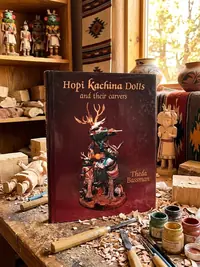
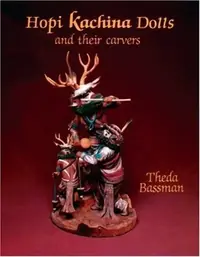
Hopi Kachina Dolls and Their Carvers
This edition can be ordered. No arrival date is confirmed.
Step into the sacred grove where cottonwood breathes life into Hopi spirits through the chisel's bite.
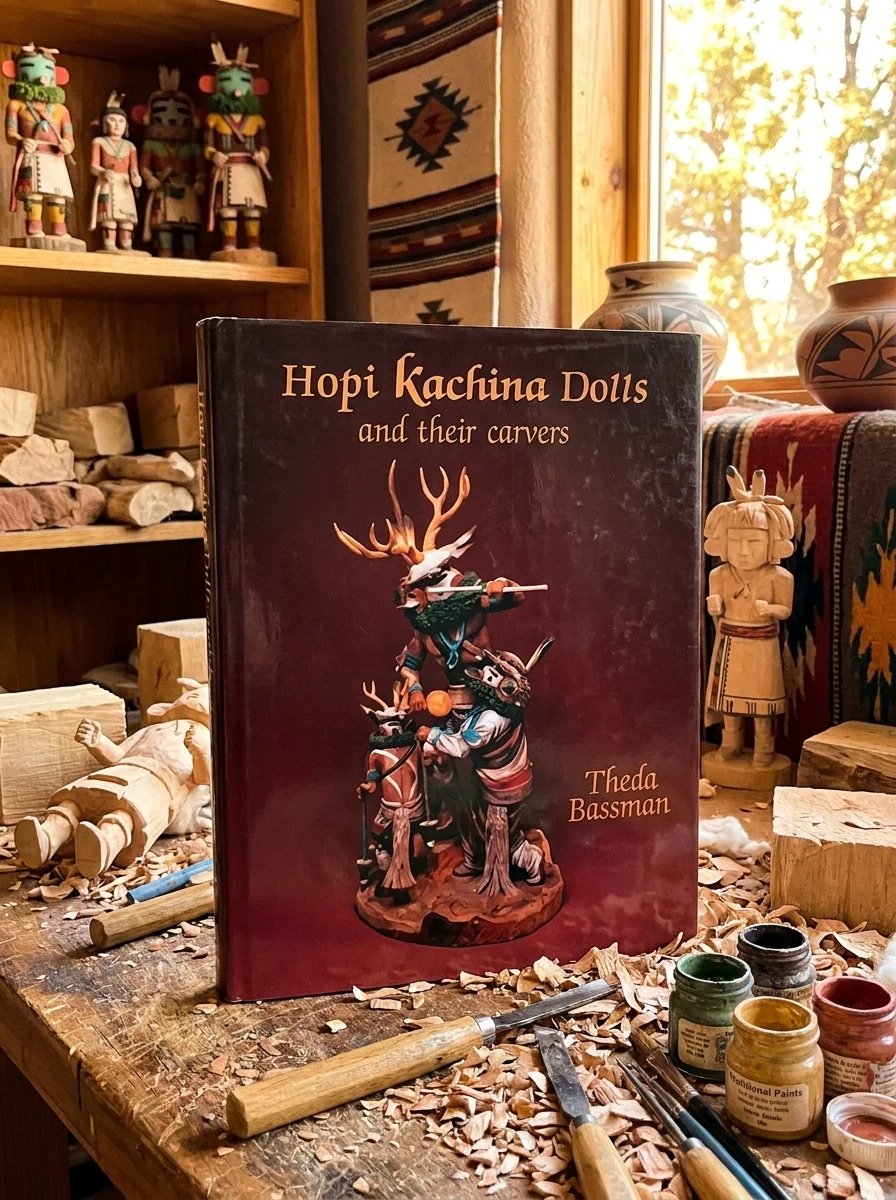
This volume transcends mere cataloging by immersing the reader in the living tradition of Hopi Kachina carving. Through twenty-five intimate interviews with contemporary artisans like Cecil Calnimptewa and Loren Phillips, the text reveals the spiritual intent behind each stroke of the knife. Richly illustrated with over 150 color photographs, it bridges the gap between antique collectibles and sacred objects, offering a profound understanding of the artists' lives and the enduring power of their creations in a modern context.
This work sits at the intersection of anthropological documentation and spiritual artistry, honoring the enduring Hopi tradition of Kachina carving. It serves as a vital record of contemporary artisans keeping sacred practices alive within modern contexts.


📝 Description: Hopi Kachina Dolls and Their Carvers
💎 Expert review
📖 Why choose it
Why this book is worth reading
Readers deeply fascinated by the intersection of sacred ritual and tangible artistry will find this volume profoundly rewarding. It offers more than a simple catalog; it provides an intimate window into the spiritual intent behind every stroke of the chisel. Through vivid interviews with master carvers, the book reveals how cottonwood breathes life into Hopi spirits, transforming wood into vessels of profound meaning. Those seeking to understand the living tradition beyond antique collecting will appreciate the rich color photography and personal narratives. It bridges the gap between decorative object and sacred entity, offering a respectful, immersive guide for anyone wishing to honor the enduring power of these creations in a modern world.
⭐ Reader reviews
Reader rating
This book is a compelling visual and narrative exploration of Hopi Kachina carving, distinguished by its focus on contemporary artisans rather than just historical artifacts. The inclusion of twenty-five interviews provides necessary depth, while the over 150 color photographs showcase the intricate detail of the work. However, it does not suit readers seeking dry academic analysis or those uninterested in the spiritual dimensions of Native American culture. It may also disappoint collectors looking solely for market valuation data, as the focus remains firmly on artistic intent and cultural continuity. For those willing to engage with the sacred context, it is a beautiful tribute to the artists who keep these traditions vibrant.
❓ Frequently asked questions
📖 Who should read this
Readers drawn to the spiritual depth of Native American traditions, serious collectors of Southwest art, and those seeking to understand the living history behind the objects in their homes or museum cases.
🎯 Key themes and symbolism
Sacred Wood and Spirit
The book explores how cottonwood is not merely a medium but a sacred vessel. It details the ritual preparation of the wood and the spiritual responsibility of the carver to embody the Kachina spirit, transforming inert timber into a conduit for divine presence and cultural continuity.
The Carver's Voice
By centering twenty-five modern artisans, the work shifts focus from the object to the creator. It documents their personal philosophies, daily rituals, and the transmission of technique across generations, highlighting the human element and individual artistry that defines the contemporary Hopi carving scene.
Artistry and Collecting
This section navigates the complex intersection of sacred tradition and the global art market. It examines how these dolls are valued by collectors worldwide while maintaining their religious significance, offering guidance on appreciating the aesthetic mastery without reducing the work to mere material possession.
💬 Quotes from the book
“The wood does not yield to force, but to respect.”
“Each doll is a prayer made visible.”
📜 Historical context
📚 Glossary
- Kachina
- Cottonwood
- Carver
📔 Questions to reflect on
- How does the materiality of cottonwood influence the spiritual perception of the Kachina spirit?
- What responsibilities does an artist carry when embodying a deity in their craft?
- How can collectors honor the sacred origins of these dolls in their private collections?
🏛 Books from this publisher Schiffer Publishing
All books from this publisher →
 89
89







You might also like
See more → 91
91
 91
91

 91
91

 91
91
 91
91