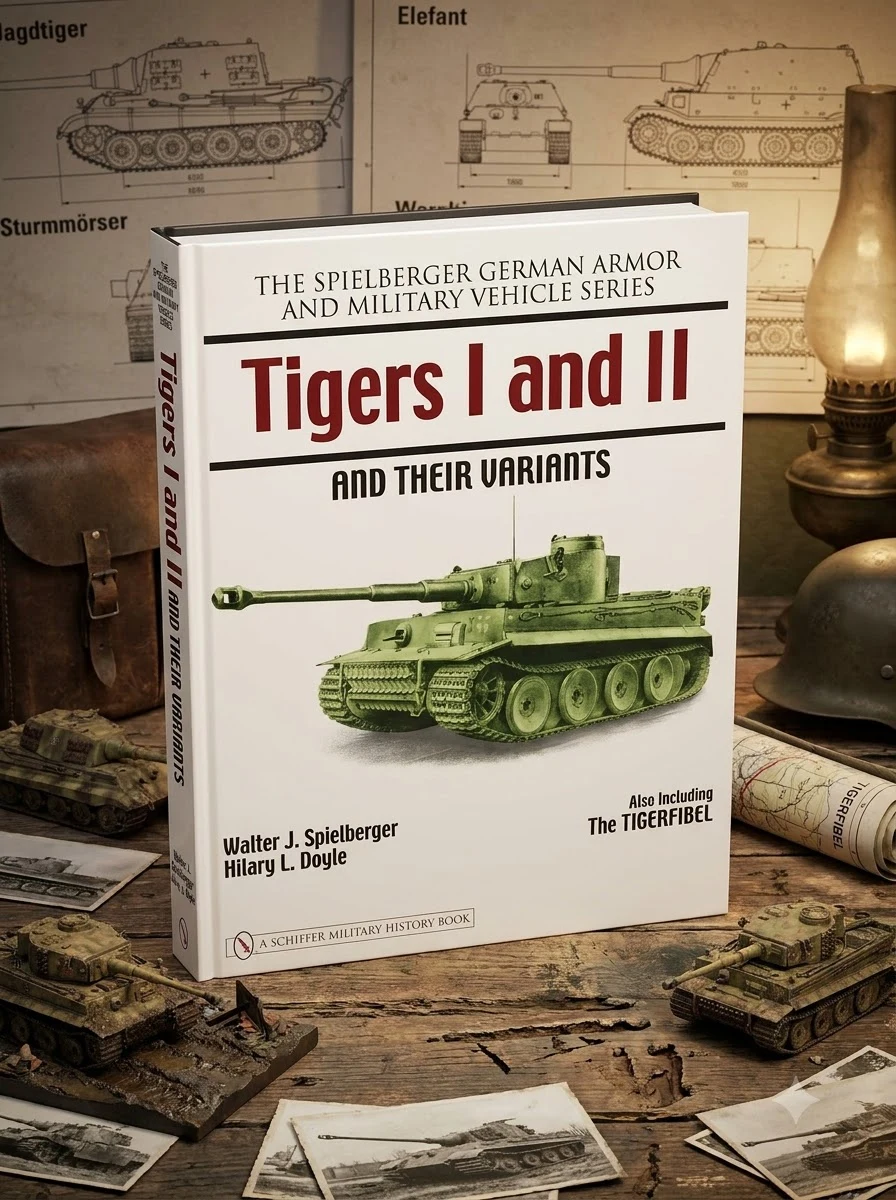
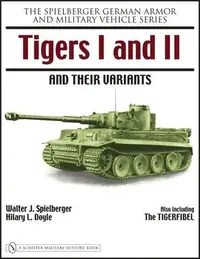
Tigers I and II and Their Variants Spielberger, Walter J
This edition can be ordered. No arrival date is confirmed.
Uncover the steel skeletons of WWII's most feared armored titans through meticulously researched technical archives.
Walter J. Spielberger and Peter Doyle deliver an exhaustive technical dissection of the Tiger tank lineage. This volume transcends mere nostalgia, offering side-profile drawings and detailed specifications for the Tiger I, Tiger II, Jagdtiger, Elefant, and Sturmmörser. It stands as a culmination of three decades of archival labor, providing an unparalleled visual and mechanical record of these German war machines for the serious student of military engineering.
This volume represents the pinnacle of post-war German military vehicle historiography, bridging the gap between archival research and technical illustration. It serves as a definitive reference within the niche tradition of rigorous armored warfare documentation.


📝 Description: Tigers I and II and Their Variants Spielberger, Walter J
💎 Expert review
📖 Why choose it
Why this book is worth reading
Serious students of military engineering and dedicated enthusiasts of armored warfare will find immense value in this exhaustive technical dissection. The book offers more than nostalgia; it provides a meticulously researched visual and mechanical record derived from decades of archival labor. Readers seeking detailed side-profile drawings, precise specifications for the Tiger I, Tiger II, Jagdtiger, Elefant, and Sturmmörser will appreciate the unparalleled depth of information. It is an essential resource for those who wish to uncover the steel skeletons of these feared titans through rigorous technical analysis rather than superficial storytelling.
⭐ Reader reviews
Reader rating
Perfect companion for my morning study sessions. I found myself reading passages aloud just to sit with them. Not a light read, but far more accessible than I feared. Would buy from this store again.
Arrived faster than expected and well packaged. It rewards patience more than any book I've bought this year. It's become a regular reference in my practice. My only regret is not ordering it sooner.
My third book from this store and this one might be the best. Solid binding, decent paper — holds up to heavy use. The historical context alone makes it worth the price.
I collect works on this subject and this is a worthy addition. Plenty of passages worth underlining; my copy is already full of margin notes. It's become a regular reference in my practice. Good, with the caveats above.
This text stands as a culmination of extensive archival labor, delivering an unparalleled visual record for the serious student of military engineering. However, it does not suit casual readers seeking narrative drama or general history. Those expecting broad strategic overviews or character-driven accounts will find its focus on side-profile drawings and detailed specifications dry and overly technical. It is strictly for the dedicated hobbyist who values mechanical accuracy and historical precision above all else. If you prefer engaging prose over exhaustive data, this volume may feel like a reference manual rather than a readable story.
❓ Frequently asked questions
📖 Who should read this
Dedicated to the military historian, modeler, and armor enthusiast who demands precise technical data over romanticized combat narratives. This volume serves as an essential reference for those studying the mechanical complexity of German armored warfare.
🎯 Key themes and symbolism
Engineering Evolution
The text traces the mechanical lineage from the initial Tiger I to the heavier Tiger II, highlighting the escalating armor thickness and gun caliber. It examines how combat losses forced rapid design modifications, resulting in the diverse array of chassis variations documented in this volume's extensive plates and cross-sections.
Heavy Armor Doctrine
Spielberger analyzes the strategic intent behind these behemoths, exploring the German military's obsession with overwhelming firepower and impenetrable defense. The book contextualizes the Tiger not just as a vehicle, but as a symbol of industrial might, detailing how its presence on the battlefield altered tactical approaches for both Allied and Axis forces.
Variant Proliferation
Beyond the main tanks, this work meticulously catalogs specialized variants like the Elefant tank destroyer and the Sturmmörser. It provides rare technical data on these less common machines, explaining their specific roles in the German arsenal and illustrating how the Tiger chassis was adapted for assault, anti-tank, and self-propelled artillery duties.
💬 Quotes from the book
“Over thirty years of intensive research have culminated in this volume.”
“Present the various Tiger varieties from all sides in this richly illustrated technical documentation.”
📜 Historical context
📚 Glossary
- Tigerfibel
- Jagdtiger
- Scale Drawings
📔 Questions to reflect on
- How does the sheer weight and complexity of the Tiger tanks reflect the industrial priorities of Nazi Germany during the war?
- In what ways did the mechanical limitations of these heavy vehicles influence their tactical deployment compared to lighter, more agile tanks?
- How does the inclusion of the Tigerfibel change your understanding of the human element operating these mechanical giants?
🏛 Books from this publisher Schiffer Publishing
All books from this publisher →
 89
89





You might also like
See more → 91
91
 91
91

 91
91

 91
91
 91
91