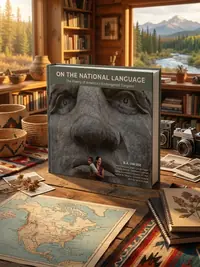
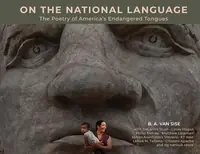
On the National Language: The Poetry of America's Endangered Tongues
Stock reported in the catalog; fulfillment is confirmed with your request.
A haunting visual and linguistic archive of America's vanishing tongues and the lands that birthed them.
This volume transcends standard linguistics to become a profound meditation on cultural survival. Van Sise collaborates with revitalizers across the continent, pairing their voices with striking photography that honors both the speakers and their ancestral environments. It is not merely a catalog but a living testament to the aesthetic power of endangered dialects, revealing how language preservation is inextricably linked to ecological and spiritual well-being in Indigenous communities.
This work sits at the intersection of ethnographic preservation and esoteric ecological spirituality, treating language not merely as communication but as a vital, living force tied to ancestral land and spiritual well-being. It belongs to a tradition of cultural activism that views linguistic survival as inseparable from environmental and metaphysical integrity.


📝 Description: On the National Language: The Poetry of America's Endangered Tongues
💎 Expert review
📖 Why choose it
Why this book is worth reading
Readers deeply concerned with the intersection of cultural survival, ecological health, and spiritual identity will find profound resonance in this volume. It offers more than linguistic data; it provides a haunting visual and emotional archive of America's vanishing tongues. Those who understand that language preservation is inextricably linked to ancestral environments will appreciate Van Sise’s collaboration with revitalizers across the continent. The book serves as a living testament to the aesthetic power of endangered dialects, honoring both speakers and their land. It is essential for anyone seeking to comprehend how spiritual well-being depends on cultural continuity, offering a meditation on resilience that transcends standard academic categorization.
⭐ Reader reviews
Reader rating
Needed this for my research. It reads better in small doses — a chapter at a time with notes. It assumes more background than a beginner might have. Solid, if not essential.
While visually striking and emotionally potent, this volume may disappoint readers seeking rigorous linguistic analysis or dry academic detachment. It is not for those who view language strictly as a mechanical system devoid of spiritual weight. Instead, it appeals to those who value the poetic and ecological dimensions of speech. The collaboration with revitalizers creates a unique narrative flow that prioritizes human connection over technical taxonomy. Readers expecting traditional encyclopedic entries may find the tone overly meditative or subjective. However, for those open to a holistic view of culture, it is an indispensable, beautiful document of resistance and remembrance.
❓ Frequently asked questions
📖 Who should read this
Readers interested in decolonial studies, visual anthropology, and Indigenous rights will find deep resonance here. It appeals to those who value art as activism and seek to understand the urgent, beautiful work of cultural preservation in contemporary America.
🎯 Key themes and symbolism
Linguistic Ecological Link
The text argues that language loss mirrors environmental degradation, positioning linguistic vitality as a crucial component of ecological health. It suggests that protecting native tongues is as urgent as preserving ancient forests, creating a parallel narrative between cultural and natural conservation efforts across the American landscape.
Visual Storytelling Sovereignty
Through collaborative photography, the book reclaims the narrative of Indigenous communities. It moves away from exoticizing gazes, instead offering intimate portraits that dignify speakers and learners. The visual elements serve as primary documents of identity, asserting the right of these communities to define their own representation in the modern world.
Community Revitalization Praxis
The work highlights the practical, grassroots efforts of language learners. It documents the emotional and logistical challenges of revitalization, celebrating small victories and communal resilience. This theme underscores that language survival is an active, daily practice of resistance and love, rather than a passive historical artifact.
💬 Quotes from the book
“The land speaks in the tongues that grew from its soil.”
“To speak is to remember the world as it was meant to be.”
📜 Historical context
📚 Glossary
- Revitalization
- Endangered Language
- Visual Anthropology
📔 Questions to reflect on
- What local language or dialect holds historical significance to your community, and how might it be preserved?
- How does the landscape around you shape the way you speak and perceive your surroundings?
- In what ways can art serve as a tool for cultural resistance and revitalization?
🏛 Books from this publisher Schiffer Publishing
All books from this publisher →
 89
89




You might also like
See more →
 91
91
 91
91

 91
91
 91
91
 91
91