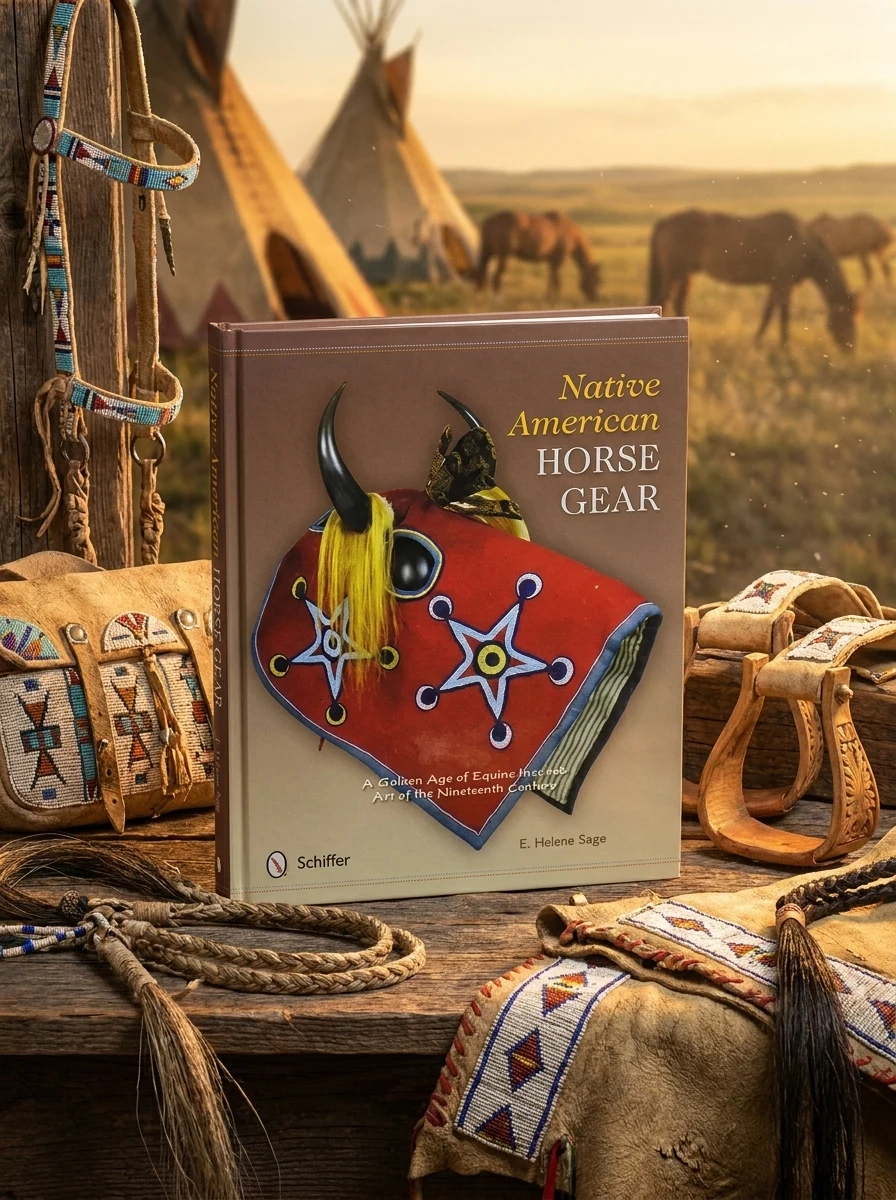

Native American Horse Gear: A Golden Age of Equine-Inspired Art of the Nineteenth Century
This edition can be ordered. No arrival date is confirmed.
Discover the breathtaking artistry of 19th-century Native American horse tack in this definitive visual survey.
This volume stands as the inaugural comprehensive study dedicated exclusively to the equine accoutrements of Indigenous North Americans. It delves into the 19th-century intersection of utility and high art, revealing how tribes transformed functional gear into prestigious symbols of power. Through over two hundred vivid color photographs, the text maps the distinct geographical and tribal variations across the Plains, Prairie, Great Basin, Plateau, and Southwest regions. Readers will examine the intricate techniques, materials, and trade relations that shaped these objects, offering a deep appreciation for the craftsmanship behind bridles, saddles, and decorative masks.
This work sits at the intersection of art history and Indigenous studies, documenting a specific era of Native American material culture during the nineteenth century. It bridges the gap between anthropological study and aesthetic appreciation by focusing on the artistic evolution of equine accoutrements.


📝 Description: Native American Horse Gear: A Golden Age of Equine-Inspired Art of the Nineteenth Century
💎 Expert review
📖 Why choose it
Why this book is worth reading
This book is a vital resource for collectors, historians, and art enthusiasts who appreciate the profound intersection of utility and high art in Native American culture. Readers will gain a deep appreciation for the intricate techniques and trade relations that shaped these prestigious symbols of power. It offers a unique visual survey through two hundred vivid color photographs, mapping distinct geographical variations across the Plains, Prairie, Great Basin, Plateau, and Southwest regions. Anyone seeking to understand how tribes transformed functional gear into artistic masterpieces will find this definitive study both enlightening and visually stunning.
⭐ Reader reviews
Reader rating
Came across this title in a footnote and had to track it down. The ideas are old but land with surprising force today. Deserves a place on any esoteric bookshelf.
A friend in my study group recommended this one. You can tell why this work has endured. Well worth it.
Finally got around to ordering this. It reads better in small doses — a chapter at a time with notes.
Arrived faster than expected and well packaged. Every rereading turns up something I missed. It assumes more background than a beginner might have. Happy enough with the purchase.
As someone who reads a lot in this field, I can be picky. I appreciated how the argument builds steadily from first principles. Great value for what you get.
My book club chose this last month. The symbolism is layered and generous to patient readers. Plenty of passages worth underlining; my copy is already full of margin notes. My only regret is not ordering it sooner.
While this volume excels as a definitive visual survey of nineteenth-century equine-inspired art, it is strictly a specialized study for those interested in Indigenous material culture and art history. It does not suit readers seeking general narratives about Native American spirituality or contemporary political issues. Those expecting a broad historical overview of tribal conflicts will find the focus too narrow on tack and bridles. However, for scholars and collectors devoted to the craftsmanship of trade relations and regional artistic variations, this inaugural comprehensive study is an indispensable, meticulously documented treasure.
❓ Frequently asked questions
📖 Who should read this
Collectors of Indigenous art, textile historians, and equestrian enthusiasts seeking to understand the cultural significance behind antique tack. This book is essential for those who appreciate the intersection of functional craft and spiritual prestige in Native American material culture.
🎯 Key themes and symbolism
Artistry in Equine Gear
The book reveals how functional tack served as a canvas for elite artistic expression. It explores how tribes adorned horses with bridles, saddlebags, and masks, turning utilitarian items into prestigious displays of wealth and cultural identity through meticulous craftsmanship.
Regional Tribal Variations
It meticulously charts how geography influenced design across the Plains, Southwest, and Plateau regions. The text explains how local materials, trade networks, and environmental conditions created distinct decorative motifs and structural forms unique to each cultural area and tribe.
Historical Trade Dynamics
The work analyzes how exchange networks impacted equipment styles. It details the flow of materials and ideas between tribes, showing how commercial interactions and familiarization with new resources altered traditional manufacturing techniques and aesthetic choices in equine adornments.
💬 Quotes from the book
“The dominant role of horses in these peoples' lives was reflected in the beautiful, practical, and artistic accoutrements.”
“Information essential to understanding variations in forms and decorative motifs amongst tribes...”
📜 Historical context
📚 Glossary
- Quirt
- Crupper
- Breastcollar
📔 Questions to reflect on
- How does the transformation of a functional item like a saddle into a work of art reflect the relationship between a culture and its animals?
- In what ways did geographical isolation or trade networks shape the visual language of Indigenous equine art?
- What can the intricate details of 19th-century tack tell us about the social status and prestige of its owners?
🏛 Books from this publisher Schiffer Publishing
All books from this publisher →
 89
89







You might also like
See more →
 91
91
 91
91

 91
91
 91
91
 91
91