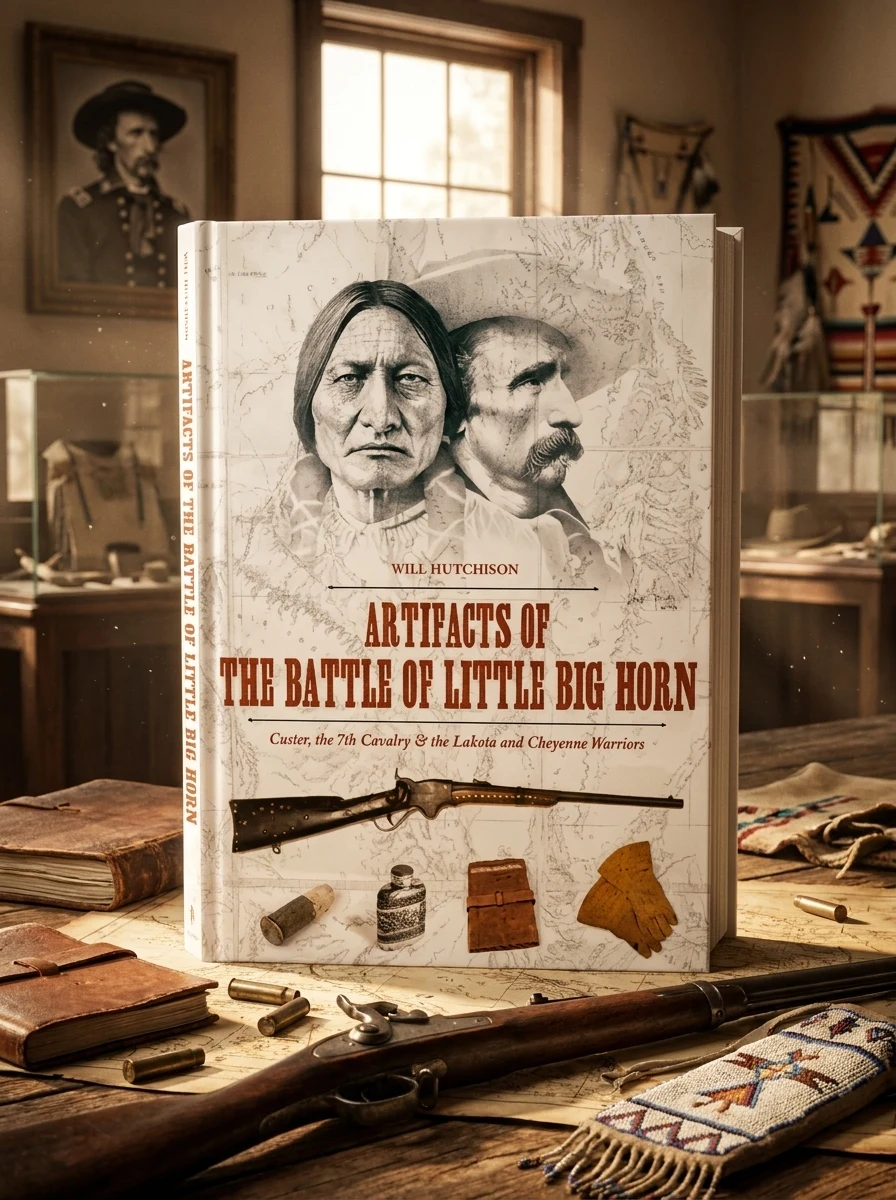
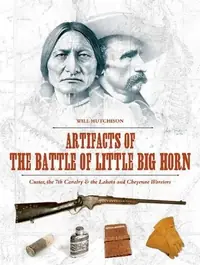
Artifacts of the Battle of Little Big Horn: Custer, the 7th Cavalry & the Lakota and Cheyenne Warriors
This edition can be ordered. No arrival date is confirmed.
Unearth the visceral reality of Little Bighorn through rare, high-resolution artifacts from both sides of the conflict.
Will Hutchison presents a meticulously curated photographic survey of surviving relics from the Battle of Little Bighorn, bridging the divide between military history and material culture. This volume transcends standard narrative by focusing on the physical objects themselves: buttons, cartridge casings, personal effects, and weapons recovered from the field. Each artifact is captured in stunning, multi-angle detail, accompanied by rigorous provenance research that traces its journey from the smoke of battle to private collections and museums. The work is structured to honor the perspectives of the 7th Cavalry alongside those of the Lakota and Cheyenne warriors, offering a tangible connection to the men who lived and died there. It serves as both a scholarly reference and a visual testament to the era's brutal intimacy.
This volume sits at the intersection of material culture studies and military history, focusing on the tangible remnants of the 1876 conflict rather than traditional narrative accounts. It bridges the gap between scholarly provenance research and visual documentation of surviving relics from both the U.S. Army and Indigenous perspectives.


📝 Description: Artifacts of the Battle of Little Big Horn: Custer, the 7th Cavalry & the Lakota and Cheyenne Warriors
💎 Expert review
📖 Why choose it
Why this book is worth reading
Readers who seek a profound, tactile connection to history will find immense value in this meticulously curated survey. By shifting focus from abstract narratives to physical objects like buttons, cartridge casings, and personal effects, the book offers a visceral reality of the Battle of Little Bighorn that text alone cannot convey. It is ideal for those interested in rigorous provenance research and the dual perspectives of the 7th Cavalry, Lakota, and Cheyenne warriors. The high-resolution imagery allows for an intimate encounter with the artifacts recovered from the field, transforming them into tangible links to the past. This work serves as both a scholarly reference and a visual testament, honoring the brutal intimacy of the era through its dedication to object-focused historiography.
⭐ Reader reviews
Reader rating
Hutchison’s approach is refreshing for those weary of standard military chronicles, offering instead a material culture survey that bridges military history and artifact studies. The multi-angle photography and rigorous provenance tracing provide a unique window into the lives of combatants on both sides. However, readers seeking dramatic storytelling or strategic analysis may find this volume dry and static. It is not for those who prefer narrative engagement over visual documentation. This book suits collectors, historians, and archaeologists who appreciate the weight of physical evidence. The candid presentation of objects without embellishment demands a patient reader who values accuracy and material reality over emotional dramatization or broad historical overview.
❓ Frequently asked questions
📖 Who should read this
Dedicated military historians, artifact collectors, and researchers seeking visual and material evidence rather than just textual accounts. It appeals to those who wish to touch the past through high-fidelity imagery and rigorous cataloging.
🎯 Key themes and symbolism
Material Evidence of Conflict
The book treats physical objects as primary sources. By examining wear patterns, manufacturing marks, and damage, the text reconstructs the immediate context of the battle, proving that the ground still speaks through its scattered debris.
Dual Narrative Perspectives
Rather than favoring one side, the catalog balances the artifacts of the U.S. 7th Cavalry with those of the Lakota and Cheyenne forces. This symmetry allows readers to witness the engagement through the material possessions of both combatants equally.
Provenance and Acquisition
Hutchison documents the complex history of how these items were gathered, sold, and preserved. This focus on the artifact's life after the battle reveals the collector's market and the ethical dimensions of possessing objects derived from sacred or traumatic sites.
💬 Quotes from the book
“The ground remembers what history forgets; every scratch and dent tells a story of survival or demise.”
“To hold these artifacts is to hold the very moment the world changed for both the cavalryman and the warrior.”
📜 Historical context
📚 Glossary
- Provenance
- Material Culture
- High-Resolution Imaging
📔 Questions to reflect on
- How does the physical condition of an object change your emotional connection to the historical event it represents?
- In what ways might the provenance of an artifact influence your interpretation of its historical significance?
- Compare the material evidence of the U.S. Cavalry with that of the Lakota and Cheyenne. What does the difference in preservation suggest about their respective experiences?
🏛 Books from this publisher Schiffer Publishing
All books from this publisher →
 89
89



You might also like
See more →
 91
91
 91
91
 91
91
 91
91
 91
91