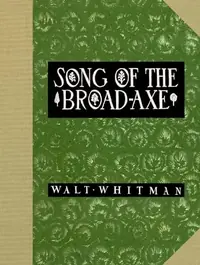
Song of the Broad-Axe (Facsimile)
Whitman, Walt 88
88
 Editorial score
How we rate
Editorial score
How we rate
This edition can be ordered. No arrival date is confirmed.
Experience Whitman's primal verse through Esherick's masterly hand-crafted art.
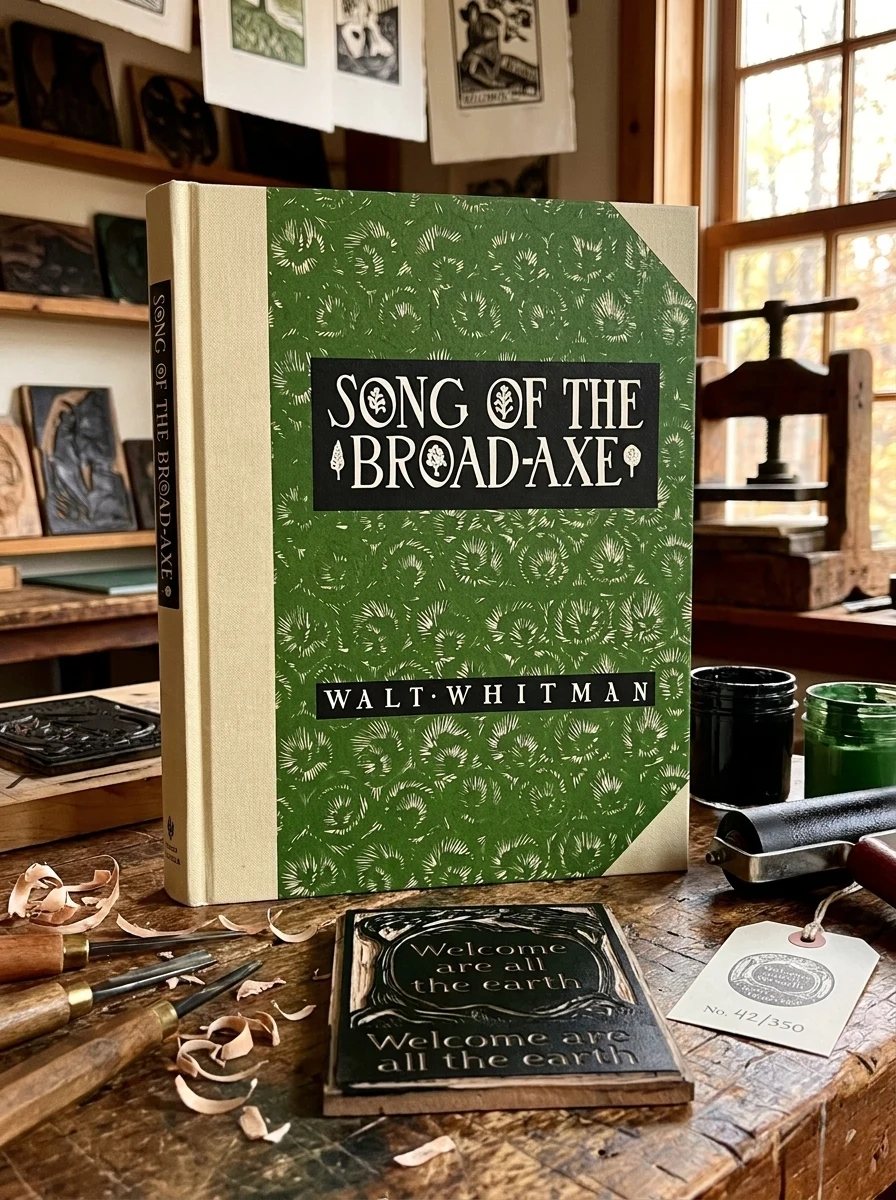
This exquisite, numbered facsimile resurrects Wharton Esherick's rare, hand-lettered prototype of Walt Whitman's "Song of the Broad-Axe." Each page showcases the artist's original illumination and unique script, complemented by eighteen potent woodblock illustrations. This edition, previously inaccessible, presents a profound visual interpretation of Whitman's powerful poetry, making it a compelling artistic collaboration. Housed in a custom cloth case, it includes a frameable woodcut restrike and an insightful essay from the Wharton Esherick Museum curator, making it a truly cherished collectible.
This work sits at the intersection of American transcendentalist poetry and early twentieth-century Arts and Crafts book arts, specifically highlighting the hand-crafted typography and woodblock illustration traditions championed by Wharton Esherick.


📝 Description: Song of the Broad-Axe (Facsimile)
💎 Expert review
📖 Why choose it
Why this book is worth reading
This exquisite, numbered facsimile is a must-have for collectors of rare book arts and devotees of Whitman’s primal verse who seek a tactile connection to the text. Readers will gain from experiencing Esherick's masterly hand-crafted art, which resurrects his rare prototype through original illumination and unique script. The inclusion of eighteen potent woodblock illustrations and a frameable woodcut restrike offers a profound visual interpretation that complements the poetry’s power. Those who appreciate the convergence of literary depth with artisanal craftsmanship will find this custom cloth-cased edition a truly cherished collectible, enriched by the curator’s insightful essay.
⭐ Reader reviews
Reader rating
This publication is a stunning artistic collaboration for those who value physical bookmaking as much as poetic content. However, it does not suit readers seeking a standard text-only edition or those uninterested in the visual arts. The facsimile nature means the experience is heavily reliant on Esherick’s specific aesthetic choices rather than Whitman’s prose alone. It may disappoint casual fans of American literature who expect conventional formatting. This title is best reserved for enthusiasts of esoteric book arts, Woodblock print collectors, and scholars interested in how visual interpretation can reshape literary perception, offering a unique, albeit niche, collector's item rather than a general reading experience.
❓ Frequently asked questions
📖 Who should read this
If you cherish the intersection of visual art and literature, appreciate fine press editions, or are a devotee of Whitman or Esherick, this unique facsimile is for you. It offers a rare opportunity to own a piece of artistic history, celebrating profound craftsmanship and interpretive vision.
🎯 Key themes and symbolism
Hand-Crafted Legacy
Every page is a testament to meticulous artistry, featuring Esherick's original hand-lettering and illumination. This attention to detail elevates the book beyond a mere text, transforming it into a sculptural object. The tactile quality and visual richness underscore the dedication to traditional book arts, offering an immersive, sensory reading experience.
Unveiling a Masterpiece
Previously a hidden treasure, this facsimile makes Esherick's prototype accessible to the public for the first time. Its limited, numbered edition status, coupled with its custom protective casing and accompanying scholarly essay, emphasizes its significance as a preserved work of art, ensuring its historical and aesthetic value for future generations.
💬 Quotes from the book
“Here, the primal song of labor and land finds its echo not just in verse, but in the very grain of wood and the sweep of the artist's hand.”
“Every illuminated stroke, every etched line, unveils a new dimension of Whitman's rugged spirit, making the poem a tactile and visual journey.”
📜 Historical context
📚 Glossary
- Facsimile
- Woodblock
- Restrike
📔 Questions to reflect on
- How does the act of hand-lettering and illumination transform your experience of reading poetry, compared to standard printed text?
- Consider the collaboration between Whitman's words and Esherick's woodblocks. How do visual interpretations influence or deepen your understanding of a literary work?
- Reflect on the value of preserving artistic prototypes and unique editions like this. What role do such works play in understanding creative processes or cultural history?
✍️ More books by this author Whitman, Walt
All books by this author →
🏛 Books from this publisher Schiffer Publishing
All books from this publisher → 89
89

You might also like
See more →
 91
91
 91
91

 91
91

 91
91
 91
91