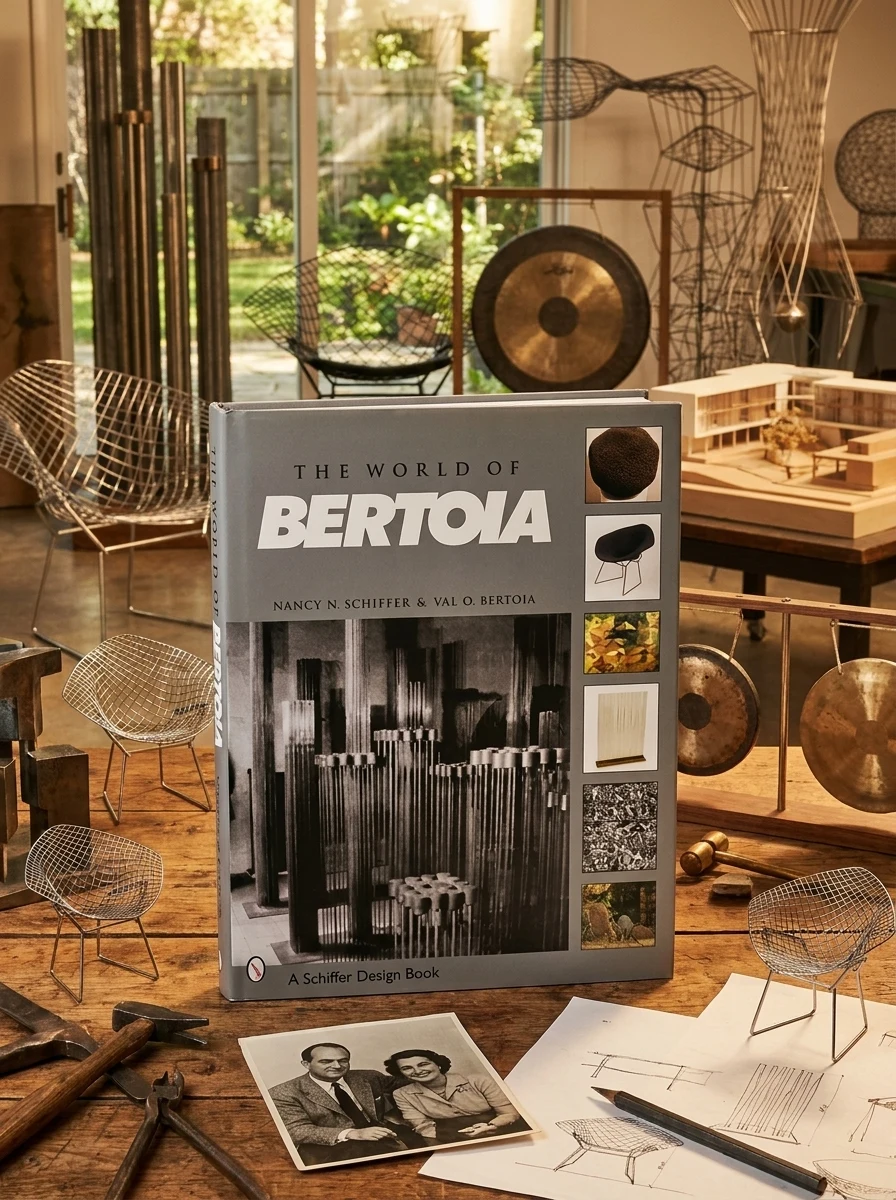

The World of Bertoia Schiffer, Nancy N
Schiffer, Nancy NThis edition can be ordered. No arrival date is confirmed.
Discover the sonic sculptures of Harry Bertoia, where metal sings and art breathes.
This volume chronicles the vibrant legacy of Bertoia Studio, tracing the creative evolution of Harry and his son Val. From Harry’s early days at Cranbrook Academy to his iconic collaborations with Eames and Knoll, the narrative captures a master craftsman who redefined metalwork. The text explores his transition from functional design to monumental sound sculptures, highlighting how natural movement and auditory elements became central to his artistic philosophy. With extensive photography, this book serves as a comprehensive archive of the studio’s innovative output, offering readers an intimate look at the hands that shaped mid-century modern aesthetics and the enduring spirit of artistic invention.
This volume sits within the tradition of mid-century modern design history and industrial arts documentation, celebrating the intersection of functional craft and artistic expression in post-war America. It serves as a specialized archival record for enthusiasts of metallurgy and sculpture who value the evolution of studio practices during this pivotal era.


📝 Description: The World of Bertoia Schiffer, Nancy N
💎 Expert review
📖 Why choose it
Why this book is worth reading
This book is a treasure for designers, sculptors, and mid-century modern enthusiasts who appreciate the tactile beauty of metalwork. Readers will gain an intimate understanding of Harry Bertoia’s transformative journey from Cranbrook to his iconic collaborations with Eames and Knoll. The extensive photography offers a visual feast, while the narrative details how natural movement and sound became central to his artistic philosophy. It is particularly rewarding for those interested in the creative evolution of the Bertoia Studio and its legacy under Harry and Val. By exploring the transition from functional design to monumental sound sculptures, this archive provides essential context for appreciating the hands that shaped modern aesthetics. It serves as both an inspiring case study in artistic invention and a comprehensive reference for understanding the enduring spirit of innovation in mid-century craft.
⭐ Reader reviews
Reader rating
Editorially, this volume stands as a robust visual and historical archive, appealing strongly to those deeply invested in industrial design history and sculpture. The extensive photography effectively captures the intricate details of Bertoia’s metalwork, making it a valuable reference for practitioners and collectors alike. However, readers seeking a dense theoretical critique of modernism or a broad general overview of twentieth-century art may find the focus too narrow. It does not suit those uninterested in the technicalities of studio practice or the specific lineage of mid-century American craft. The narrative prioritizes the creative evolution and output of the Bertoia Studio over broader cultural analysis, which might feel restrictive to casual readers looking for a sweeping historical survey rather than an intimate look at specific artistic invention.
❓ Frequently asked questions
📖 Who should read this
Art historians, industrial designers, and collectors of mid-century modernism will find this essential. It appeals to those fascinated by the intersection of craft and fine art, particularly those interested in how metalwork evolved from furniture to monumental public installations.
🎯 Key themes and symbolism
Sonic Sculpture Evolution
The book details how Bertoia transformed static metal into kinetic instruments. It examines his unique approach to incorporating air and movement, creating works that respond to the environment. This theme highlights the intersection of visual form and auditory experience, showing how he challenged traditional sculpture by making sound a primary material rather than an afterthought.
Mid-Century Design Legacy
Readers will explore Bertoia’s pivotal role in the post-war design movement. The text connects his industrial metalwork to his famous furniture designs, illustrating how his workshop environment influenced the broader aesthetic of the era. It underscores his collaborative spirit and his ability to bridge the gap between fine art and functional object-making for modern living spaces.
Intergenerational Creative Bond
This section focuses on the transition of the studio’s vision to Val Bertoia. It discusses how the son inherited his father’s technical skills while developing his own stylistic voice. The narrative emphasizes the continuity of their shared passion for invention, showing how the studio remained a fertile ground for experimentation across decades, preserving the original ethos of creative freedom.
💬 Quotes from the book
“He was a charming character who saw the beauty of the world through his wonderful clear blue eyes.”
“His ability to create was endless.”
📜 Historical context
📚 Glossary
- Kinetic Art
- Metal Craftsman
- Cranbrook Academy
📔 Questions to reflect on
- How does the integration of sound change your perception of a physical object?
- In what ways can industrial materials like metal convey organic, natural movements?
- How might collaboration with peers like the Eameses influence an artist’s individual style?
✍️ More books by this author Schiffer, Nancy N
All books by this author →

🏛 Books from this publisher Schiffer Publishing
All books from this publisher →
 89
89






You might also like
See more →

 91
91
 91
91

 91
91