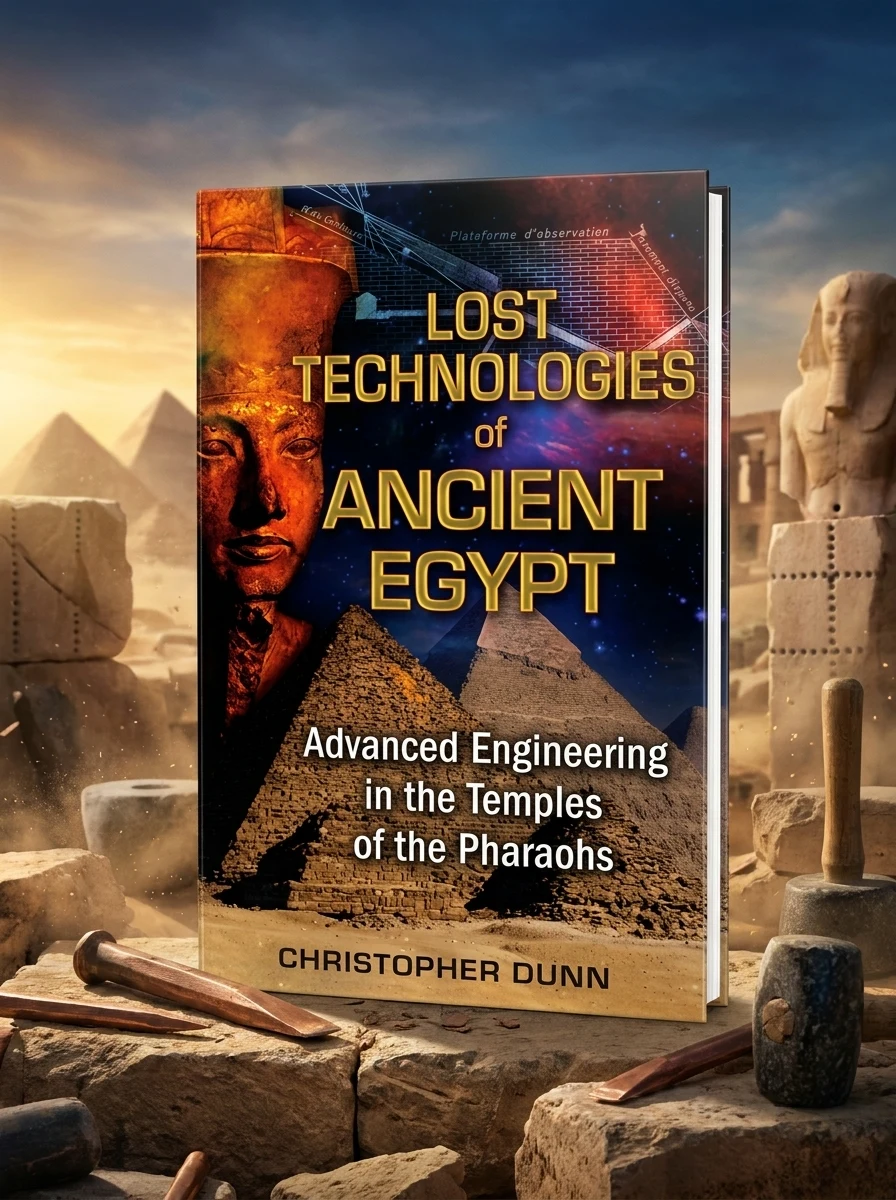
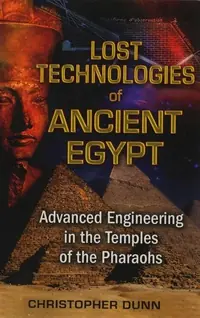
Lost Technologies of Ancient Egypt: Advanced Engineering in the Temples of the Pharaohs
Dunn, Christopher

Stock reported in the catalog; fulfillment is confirmed with your request.
Uncover the impossible precision of ancient Egypt, challenging everything you thought you knew about pharaonic engineering.
Christopher Dunn, an accomplished engineer, meticulously investigates the monumental structures of ancient Egypt, revealing an astounding level of technological sophistication. Drawing on over thirty years of research and multiple field studies, he employs modern analytical tools like digital photography and CAD software to dissect the construction of sites such as the statues of Ramses II and the Serapeum. This work posits that the ancient Egyptians possessed and utilized advanced machinery and precision tools, far beyond what is conventionally understood, to achieve feats of craftsmanship that remain baffling even today.
This work sits firmly within the alternative history and esoteric engineering traditions that question mainstream archaeological consensus regarding ancient technological capabilities. It aligns with literature seeking hidden knowledge behind monumental architecture, appealing to those interested in the intersection of occult philosophy and speculative historical analysis.


📝 Description: Lost Technologies of Ancient Egypt: Advanced Engineering in the Temples of the Pharaohs
💎 Expert review
📖 Why choose it
Why this book is worth reading
This book is essential for engineers, archaeology enthusiasts, and skeptics of conventional historical narratives who crave a rigorous, data-driven alternative. Christopher Dunn leverages his professional expertise to dismantle the idea that ancient Egyptians lacked advanced tools, offering a compelling case based on precision measurements rather than mystical speculation. Readers who enjoy detailed technical dissections of how things are made will find immense satisfaction in the CAD analyses and field studies presented here. It challenges the reader to reconsider the sophistication of past civilizations through a lens of hard engineering facts, providing a fresh perspective that bridges the gap between esoteric curiosity and scientific inquiry. If you have ever looked at the pyramids and wondered about the impossible precision, this text provides the analytical framework to understand those mysteries without resorting to fantasy.
⭐ Reader reviews
Reader rating
Dunn’s methodology is undeniably thorough, utilizing modern digital photography and CAD software to analyze sites like the Serapeum with impressive detail. However, this book is not for readers who prefer traditional historical accounts or who are unwilling to engage with dense technical arguments. Those seeking a narrative-driven history or mystical explanations will likely find the focus on machining tolerances and tool marks tedious. It does not suit casual readers expecting simple answers; instead, it demands an appreciation for engineering logic. While the conclusions may challenge mainstream archaeology, the strength lies in the visual evidence and logical deduction rather than conjecture. It is a robust, if polarizing, contribution to the debate on ancient technology.
❓ Frequently asked questions
📖 Who should read this
If you're fascinated by ancient mysteries, engineering, and are open to radically re-evaluating history, this book is for you. It appeals to those who question conventional explanations and seek empirical evidence for advanced civilizations in antiquity.
🎯 Key themes and symbolism
Lost Advanced Technologies
Dunn systematically breaks down the construction methods of iconic Egyptian sites, from colossal statues to intricate subterranean tunnels. He argues compellingly that these engineering marvels required an understanding of precision machining and material handling that defies our current historical narrative, strongly suggesting a technologically advanced past now forgotten.
Challenging Historical Narratives
This work directly confronts mainstream archaeological explanations for Egypt's megalithic structures. By applying rigorous modern engineering principles, Dunn illustrates the implausibility of rudimentary tools creating such flawless results. This forces readers to critically reconsider the true capabilities and profound knowledge base possessed by these ancient civilizations.
Evidence of Precision Craftsmanship
Through the application of advanced metrology and computer-aided analysis, Dunn demonstrates the astonishing accuracy embedded within ancient Egyptian stonework. He uncovers details like perfect symmetry, microscopic tolerances, and incredibly flat surfaces, providing tangible proof that sophisticated instruments and techniques, comparable to modern industrial manufacturing, were indeed employed.
💬 Quotes from the book
“The evidence of perfect radii and planar surfaces, often on granite, speaks not of bronze chisels, but of cutting methods we are only now beginning to replicate.”
“To dismiss these impossibly precise artifacts as mere 'craftsmanship' is to ignore the fundamental principles of physics and material science.”
📜 Historical context
📚 Glossary
- Metrology
- Serapeum
- Megalithic
📔 Questions to reflect on
- How does Dunn's engineering perspective challenge your preconceived notions about ancient civilizations and their capabilities?
- Consider how the loss of advanced technology might occur in human history. What implications does this have for our understanding of progress?
- If Dunn's findings are correct, what impact should this have on our approach to studying ancient cultures and archaeological sites worldwide?
✍️ More books by this author Dunn, Christopher
All books by this author →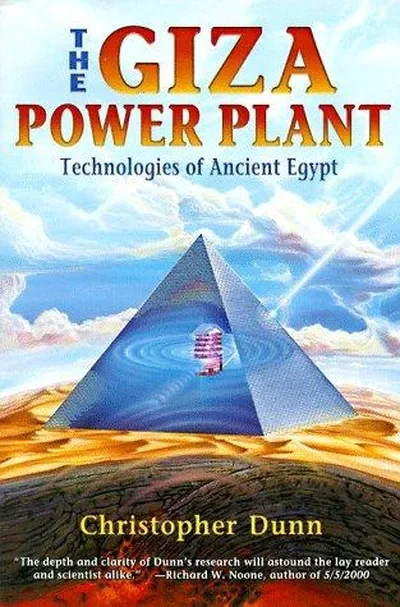

🏛 Books from this publisher Bear & Company
All books from this publisher →


You might also like
See more →