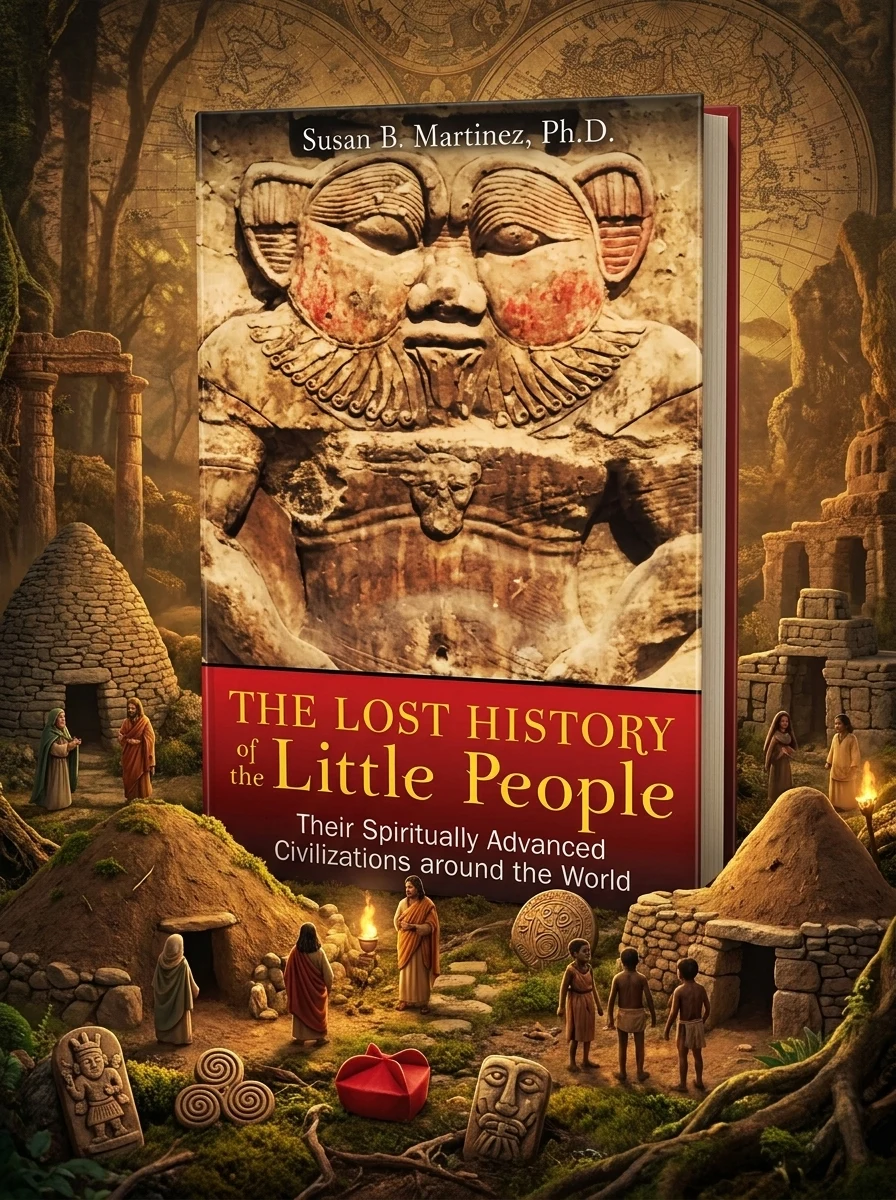
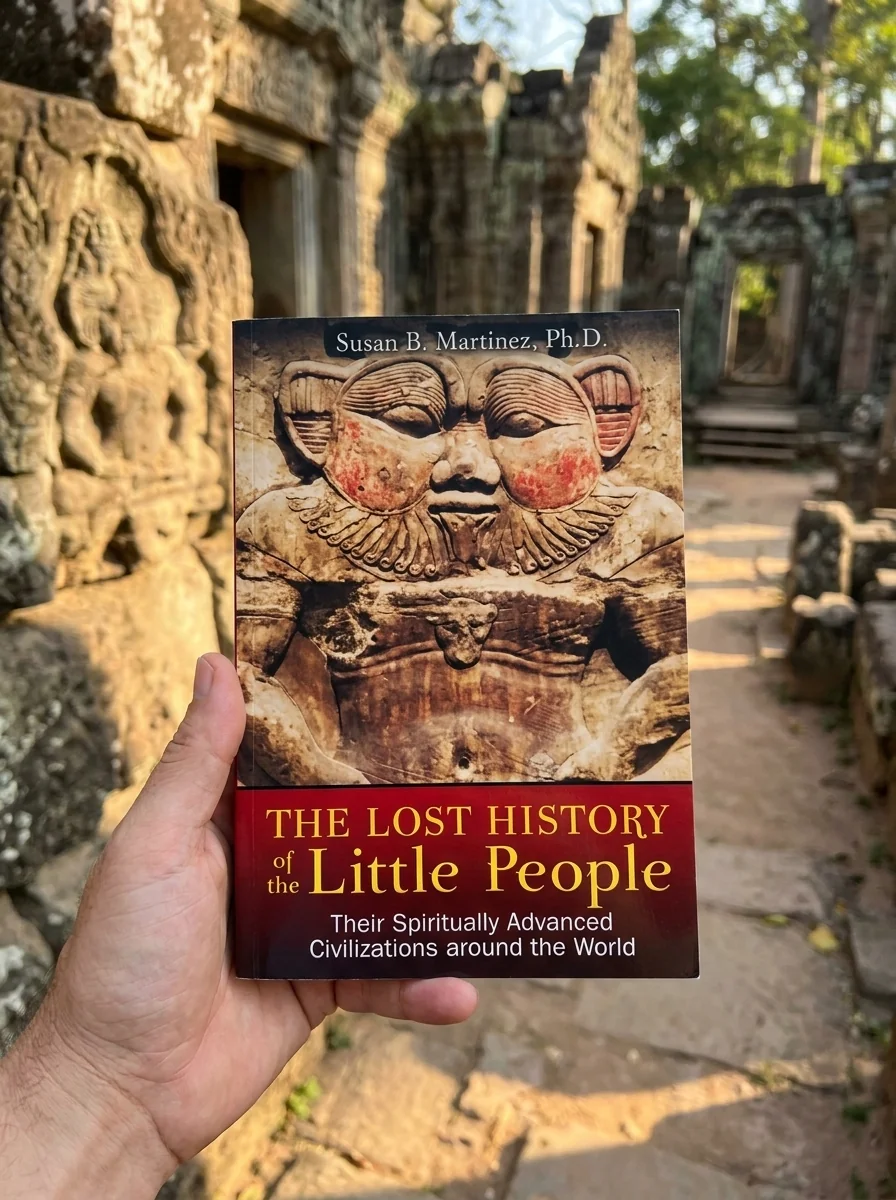
The Lost History of the Little People: Their Spiritually Advanced Civilizations Around the World
✍️ Martinez, Susan BSusan Martinez unveils a radical reinterpretation of ancient history, positing that a diminutive, highly advanced race of "Little People" were the true architects of early human civilization. From the Tuatha De Danaan to the Menehune, these universally remembered "First People" were masters of sophisticated arts like stone carving, agriculture, and shamanic healing. This groundbreaking work argues that seemingly disparate global traditions and even sacred symbols trace their origins to these prehistoric forebears, challenging conventional views on ancient structures and the origins of human culture.


Praise for this book
“Susan Martinez has amassed more information in a single volume about the so-called little people than any other research of its kind. This new book offers invaluable, otherwise obscure, resource materials in a presentation as thorough as it is engaging.”
📝 Description: The Lost History of the Little People: Their Spiritually Advanced Civilizations Around the World
📑 What's inside
- Preface
- 1 The Old Ones
- 2 Where Are the Little People?
- 3 Legend of the Scarlet Hat
- 4 The Paragon
- 5 His Flesh Was White as Snow
- 6 The Night of Time
- 7 Mounds of Mounds
- 8 Tall Tales and Short Subjects
- 9 Men and Manimals
- Appendices Word Derivations and Their Geographic Relationships and Historic Themes
- Appendix A
- Nan, the Universal Ancestor
- Appendix B
- Ba, Denoting Smallness in the World's Languages
- Appendix C
- Pan, Names in the Pacific Ocean and Beyond
- Appendix D Permutations of
- Ihin
- Appendix E The Word
- Men from the Proto-Historical World
- Appendix F Man, Megafauna, and Mastodons in the Mesolithic
- Notes Bibliography Index
💎 Expert review
📖 Why choose it
Why this book is worth reading
Readers fascinated by the intersection of archaeology and spirituality will find this book a compelling invitation to look beyond conventional timelines. Susan Martinez offers a warm, imaginative perspective for those who feel that mainstream history leaves gaps in our understanding of human origins. It is ideal for seekers interested in shamanic traditions, ancient stone mysteries, and the enduring myths of the Tuatha De Danaan or Menehune. If you have ever wondered if there is more to these ancient tales than mere superstition, this text provides a cohesive framework that honors these 'First People' as sophisticated cultural architects rather than simple legends.
⭐ Reader reviews
Reader rating
Martinez presents a bold, unified theory connecting disparate global myths through the figure of the Little People. While the prose is accessible and the premise stimulating for those open to alternative historiography, this work may frustrate readers seeking rigorous academic evidence or peer-reviewed archaeological data. It is not suitable for strict materialists who dismiss spiritual interpretations of history as mere fantasy. However, for those willing to suspend disbelief and explore the symbolic power of these ancient narratives, it serves as a thoughtful, albeit speculative, exploration of humanity’s mysterious past and its potential non-human collaborators.
❓ Frequently asked questions
📖 Who should read this
If you're fascinated by unconventional historical theories, the true origins of spiritual traditions, or the hidden meanings behind global myths, this book offers a compelling and provocative journey. Prepare to have your understanding of ancient civilizations completely reshaped.
🎯 Key themes and symbolism
Ancient Civilizational Catalyst
Explores the audacious theory that a global race of "Little People" did not merely coexist with early humans but actively seeded and guided the development of the first high civilizations, laying foundational knowledge for agriculture, writing, and societal structures across continents.
Global Mythic Connections
Investigates the surprising commonalities in worldwide folklore and spiritual traditions, revealing how diverse tales of "First People" or "Old Ones" — from European fairies to American Nunnehi and Polynesian Menehune — are interconnected narratives of this single, influential miniature race.
Redefining Ancient Structures
Challenges archaeological orthodoxy by presenting a new perspective on iconic ancient sites. The book reinterprets North American and Irish mounds, not as burial grounds, but as sophisticated dwellings constructed and inhabited by these technologically and spiritually advanced "Little People."
📜 Historical context
📚 Glossary
- Little People
- First People / Old Ones
- Pleistocene Golden Age
📔 Questions to reflect on
- How might a global, miniature, advanced civilization explain otherwise baffling ancient myths or archaeological anomalies?
- Consider how the reinterpretation of sacred symbols, like the scarlet biretta, could alter your perception of established religious histories.
- If our earliest ancestors were guided by such a race, what implications does this have for our understanding of human ingenuity and spiritual development?