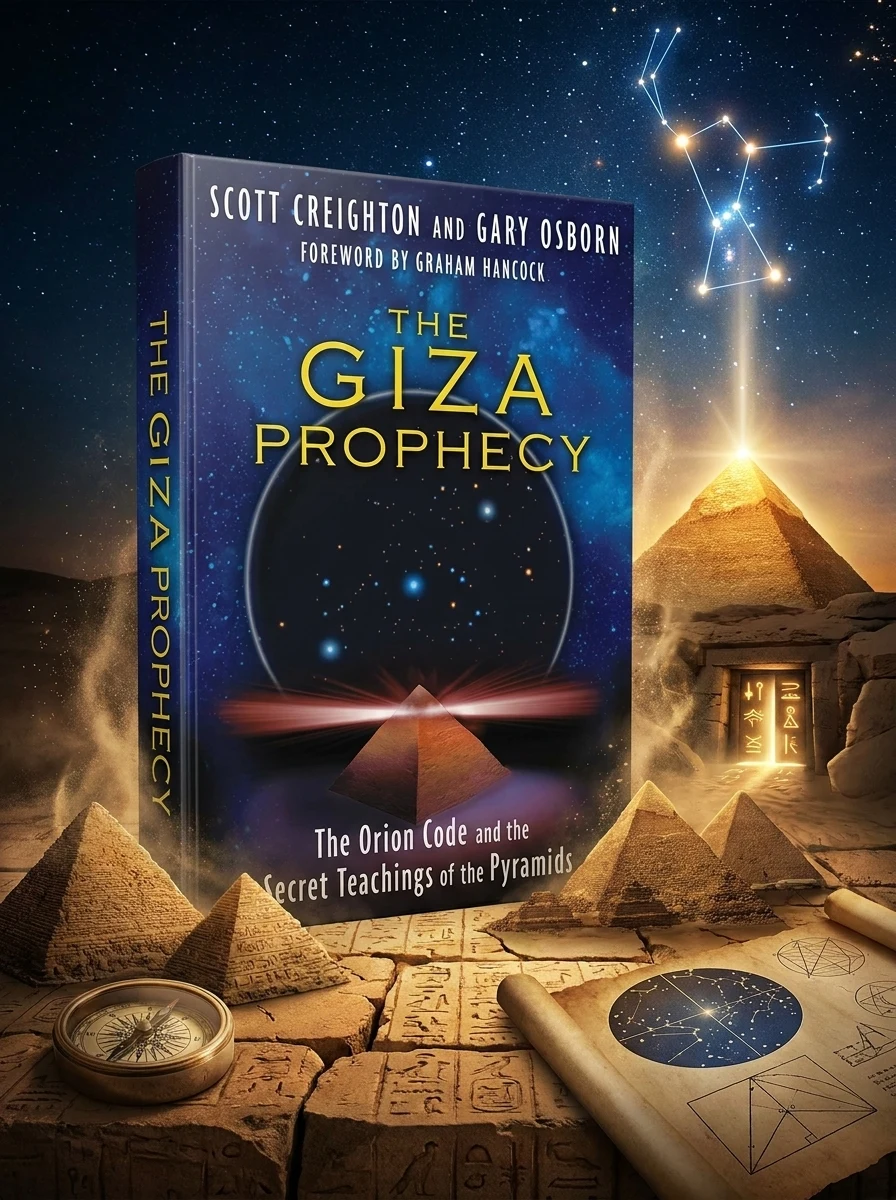
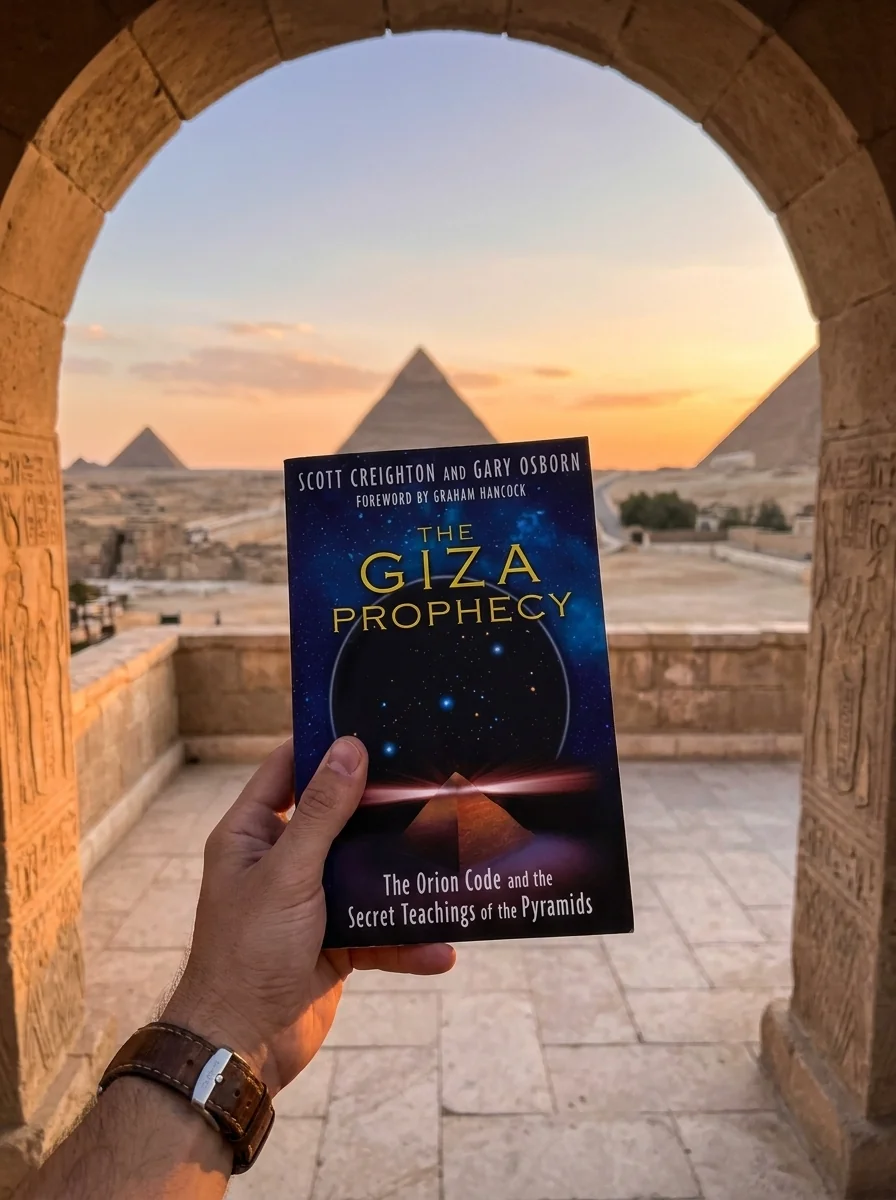
The Giza Prophecy: The Orion Code and the Secret Teachings of the Pyramids
✍️ Creighton, Scott;, Osborn and 3 moreThis groundbreaking work reinterprets the monumental architecture of the Giza plateau, suggesting the pyramids are far more than royal burial sites. Instead, authors Creighton and Osborn propose they function as sophisticated astronomical instruments, meticulously designed to chart Earth's rotational axis shifts. The book argues these ancient structures serve as "recovery vaults," strategically placed to safeguard civilization's rebirth after cataclysmic global events, simultaneously documenting past disasters and presaging future ones with startling precision, including an undiscovered chamber hinted at by myth.


Praise for this book
“Remarkable . . . original . . . convincing . . . explosive.”
📝 Description: The Giza Prophecy: The Orion Code and the Secret Teachings of the Pyramids
📑 What's inside
- Acknowledgments Foreword by Graham Hancock Introduction
- 1 The Axis and the Heretic
- 2 Something Amiss
- 3 The Orion Key
- 4 Lost Time of the Gods
- 5 The Gravity Cubit
- 6 Sacred Earth Geometry
- 7 Through the Veil
- 8 The Paradox of the Star-Shafts
- 9 The Day Earth Fell
- 10 The Afterlife Machine
- 11 Secret of the Sands
- Appendix 1 Precise Angles Appendix 2 Internet Resources Notes Bibliography Index
💎 Expert review
📖 Why choose it
Why this book is worth reading
Readers fascinated by the intersection of astronomy, ancient history, and prophetic mystery will find this book deeply rewarding. If you have long wondered if the Pyramids hold secrets beyond burial rites, this text offers a compelling alternative narrative. It appeals to those who enjoy decoding symbolic architecture and believe that ancient civilizations possessed profound cosmic knowledge. The promise of uncovering a 'cosmic clock' and potential undiscovered chambers provides an engaging intellectual adventure for enthusiasts of fringe history and metaphysical speculation seeking to understand humanity's cyclical fate.
⭐ Reader reviews
Reader rating
While intriguing for its bold reinterpretation of Giza as an astronomical instrument and recovery vault, this book may disappoint readers seeking rigorous academic proof or conventional historical analysis. It is best suited for those already open to alternative theories regarding ancient technology and prophecy. Skeptics or strict Egyptologists might find the claims about cataclysmic forecasting and myth-hinted chambers too speculative. However, for casual explorers of the occult and esoteric, it provides a stimulating framework that connects stellar movements with terrestrial destiny, offering a unique perspective on why these monuments endure.
❓ Frequently asked questions
📖 Who should read this
If you're drawn to alternative histories, ancient mysteries, and the potential for lost advanced civilizations, this book will deeply resonate. Readers intrigued by sacred geometry, astronomical alignments, and the possibility of Earth's cyclical catastrophes will find its arguments compelling.
🎯 Key themes and symbolism
Giza's Hidden Purpose
Delve into the radical assertion that the Giza pyramids were not mere pharaonic tombs, but meticulously engineered "recovery vaults." This book reveals how these colossal structures were intended to preserve crucial knowledge and ensure the resurgence of civilization following planetary-scale catastrophes, challenging conventional archaeological narratives.
Cosmic Prophecy & Geometry
Explore the profound connection between the Great Pyramid's precise angles and geometry and its function as a celestial timekeeper. The authors meticulously demonstrate how these architectural marvels encode specific dates of Earth's axial shifts, both ancient (like 3980 BCE) and those yet to come, tying terrestrial events to cosmic cycles.
Ancient Cataclysms & Rebirth
Investigate the theory that humanity has endured cyclical global disasters, and that the Giza complex is a direct response to this pattern. This work posits the pyramids as an elaborate system designed by a highly advanced ancient civilization to warn future generations and facilitate the recovery of knowledge and culture after such devastating events.
📜 Historical context
📚 Glossary
- Axial Shift
- Recovery Vault
- Astronomical Timeline
📔 Questions to reflect on
- If the Giza pyramids truly are "recovery vaults" for a lost civilization, what kind of knowledge do you imagine they were designed to preserve for future generations?
- How might recognizing Earth's cyclical catastrophes, as suggested by the authors, change our perspective on human history and our current civilization's priorities?
- Consider the idea of an undiscovered chamber on the Giza plateau; what implications would its discovery have for our understanding of ancient Egypt and global history?