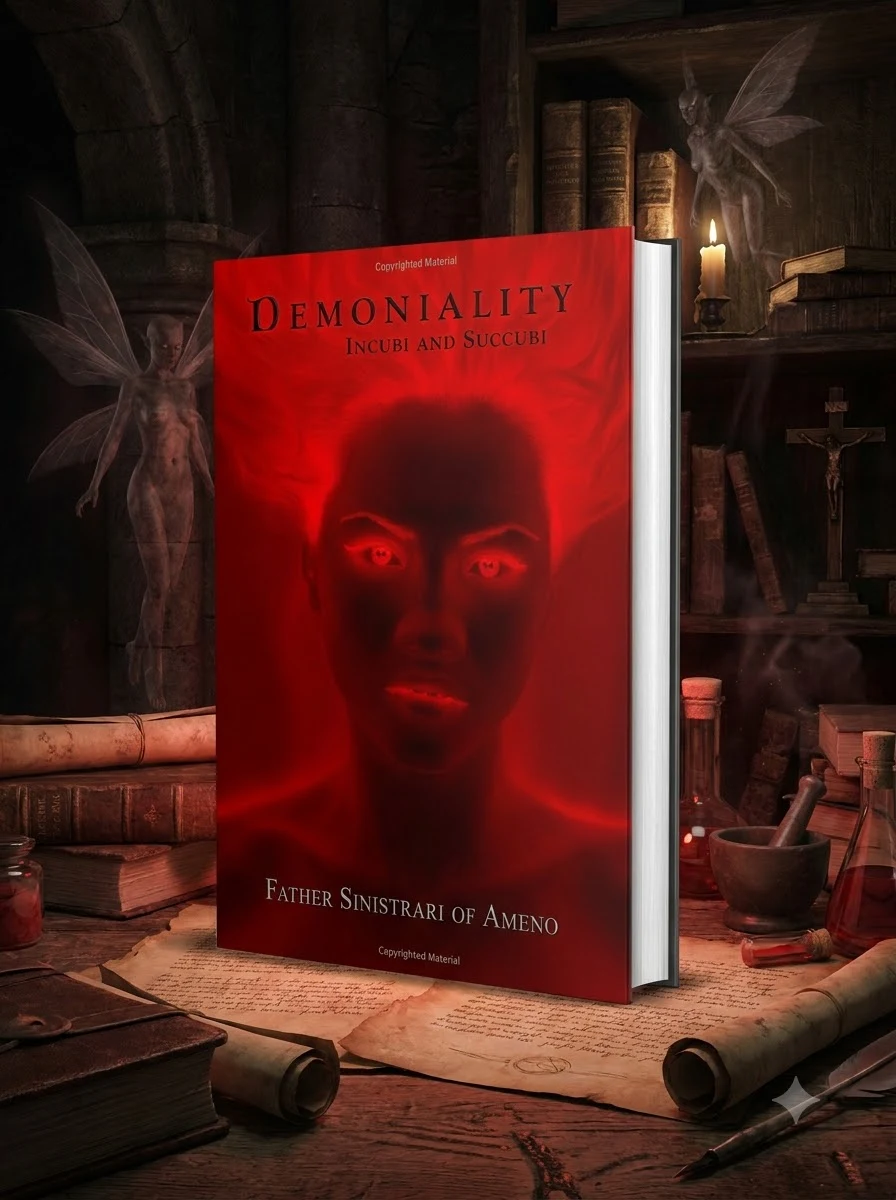
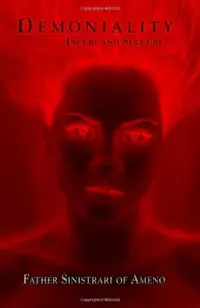
Demoniality: Or, Incubi And Succubi (1879)
Stock reported in the catalog; fulfillment is confirmed with your request.
Unravel the audacious theological debate: do demons possess souls capable of redemption?
This seminal 17th-century treatise, presented here in its 1879 English translation, delves into the controversial premise that certain non-human entities exist with both body and soul, mirroring humanity's capacity for reason, life, and death. Father Sinistrari provocatively argues that these beings, particularly incubi and succubi, were potentially included in Christ's redemption, thereby raising profound questions about their ultimate spiritual fate, whether salvation or damnation. It's a fascinating exploration of scholastic demonology that challenges conventional angelic and demonic hierarchies.
This work sits firmly within the tradition of scholastic demonology and early modern theological inquiry, specifically addressing the complex metaphysical classifications of non-human entities in Christian thought. It reflects a period where rigorous philosophical debate intersected with occult speculation regarding the nature of spiritual beings.


📝 Description: Demoniality: Or, Incubi And Succubi (1879)
💎 Expert review
📖 Why choose it
Why this book is worth reading
This book is a must-read for scholars of religious history, theologians, and enthusiasts of esoteric philosophy who crave depth over simplicity. It offers a unique window into the audacious theological debates of the past, specifically challenging conventional views on demonic hierarchy and spiritual fate. Readers interested in the intersection of scholasticism and occultism will find value in its provocative argument that entities like incubi and succubi might possess redeemable souls. By exploring whether these beings were included in Christ's redemption, the text provides a fascinating, albeit dense, examination of life, death, and reason in non-human forms. It is ideal for those who enjoy dissecting complex doctrinal controversies and understanding the historical nuances of how humanity defined its spiritual adversaries.
⭐ Reader reviews
Reader rating
While intellectually stimulating for its target audience, this treatise demands patience and a strong grasp of theological concepts. It is not suited for casual readers seeking straightforward horror or simple occult lore, as it relies heavily on scholastic argumentation rather than narrative or practical magic. Those expecting vivid descriptions of demonic rituals may find the philosophical abstraction dry or inaccessible. However, for those willing to engage with its rigorous logic, it offers a compelling look at historical debates on redemption and entity classification. The 1879 translation serves as an accessible entry point into these 17th-century ideas, though the content remains dense. It is best appreciated by academics and serious students of esoteric history rather than general readers looking for entertainment or practical guidance.
❓ Frequently asked questions
📖 Who should read this
If you're a scholar of demonology, a theologian interested in the fringes of Christian thought, or a curious occultist seeking a foundational text on the nature of non-human intelligences, this book offers a profound and challenging read.
🎯 Key themes and symbolism
The Nature of Demonic Beings
Sinistrari meticulously dissects the philosophical and theological attributes of demons, proposing that they are not merely ethereal spirits but possess tangible, albeit subtle, bodies. This challenges established views, arguing for a more complex understanding of their existence as rational creatures capable of birth, death, and interaction within the material world, much like humans.
Demonic Redemption and Damnation
Perhaps the most radical aspect of this work is its contemplation of whether these embodied, rational demons could be recipients of divine grace. The author explores the possibility of their redemption through Christ or, conversely, their definitive damnation, thereby extending the scope of salvation theology beyond strictly human experience to other intelligent beings.
Incubi and Succubi Phenomena
The treatise specifically addresses the phenomena of incubi and succubi, framing their interactions with humans not as mere apparitions, but as encounters with corporeal, rational entities. Sinistrari provides a theological framework for understanding these nocturnal visitations, classifying them within his unique schema of demonology and their potential for spiritual agency.
💬 Quotes from the book
“It is not sufficient to merely dismiss these entities as phantasms; their manifest interaction with the corporeal world necessitates a body, albeit of a subtle nature, distinguishing them from mere spirits.”
“The question then arises, if these beings possess a rational soul and capacity for choice, are they not also subject to divine grace and the ultimate judgment, as are the children of Adam?”
📜 Historical context
📚 Glossary
- Demoniality
- Incubus/Succubus
- Rational Creature
📔 Questions to reflect on
- How does the concept of embodied, rational demons challenge your preconceptions about the nature of evil and spiritual beings?
- If demons could be redeemed, what implications would that have for traditional Christian theology and the understanding of salvation?
- Consider the ethical or philosophical implications of classifying non-human entities as 'rational creatures' capable of moral choice. Where would you draw that line?
🏛 Books from this publisher Createspace Independent Publishing Platform
All books from this publisher →


You might also like
See more →
 91
91