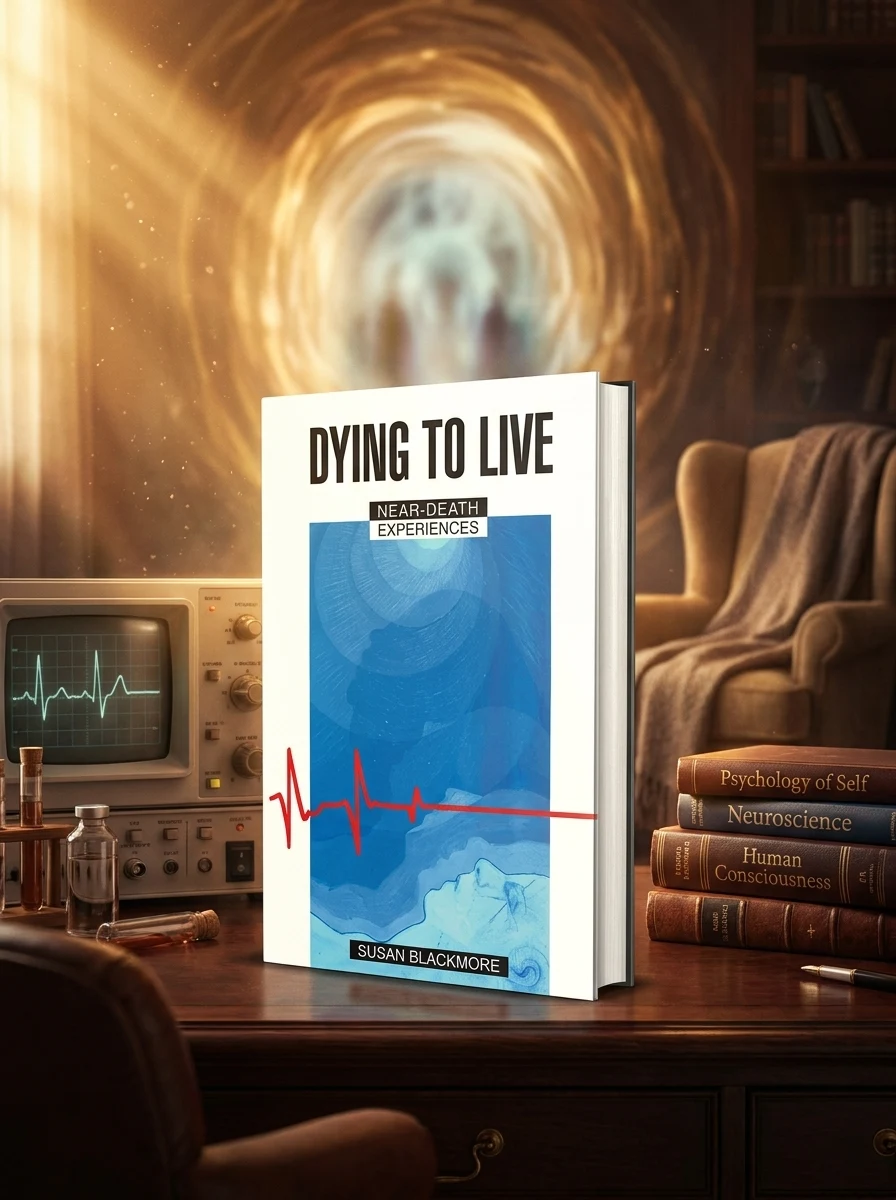
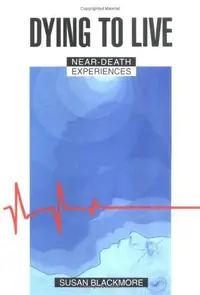
Dying to Live: Near Death Experiences
Stock reported in the catalog; fulfillment is confirmed with your request.
What if the boundary between life and death isn't a wall, but a shimmering veil?
Susan Blackmore, a leading authority, critically yet openly investigates near-death experiences in "Dying to Live." She masterfully synthesizes cutting-edge medical science, particularly regarding brain function at its limits, with deep psychological insights into the nature of the self. This book offers a compelling re-evaluation of these profound phenomena, seeking to demystify their origins without diminishing their transformative power. Blackmore challenges us to reconsider how our minds construct reality, even at the precipice of existence, offering a fresh, evidence-based perspective on what it means to encounter the threshold of death.
Situated within the modern esoteric intersection of neuroscience and consciousness studies, this work bridges the gap between scientific skepticism and spiritual inquiry regarding the afterlife.


📝 Description: Dying to Live: Near Death Experiences
💎 Expert review
📖 Why choose it
Why this book is worth reading
Readers who stand at the intersection of scientific rigor and spiritual wonder will find this book uniquely resonant. It is ideal for those seeking to understand near-death experiences not as supernatural proofs, but as profound psychological events shaped by a dying brain. Susan Blackmore’s approach offers a refreshing alternative to purely mystical interpretations, providing evidence-based insights that honor the transformative power of these encounters without sacrificing intellectual integrity. If you are curious about how the mind constructs reality at its limits, or if you wish to demystify the 'shimmering veil' between life and death through critical yet open investigation, this volume provides a compelling framework for re-evaluating existence and consciousness.
⭐ Reader reviews
Reader rating
This text serves as a vital resource for those interested in the psychology of consciousness and the medical realities of dying. However, it does not suit readers seeking definitive proof of an afterlife or comforting spiritual dogma, as Blackmore prioritizes scientific explanation over mystical validation. The tone is analytical rather than devotional, which may disappoint seekers expecting supernatural affirmation. It is best appreciated by those willing to engage with complex medical science and psychological theory. While it lacks the narrative flair of pure memoirs, its strength lies in its candid, evidence-based perspective on how our minds construct reality at the precipice of death.
❓ Frequently asked questions
📖 Who should read this
If you're fascinated by the mysteries of consciousness, curious about what lies beyond, or simply seek a rigorous, scientific yet respectful examination of near-death experiences, this book offers a compelling journey. It’s for those who dare to question and desire deeper understanding.
🎯 Key themes and symbolism
The Brain's Last Dance
Blackmore meticulously examines how advancements in neuroscience shed light on the brain's activity during moments of extreme physiological stress. She explores the potential neurological underpinnings of classic NDE elements, such as tunnels of light or out-of-body sensations, suggesting that these profound experiences may arise from specific neural processes during the dying process.
The Elusive Self
This work delves into the psychological construction of identity and consciousness, particularly how it's perceived during states of extreme duress or altered perception. Blackmore investigates how NDEs profoundly impact an individual's sense of self, memory, and subjective reality, offering insights into the mind's remarkable capacity for generating complex experiences.
Demystifying NDE Phenomena
As a prominent expert, Blackmore employs a rigorous, evidence-based approach to dissect and understand near-death experiences. She scrutinizes common NDE elements through the lens of cognitive science, aiming to provide plausible, often scientific, explanations for these widespread subjective reports, thereby offering a rational framework without discrediting personal impact.
Consciousness and Perception
The book deeply explores the nature of consciousness itself, questioning its origins and its relationship to the physical brain. Blackmore uses NDEs as a unique window into how our perceptions are formed and how profoundly they can be altered, challenging us to consider the limits and capabilities of human awareness.
💬 Quotes from the book
“The brain, in its final throes, can generate experiences of immense profundity, mimicking what many interpret as a glimpse beyond the veil.”
“To understand the NDE, we must first understand the self—a construct more fluid and adaptable than we often imagine, even at the precipice of non-existence.”
📜 Historical context
📚 Glossary
- Near-Death Experience (NDE)
- Consciousness
- Dualism
📔 Questions to reflect on
- How might understanding the brain's role in NDEs change your perception of consciousness and identity?
- Consider a time you experienced an altered state of consciousness. How does Blackmore's analysis resonate with or challenge your personal interpretation?
- If profound experiences can be generated by the dying brain, what implications does this have for our understanding of 'spiritual' encounters?
🏛 Books from this publisher Prometheus Books
All books from this publisher →
 83
83
You might also like
See more →
 90
90
 89
89
 88
88