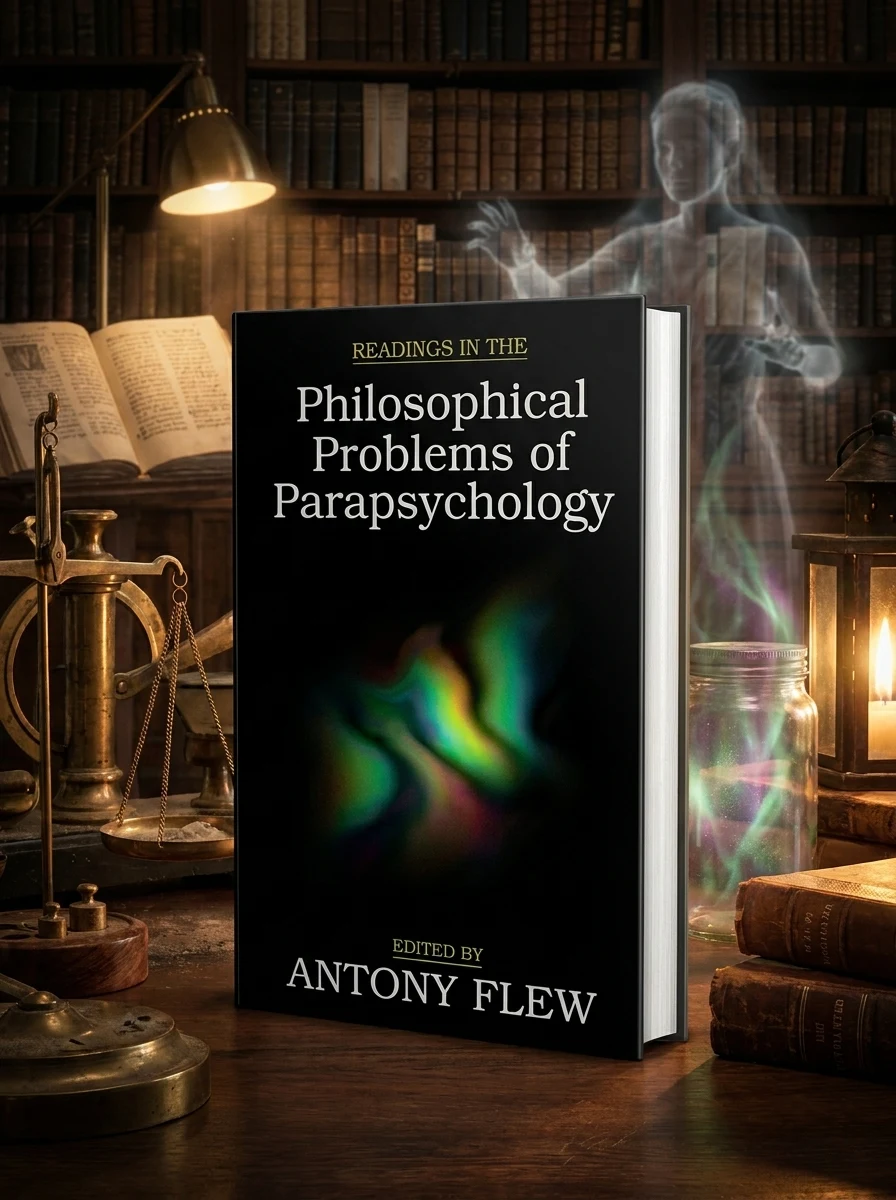
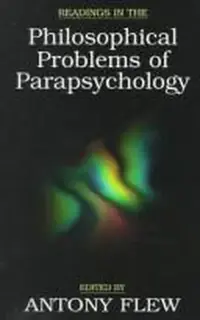
Readings in the Philosophical Problems of Parapsychology
Stock reported in the catalog; fulfillment is confirmed with your request.
Antony Flew dissects the philosophical cracks in parapsychology, revealing why the occult remains scientifically elusive.
This volume serves as a rigorous philosophical autopsy of psychical research, edited by the renowned scholar Antony Flew. It moves beyond mere skepticism to interrogate the foundational logic of ESP, psychokinesis, and out-of-body experiences. The text does not simply dismiss these phenomena but maps the conceptual minefields they create for empirical science. By compiling critical essays, it exposes the methodological gaps that have historically hindered parapsychology’s acceptance. Readers will find a sharp, intellectual dissection of how subjective experience clashes with objective verification, offering a vital resource for understanding the boundaries of scientific inquiry.
This volume represents a pivotal moment in the philosophy of science, where rigorous analytical scrutiny was applied to psychical research during a period of intense debate over empirical verification. It sits firmly within the tradition of critical inquiry that seeks to demarcate the boundaries between subjective experience and objective scientific fact.


📝 Description: Readings in the Philosophical Problems of Parapsychology
💎 Expert review
📖 Why choose it
Why this book is worth reading
This book is essential for the intellectually curious occultist who values rigor over romance. It offers a vital resource for understanding the boundaries of scientific inquiry, mapping the conceptual minefields created by ESP and psychokinesis. Readers will appreciate how it dissects the methodological gaps hindering parapsychology’s acceptance. It is ideal for those seeking to understand why the occult remains scientifically elusive, providing a sharp, intellectual dissection that respects the complexity of subjective experience while demanding objective verification.
⭐ Reader reviews
Reader rating
Been hunting for a decent copy of this text for ages. A text you study rather than simply read. Will be gifting a copy to a friend.
Honestly wasn't sure what to expect, but I'm impressed. Every rereading turns up something I missed. The language takes some getting used to, but it becomes part of the charm. A keeper.
Was skeptical at first. Some sections stopped me cold in the best way. The material is presented clearly and the structure makes it easy to revisit key passages. If you're drawn to this subject, don't hesitate.
While this text provides a formidable philosophical autopsy of psychical research, it is not for the faint-hearted or the purely spiritual. It does not suit readers seeking validation of their psychic experiences or those who prefer mystical affirmation over critical analysis. The tone is rigorously skeptical, focusing on foundational logic and empirical standards rather than anecdotal wonder. It may feel cold to those expecting a supportive exploration of the occult. However, for those willing to engage with hard-edged philosophical critique, it offers an indispensable perspective on the challenges facing parapsychology.
❓ Frequently asked questions
📖 Who should read this
Readers fascinated by the intersection of metaphysics and logic. Ideal for philosophy students, critical thinkers, and occultists who demand intellectual rigor rather than blind faith in psychic phenomena.
🎯 Key themes and symbolism
The Verification Crisis
The book meticulously examines why psychic claims fail to meet the strict standards of reproducible evidence. It argues that without controlled, repeatable data, parapsychology cannot transition from anecdote to hard science, leaving it in a permanent state of philosophical limbo.
Mind-Body Dualism
Flew explores the ontological implications of telepathy and precognition. If the mind can act at a distance, the materialist view of the brain collapses. This section challenges readers to reconsider the nature of consciousness and its potential independence from physical biology.
Historical Skepticism
Tracing the lineage of psychical research, the text highlights how early investigators were often undermined by their own biases. It provides a critical history of how the field’s reliance on subjective testimony has perpetuated its marginalization within the broader scientific community.
💬 Quotes from the book
“The burden of proof lies not with the skeptic, but with the claimant.”
“Science advances by falsification, not confirmation.”
📜 Historical context
📚 Glossary
- Epistemology
- Psychokinesis
- Paradigm Shift
📔 Questions to reflect on
- When have you accepted a claim without demanding verifiable proof?
- How does the fear of being wrong influence your spiritual beliefs?
- What would it take for you to consider a psychic phenomenon scientifically valid?
🏛 Books from this publisher Prometheus Books
All books from this publisher →
 83
83
You might also like
See more →
 90
90
 89
89
 88
88
 87
87