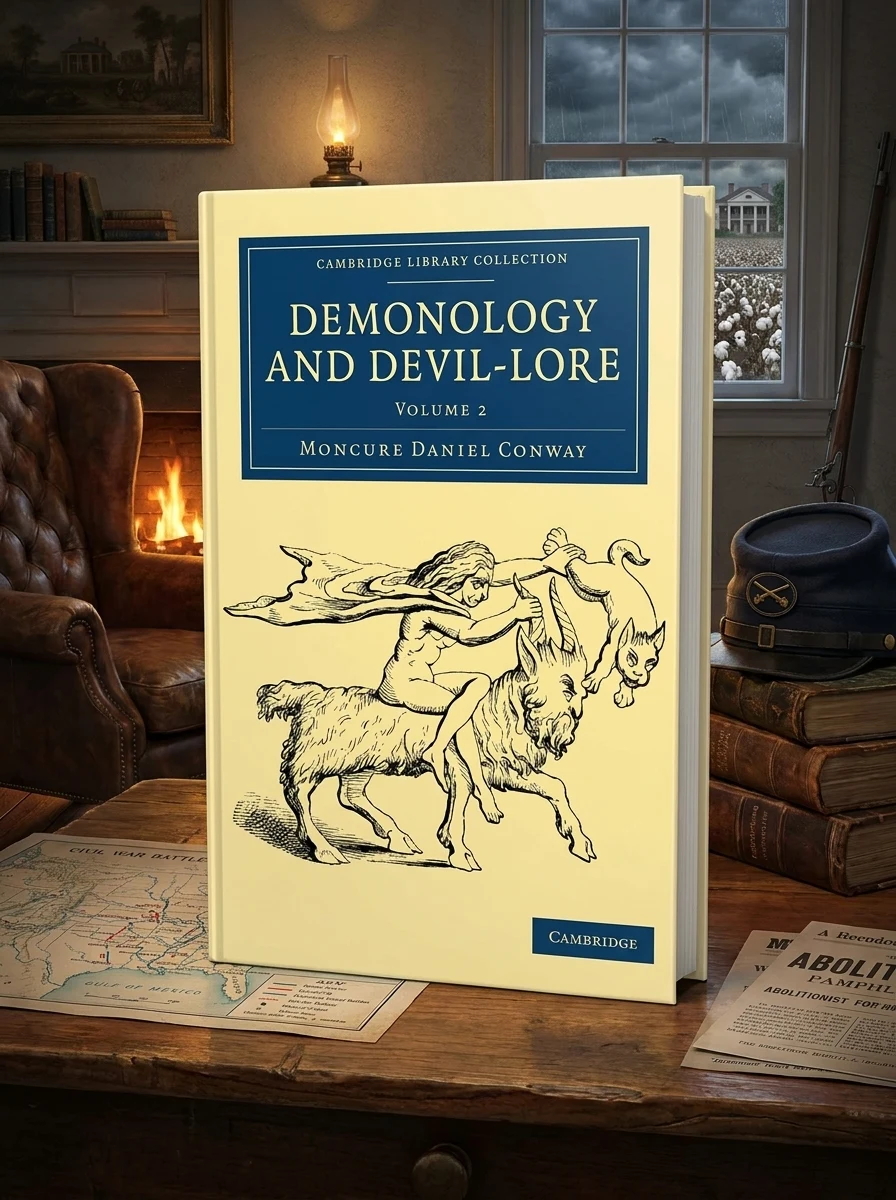
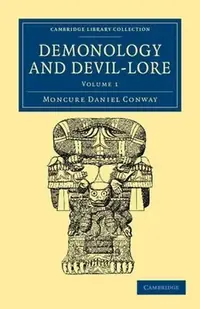
Demonology and Devil-Lore Conway, Moncure Daniel
Conway, Moncure DanielStock reported in the catalog; fulfillment is confirmed with your request.
A Victorian scholar traces the global mythos of demons as primal human fears given form.
Conway, a former Unitarian minister turned freethinker, surveys the worldwide evolution of demonic lore. He posits that ancient demons were not supernatural entities but psychological projections of early humanity’s most pressing survival threats. By categorizing these beings, he reveals how hunger, disease, and natural forces were mythologized into malevolent figures. This comprehensive two-volume study offers a fascinating anthropological lens on how fear shaped our earliest spiritual narratives and cultural identities across disparate civilizations.
This work emerges from the Victorian era, reflecting a period where scholarly inquiry increasingly intersected with freethinking and anthropological studies of religion. It sits within the broader tradition of occult philosophy by examining the historical construction of supernatural beliefs through a rationalist lens.


📝 Description: Demonology and Devil-Lore Conway, Moncure Daniel
💎 Expert review
📖 Why choose it
Why this book is worth reading
Scholars and curious minds interested in the intersection of psychology, anthropology, and religion will find this text invaluable. Conway offers a unique perspective by demystifying demonic figures, presenting them not as supernatural horrors but as projections of early human survival fears like hunger and disease. This approach provides a fascinating lens for understanding how cultural identities were formed through mythologized natural forces. It is essential reading for those who wish to understand the psychological roots of spiritual narratives without accepting supernatural claims at face value.
⭐ Reader reviews
Reader rating
Grabbed this during a weekend order. There's real depth here that reveals itself on a second reading. It reads better in small doses — a chapter at a time with notes. Still worth having on the shelf.
Not my usual area but wanted to branch out. I appreciated how the argument builds steadily from first principles. Some sections stopped me cold in the best way. Well worth it.
This has been on my wishlist for months. Every rereading turns up something I missed. It's become a regular reference in my practice. My only regret is not ordering it sooner.
This exceeded my expectations. It connects ideas I'd only seen treated separately elsewhere. Would buy from this store again.
Bought this as a gift for my sister and ended up ordering a second copy for myself. Solid binding, decent paper — holds up to heavy use. Already eyeing my next order.
Came across this title in a footnote and had to track it down. I appreciated how the argument builds steadily from first principles. Plenty of passages worth underlining; my copy is already full of margin notes.
Conway’s comprehensive survey is intellectually rigorous, offering a compelling anthropological argument that reframes demonology as a study of human fear rather than supernatural reality. However, readers seeking traditional theological debates or comforting spiritual narratives will find this work cold and dismissive of the sacred. It may also alienate those who prefer mystical interpretations over clinical psychological analysis. While the scope is impressive, the dense academic tone requires patience. It is best suited for skeptics and historians rather than practitioners or believers looking for validation of their faith.
❓ Frequently asked questions
📖 Who should read this
Readers interested in the intersection of religion, psychology, and anthropology. Ideal for those who view mythology as a mirror of human history rather than divine truth, and who appreciate Victorian intellectual rigor applied to esoteric subjects.
🎯 Key themes and symbolism
Psychological projection of fear
Anthropological origins of mythology
Cross-cultural demon classification
💬 Quotes from the book
“Demons are the shadows cast by our deepest anxieties.”
“From hunger to fire, the world became populated by our fears.”
📜 Historical context
📚 Glossary
- Personification
- Primitive Man
- Freethinker
📔 Questions to reflect on
- What modern fears do you think are currently taking the place of ancient 'demons' in our collective consciousness?
- How might viewing your own anxieties as 'personifications' change your approach to managing them?
- In what ways does your culture mythologize natural disasters or diseases today?
✍️ More books by this author Conway, Moncure Daniel
All books by this author →
🏛 Books from this publisher Cambridge University Press
All books from this publisher →

 75
75

You might also like
See more →