Demonology
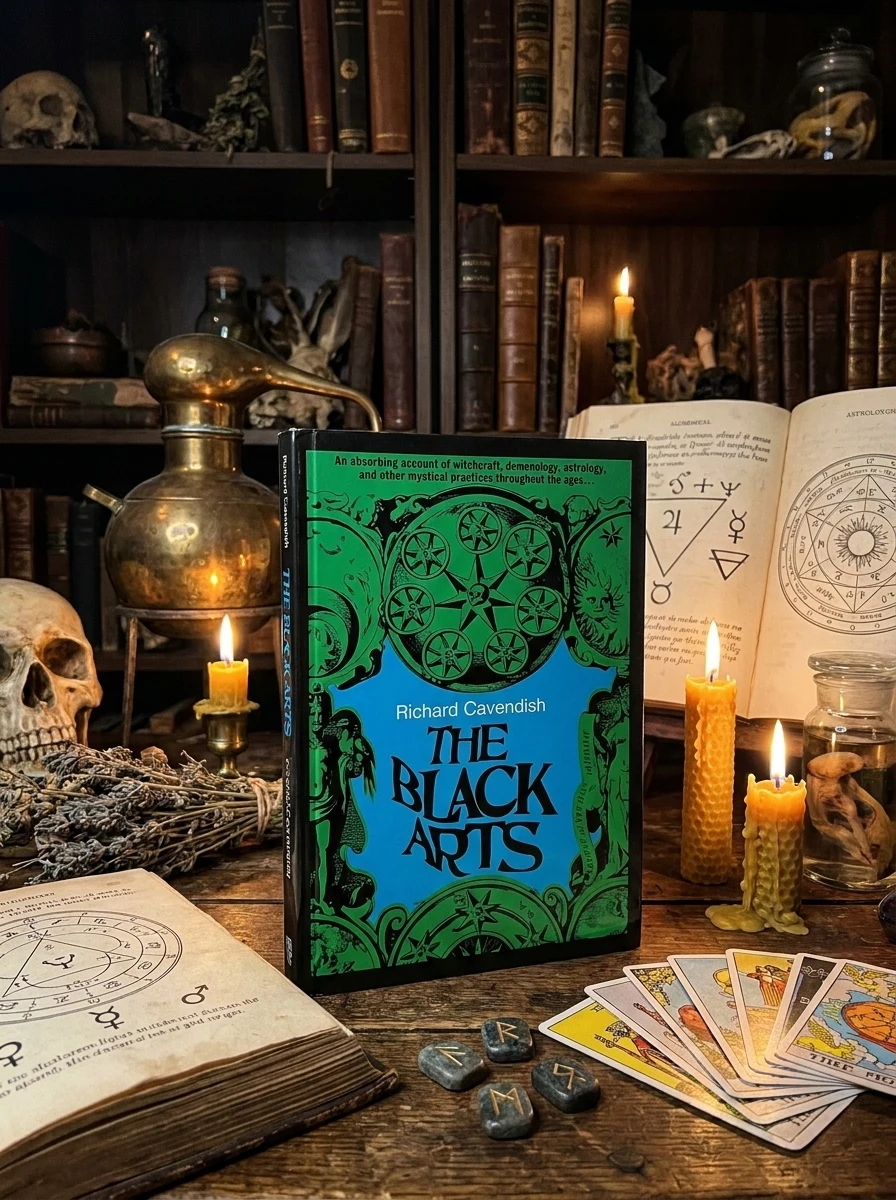
Demonology is the study of demons: their names, natures, ranks and powers, and how humans have tried to repel, bind or summon them. It spans ancient Mesopotamian exorcism, Jewish and Christian theology, early modern witch-hunting treatises and the grimoires of ceremonial magic.
Where the word comes from
The word joins the Greek daimōn and -logia, "study". In Greek religion a daimōn was not evil: it was a divine power or guiding spirit, and Socrates spoke of his daimonion as an inner voice that warned him. Early Christian writers used the diminutive daimonion for the pagan gods and unclean spirits, and in Christian Latin and later European languages the demon became unambiguously malevolent. English "demonology" appears in the late sixteenth century, most famously in King James VI's Daemonologie of 1597.
In depth
Demonology is less a single discipline than a long conversation about harmful spirits, carried on by priests, theologians, magicians, physicians and folklorists across four thousand years.
The ancient Near East
Mesopotamian texts name many demons and give detailed rituals against them. Lamashtu attacked pregnant women and newborns; Pazuzu, a wind demon, was ironically used as a protective amulet against her. Exorcists (āšipu) used incantation series such as Utukkū Lemnūtu, "Evil Spirits", to drive them out. Many later ideas, from demons of disease to the use of names and images for protection, have roots here.
Jewish and early Christian demonology
The Hebrew Bible says relatively little about demons, but later Jewish writings say a great deal. The Book of Tobit features the demon Asmodeus; the Book of Enoch tells of the Watchers, angels who descended and fathered giants whose spirits became demons; and Talmudic and later rabbinic lore adds figures such as Lilith and a large population of shedim. The Testament of Solomon, an early Christian-era text, has King Solomon interrogate demons one by one with a divine ring, the ancestor of the Solomonic grimoires.
The New Testament presents Jesus as an exorcist, and early Christian thinkers such as Origen and Augustine built a theology of fallen angels led by Satan, working through temptation, false gods and possession.
Hierarchies and catalogues
Medieval and early modern authors organised demons into ranks, often mirroring the angelic hierarchy of Pseudo-Dionysius. In 1589 the bishop Peter Binsfeld linked seven princes of hell to the seven deadly sins: Lucifer (pride), Mammon (greed), Asmodeus (lust), Leviathan (envy), Beelzebub (gluttony), Satan (wrath) and Belphegor (sloth). Johann Weyer's Pseudomonarchia Daemonum (1563) catalogued 69 spirits with ranks and legions, and its list reappears in the Ars Goetia. Jacques Collin de Plancy's Dictionnaire infernal (1818), especially the 1863 edition illustrated by Louis Le Breton, fixed the popular image of many demons.
Demonology and the witch trials
The darkest chapter is the demonology of the witch-hunts. The Malleus Maleficarum (1486 to 1487), written by the inquisitor Heinrich Kramer, argued that witches made pacts with the Devil and set out procedures for prosecuting them. Jean Bodin's De la démonomanie des sorciers (1580) and King James's Daemonologie followed. Weyer's De praestigiis daemonum (1563), by contrast, argued that many accused witches were ill or deluded, an early voice of scepticism.
Demonology in magic
In the grimoire tradition, knowledge of demons had a practical purpose: to command them. The Solomonic texts, especially the Lesser Key of Solomon and its first book, the Ars Goetia, list spirits with their seals and offices so that a magician, protected by divine names, can compel their service. Modern occultists read this material in many ways, from literal evocation to psychological models of the shadow.
Beyond Christianity
Other traditions have their own rich demonologies: the jinn and shayāṭīn of Islam, the asuras and rakshasas of Hindu myth, the pretas and māras of Buddhism, and the oni and yōkai of Japan. Comparing them shows how differently cultures draw the line between the merely non-human and the truly malign.
How different paths see it
Where it appears
Book of Tobit. The story of the demon Asmodeus and his defeat.
Testament of Solomon (1st to 5th century CE). Solomon questions and binds demons with a divine ring.
Malleus Maleficarum (Heinrich Kramer, 1486 to 1487). The notorious witch-hunting manual.
De praestigiis daemonum and Pseudomonarchia Daemonum (Johann Weyer, 1563). A sceptic's treatise and its catalogue of 69 spirits.
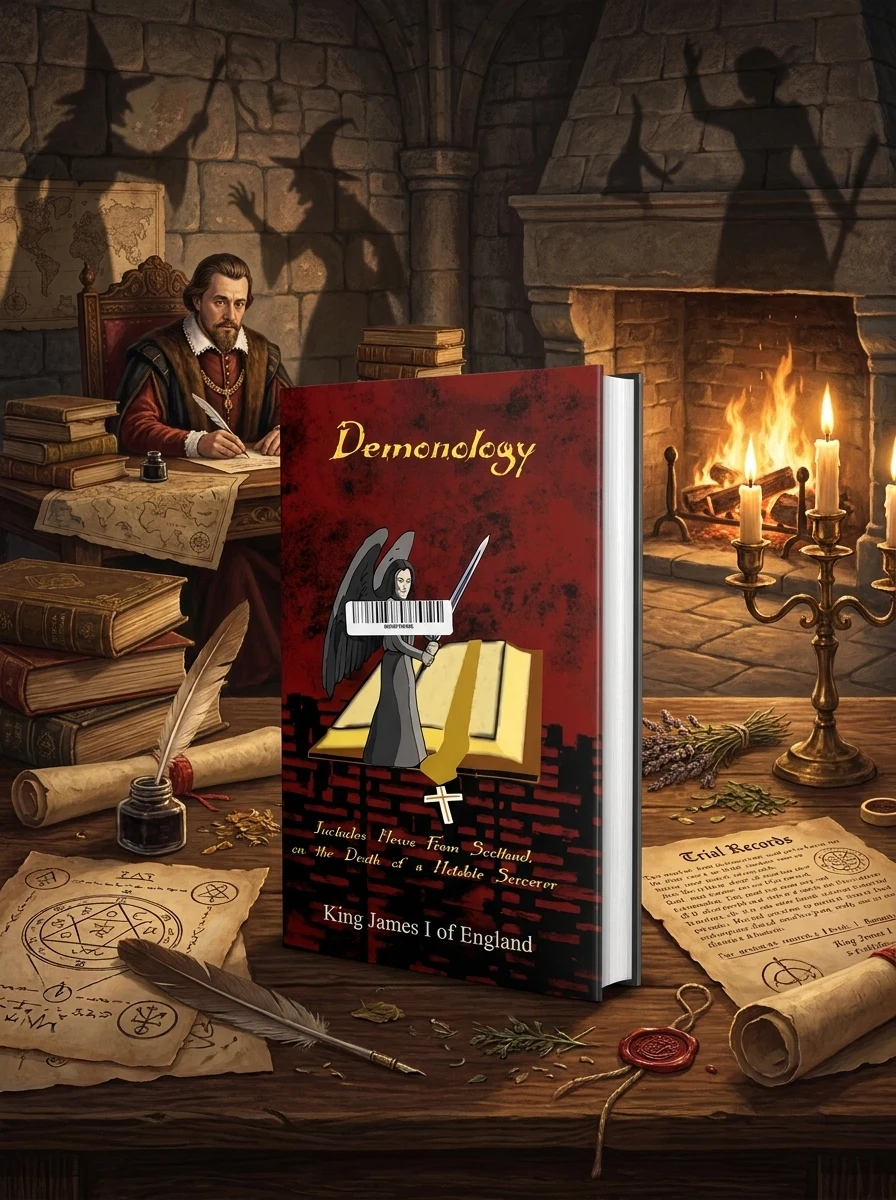
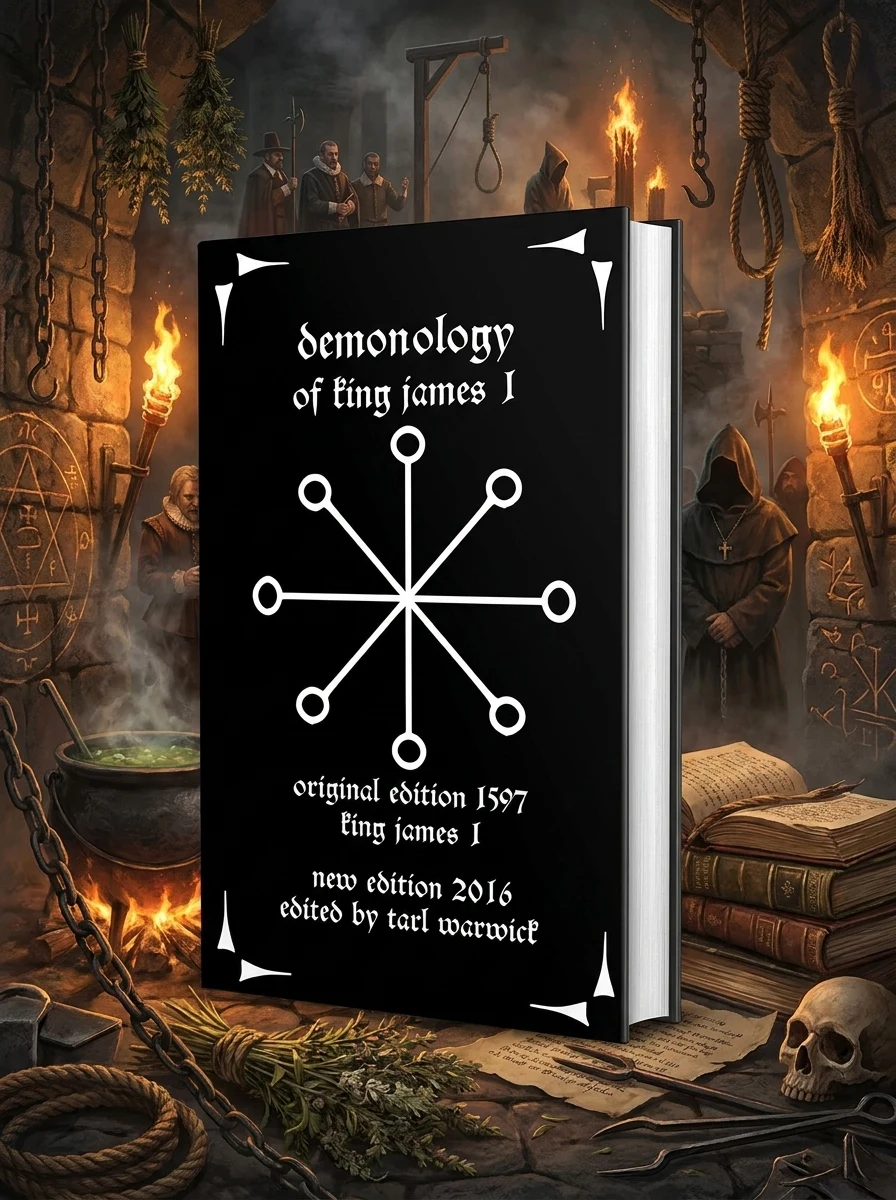
Daemonologie (King James VI, 1597). A royal treatise on witchcraft and spirits.
Dictionnaire infernal (Collin de Plancy, 1818; illustrated 1863). The encyclopaedia that fixed the popular image of demons.
What it means today
Demonology is one of the most searched and least understood subjects in esoteric literature. People arrive from horror films, games and anime, and find a field that is mostly history: theology, law, medicine and folklore trying to explain misfortune.
That history is worth reading with care. The same books that built the grand hierarchies of hell also sent real people to their deaths, and the sceptics, Weyer above all, deserve as much attention as the believers.
For a start, read a general history of the Devil and demons, then one primary text from each period: the Testament of Solomon, the Malleus Maleficarum (in a critical translation), and a scholarly edition of the Lesser Key of Solomon.