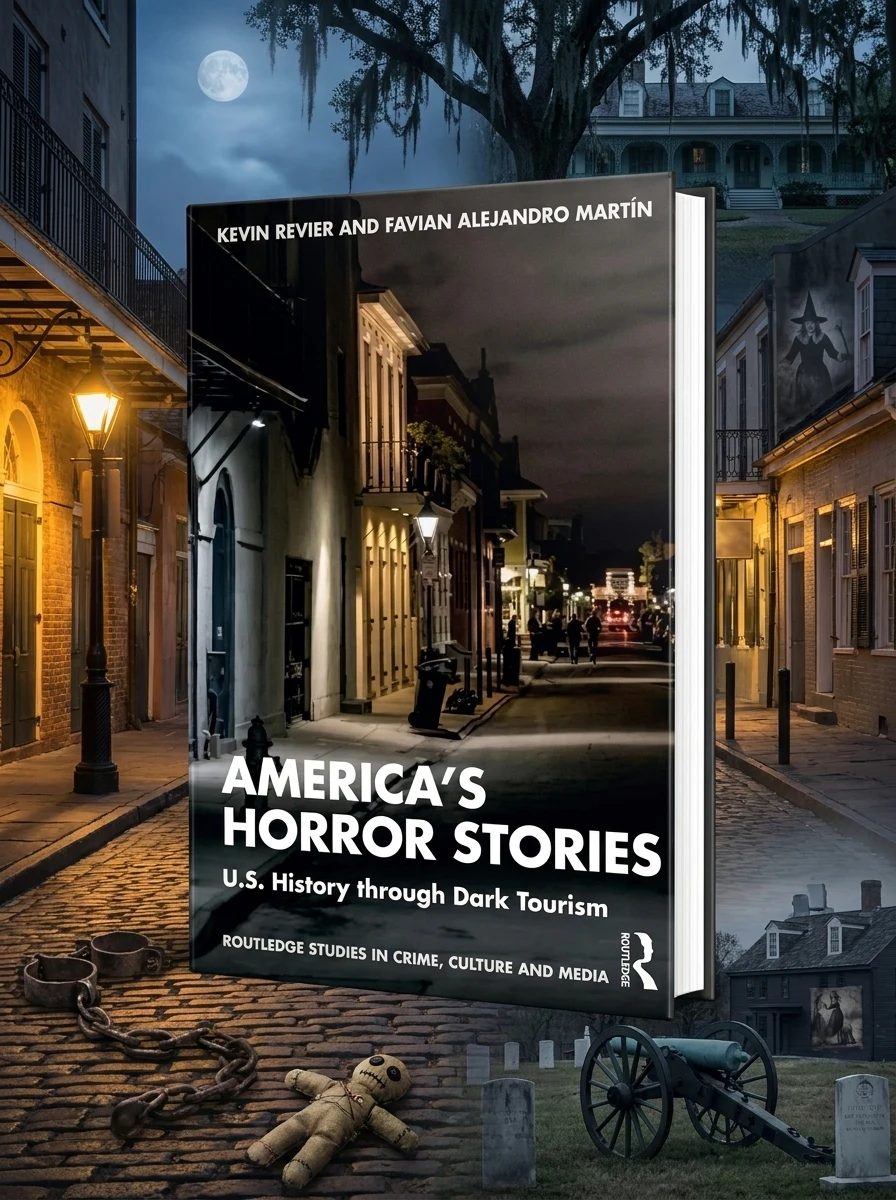
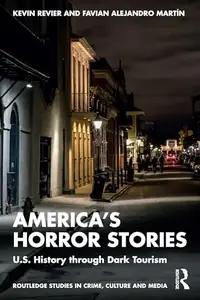
America's Horror Stories: U.S. History Through Dark Tourism Revier, Kevin
Revier, Kevin; , Martín, Favian AlejandroStock reported in the catalog; fulfillment is confirmed with your request.
Unearth America's hidden horrors through a critical ghost tour of its most haunted histories.
This incisive study employs a unique "ghost tour(ist)" methodology to dissect how the darkest chapters of American history, particularly slavery and systemic racism, are presented in popular dark tourism. Through immersive travel to sites like Salem, New Orleans, and Gettysburg, the authors expose how narratives often become whitewashed, sensationalized, and commercialized. They reveal how tour guides and historical sites frequently obscure the profound suffering and complex truths of the past, offering a critical examination of historical memory and its commodification for public consumption.
This work situates itself within the critical discourse of dark tourism and cultural studies, examining how historical trauma is commodified in contemporary American society. It bridges the gap between academic analysis of systemic racism and the popular genre of ghost tours.


📝 Description: America's Horror Stories: U.S. History Through Dark Tourism Revier, Kevin
💎 Expert review
📖 Why choose it
Why this book is worth reading
Readers deeply interested in the intersection of history, sociology, and tourism will find this book indispensable. Those who question how we remember the past, especially regarding slavery and racism, will appreciate its rigorous 'ghost tour(ist)' methodology. It offers a necessary critique for anyone concerned with how historical suffering is sanitized or sensationalized for public consumption. If you value uncovering hidden narratives and understanding the mechanics of memory commodification, this text provides a vital, critical lens through which to view America's haunted landscapes.
⭐ Reader reviews
Reader rating
Revier and Martín deliver a sharp, academic dissection of dark tourism’s ethical failures. While intellectually robust and necessary for scholars of cultural memory, it may not suit readers seeking entertaining ghost stories or casual travel guides. The text is dense with critical theory, potentially alienating those expecting lighthearted exploration. It demands engagement with complex ideas about systemic racism and commercialization rather than offering simple narratives. Ideal for academic audiences and critical thinkers, but likely too dry for general tourists looking for spooky anecdotes without sociological context.
❓ Frequently asked questions
📖 Who should read this
If you're fascinated by the intersection of history, social justice, and the macabre, or if you've ever questioned the narratives presented at historical sites, this book is for you. It offers a fresh, critical perspective on how we remember—and misremember—America's most unsettling past.
🎯 Key themes and symbolism
Dark Tourism's Critical Lens
The book examines how visiting sites of tragedy, such as former slave markets or battlefields, shapes our understanding of history. It innovatively uses the specific tourist experience—engaging with ghost tours and haunted locations—as a research method to uncover deeper truths about historical representation and public engagement with difficult pasts.
Historical Whitewashing Unveiled
This work delves into the insidious ways uncomfortable truths, especially concerning slavery, colonialism, and systemic racism, are often diluted or omitted from popular historical narratives presented at tourist sites. It critically exposes how complex suffering is frequently simplified or re-framed to appeal to a broader, less confrontational audience, sanitizing genuine horror.
Commodifying Collective Trauma
The book investigates the commercial aspects of dark tourism, revealing how historical atrocities and profound human suffering can be sensationalized and packaged for entertainment. It scrutinizes the ethics of turning sites of immense tragedy into profitable attractions, often at the expense of genuine historical reflection, accuracy, and respect for the victims' experiences.
💬 Quotes from the book
“Our 'ghost-hunting' wasn't for spectral apparitions, but for the elusive specters of truth obscured by convenient narratives at America's most tragic historical sites.”
“The real horror isn't always in the past events themselves, but in the present-day commercialization that polishes away the sharp edges of injustice, leaving only a palatable, sanitized ghost.”
📜 Historical context
📚 Glossary
- Dark Tourism
- Ghost Tour(ist) Methodology
- Historical Whitewashing
📔 Questions to reflect on
- Reflect on a historical site you've visited. How was its story presented? Did you feel it fully conveyed the complexity or suffering associated with the location?
- Consider how popular media (movies, TV shows, tours) shapes your understanding of history. Are there instances where you suspect historical events might be oversimplified or sensationalized?
- What ethical responsibilities do we, as tourists, have when visiting sites of tragedy or profound historical injustice? How can we engage with such places respectfully and meaningfully?
📖 From the series “Routledge Studies in Crime, Culture and Media”
All books in the series →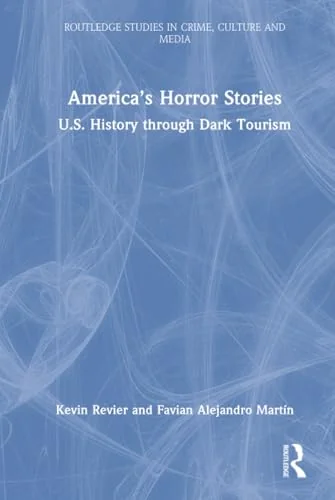
✍️ More books by this author Revier, Kevin; , Martín, Favian Alejandro
All books by this author →🏛 Books from this publisher Routledge
All books from this publisher →



 89
89


You might also like
See more →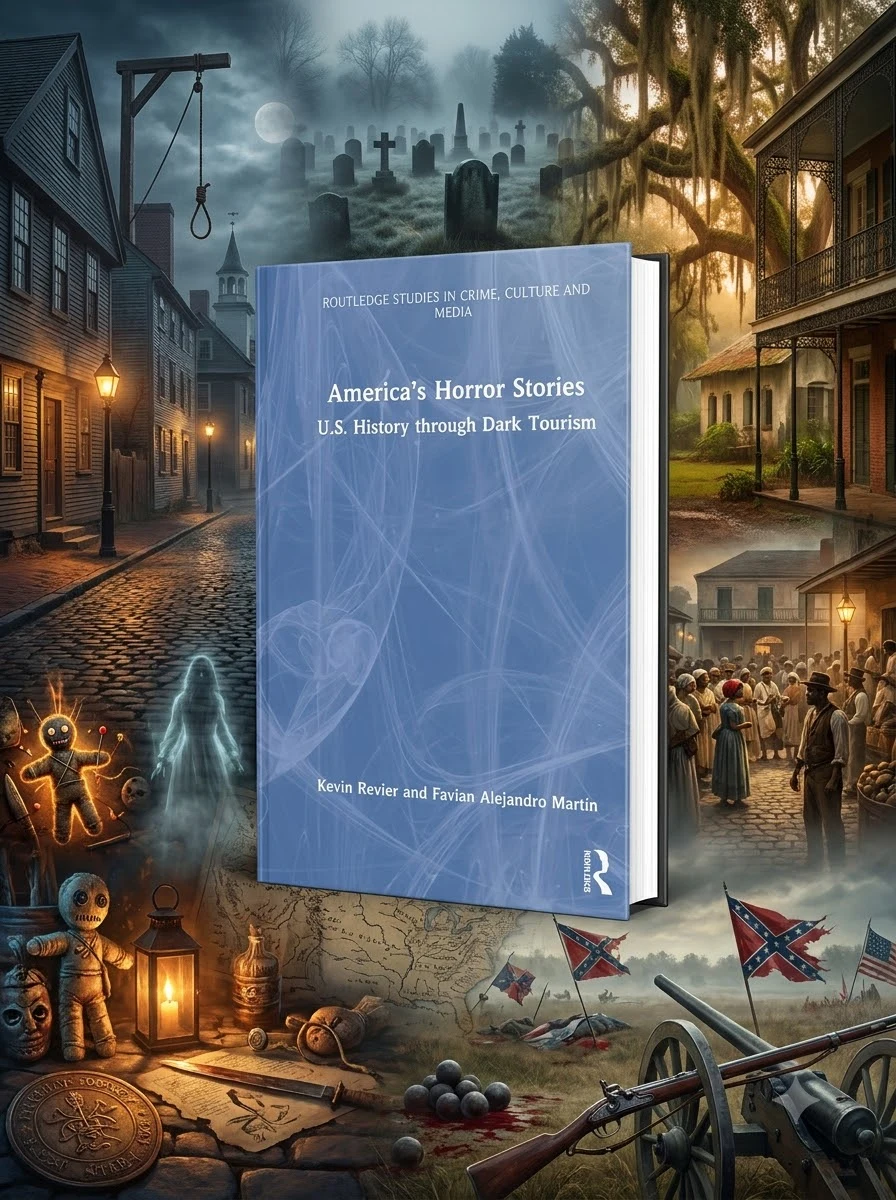

 91
91
 91
91