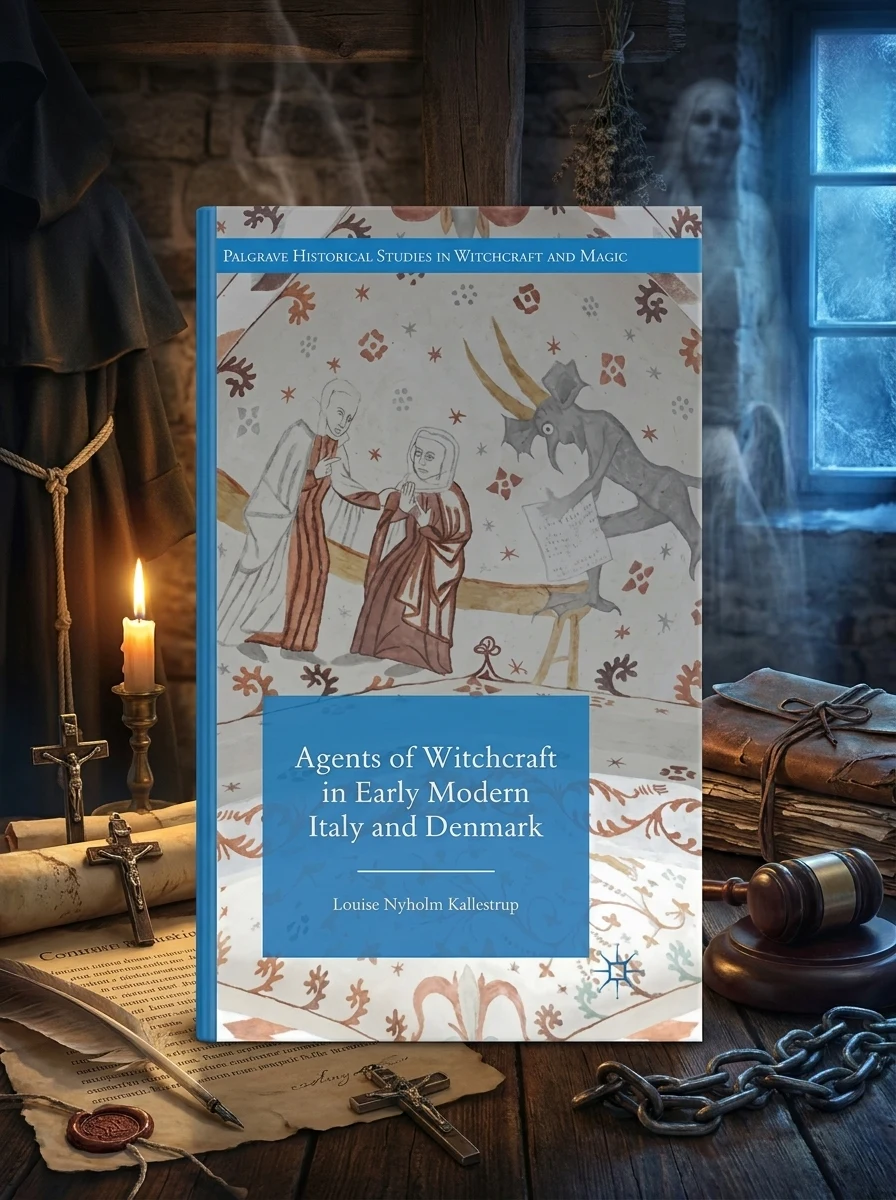
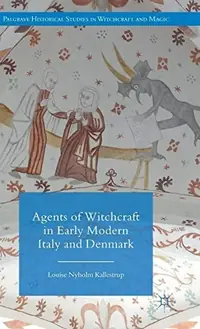
Agents of Witchcraft in Early Modern Italy and Denmark (2015) Kallestrup, L
 82
82
 Editorial score
How we rate
Editorial score
How we rate
Stock reported in the catalog; fulfillment is confirmed with your request.
Two nations, one shadow: how secular courts and the Inquisition shaped early modern witch trials.
Lars Kallestrup delivers a compelling comparative study of witchcraft prosecutions in early modern Italy and Denmark, revealing how jurisdictional differences shaped the very nature of the accusations. By examining the narratives presented by both lay accusers and inquisitorial authorities, the author uncovers distinct cultural fears and legal mechanisms. While Denmark’s secular courts produced trials driven by local community tensions, Italy’s Roman Inquisition filtered accusations through a theological lens. This work dissects the interplay between state power, religious doctrine, and popular belief, offering a nuanced view of how witchcraft was constructed, prosecuted, and understood across two distinct European landscapes during the height of the witch-hunts.
This work sits firmly within the historiography of early modern European witchcraft, specifically contributing to comparative studies of how judicial systems influenced persecution narratives in Italy and Denmark.


📝 Description: Agents of Witchcraft in Early Modern Italy and Denmark (2015) Kallestrup, L
💎 Expert review
📖 Why choose it
Why this book is worth reading
Scholars and dedicated enthusiasts of early modern history will find immense value in this nuanced comparative study. By contrasting the secular court dynamics of Denmark with the theological frameworks of Italy’s Roman Inquisition, Kallestrup illuminates how jurisdictional boundaries actively constructed the reality of witchcraft accusations. Readers interested in the intersection of state power, religious doctrine, and popular belief will appreciate the detailed dissection of legal mechanisms and cultural fears. It offers a sophisticated understanding of why witch trials manifested differently across Europe, providing essential context for anyone seeking to move beyond general narratives and grasp the specific political and social drivers of these persecutions.
⭐ Reader reviews
Reader rating
Ordered this after seeing it referenced in another book I was studying. It reads better in small doses — a chapter at a time with notes. Challenging in places, but never needlessly obscure. Great value for what you get.
Kallestrup provides a rigorous academic examination that may feel dense to casual readers or those seeking sensationalist accounts of witch hunts. The book is not suitable for individuals looking for light reading, personal memoirs, or fictionalized dramatizations of the era. It requires patience and an interest in legal history and theological nuance. However, for those willing to engage with complex jurisdictional analyses, it offers a vital corrective to monolithic views of witchcraft prosecutions. The comparative approach is its strongest asset, revealing how local tensions versus imperial doctrine shaped outcomes. It is a serious scholarly contribution rather than a popular history.
❓ Frequently asked questions
📖 Who should read this
Scholars of early modern European history, legal historians, and students of comparative religion will find this rigorous analysis essential. It is also for those interested in the sociology of fear and the mechanics of historical persecution.
🎯 Key themes and symbolism
Jurisdictional Divergence
The text contrasts Denmark's secular legal framework with Italy's ecclesiastical inquisitorial system, showing how these different authorities dictated the evidence, charges, and outcomes of witchcraft trials, thereby shaping the societal perception of evil.
Narrative Construction
Kallestrup analyzes the specific stories told by accusers and defendants, demonstrating how personal grievances and local rumors were amplified into formal charges, revealing the fluid boundary between genuine belief and opportunistic accusation in early modern society.
Cultural Fear
The book explores the underlying anxieties of the period, illustrating how political instability and social fragmentation fueled the persecution of witches, with each region projecting its unique internal conflicts onto the figure of the maleficent.
💬 Quotes from the book
“The law does not merely punish the witch; it defines what a witch is.”
“In Denmark, the community spoke; in Italy, the Church listened.”
📜 Historical context
📚 Glossary
- Secular Courts
- Roman Inquisition
- Maleficium
📔 Questions to reflect on
- How might the source of legal authority (state vs. church) alter the way a community perceives its own fears?
- In what ways do modern legal or social systems still shape our narratives of 'deviance' and 'evil'?
- Consider a historical event you know well: how did the jurisdictional framework influence the stories told by those involved?
🏛 Books from this publisher Palgrave MacMillan
All books from this publisher →
You might also like
See more →